
What Must an Entrepreneur Do After Creating a Business Plan?
The Business Plan Is Completed, What’s Next?
You worked for weeks – or even months – on writing the great business plan. The summary is brief and to the point. The financial figures are looking good.
You did thorough market research. You close your laptop with a sense of accomplishment. But then you realize: What now?
Unfortunately, this is the very moment when most first-time entrepreneurs fail to consider. A business plan is simply a blueprint. Just like a blueprint that languishes on a shelf cannot result in anything being built, so too a business plan that is not acted upon will be useless.
Research has shown that the entrepreneurs who prepared business plans are 260% more likely to start up their businesses – but only if they not only make the plans but also follow them. So, if you want to know what an entrepreneur must do after creating a Business Plan, you are already thinking like a winner. Let’s take a look at what happens next, one step at a time.
1. Validate Your Business Idea Before You Spend a Dollar
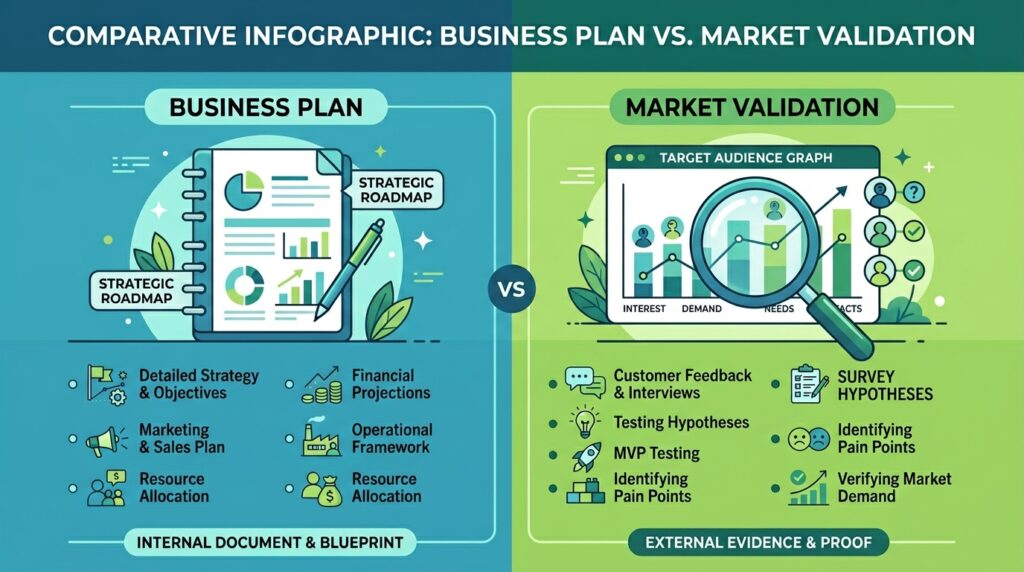
Here’s a hard truth: a business plan, no matter how well-written, is based largely on assumptions. Before you invest money in your idea, you really have to test if those assumptions will stand up in the real world.
The next step for you after making your business plan is to analyze if your business idea really has a market. You might do this through market research, creating a minimum viable product (MVP) for testing, or collecting feedback from your targeted potential customers.
Consider validation as a reality check, and not a setback. It is way less expensive to find out the mistakes now than six months after the launch.
Here are some doable ways to verify your idea:
- Talk to real potential customers. Not just friends and family — people who would actually pay for what you’re offering.
- Build a simple landing page. Tools like Carrd or Mixo let you set up a page in under an hour. Track signups or interest before you build anything.
- Run a small ad test. A modest Google Ads or Meta campaign can tell you if people are actually searching for your solution.
- Conduct competitor research. Doing this before you launch can help you get a lay of the land, inform your decisions, and identify which parts of your company need strengthening.
If validation reveals a gap or a flaw, that’s valuable information — not failure. Adjust your plan and test again.
2. Secure the Funding Your Business Needs
If you don’t get enough money, your brilliant idea might remain a dream. This is precisely when a business plan turns into your mightiest weapon – bankers and investors insist on knowing what they are financing.
To get the money, you have to come up with a convincing speech along with presenting your business plan to those who you want to fund you. Be sure that you are capable of telling in a nutshell why your business is going to make it – point out your different selling point, market study, anticipated finances, and ways to expand.
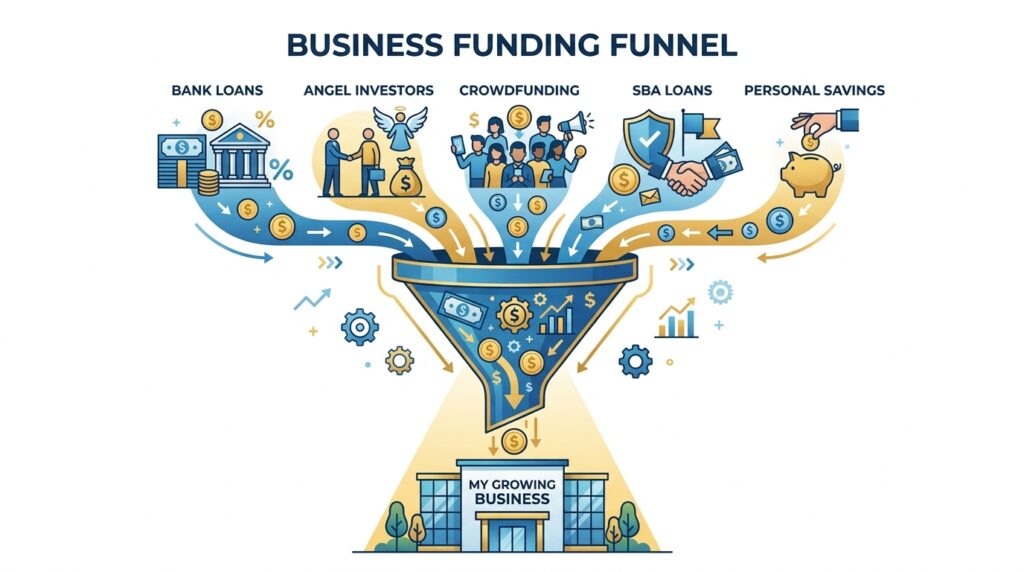
Common Funding Sources to Explore
| Funding Source | Best For | Key Consideration |
|---|---|---|
| SBA Loans | Small businesses needing startup capital | Requires strong credit and paperwork |
| Angel Investors | Early-stage startups with growth potential | Give up partial equity |
| Crowdfunding | Consumer products with broad appeal | Requires a strong marketing push |
| Friends & Family | Very early-stage, low-risk capital | Keep agreements formal and written |
| Business Credit Cards | Short-term operational expenses | High interest if not managed carefully |
The nonprofit Accion and the Small Business Administration (SBA) are two excellent sources of startup loans. The SBA guarantees microloans of up to $50,000 and federally guaranteed term loans called Community Advantage Loans.
Expert Tip: When you take a loan you keep complete control over your business and do not have to share the ownership or the decision making with anyone else which is one of the main differences between loans and getting investors. Besides that, borrowing money is one of the ways to strengthen your business credit rating. In contrast to investors, loans come with a fixed repayment plan that you can rely on. Think about your development plans and see what suits you best.
3. Register Your Business and Handle Legal Requirements
This step is non-negotiable. Doing business without proper legal registration means risking everything that you have worked to build.
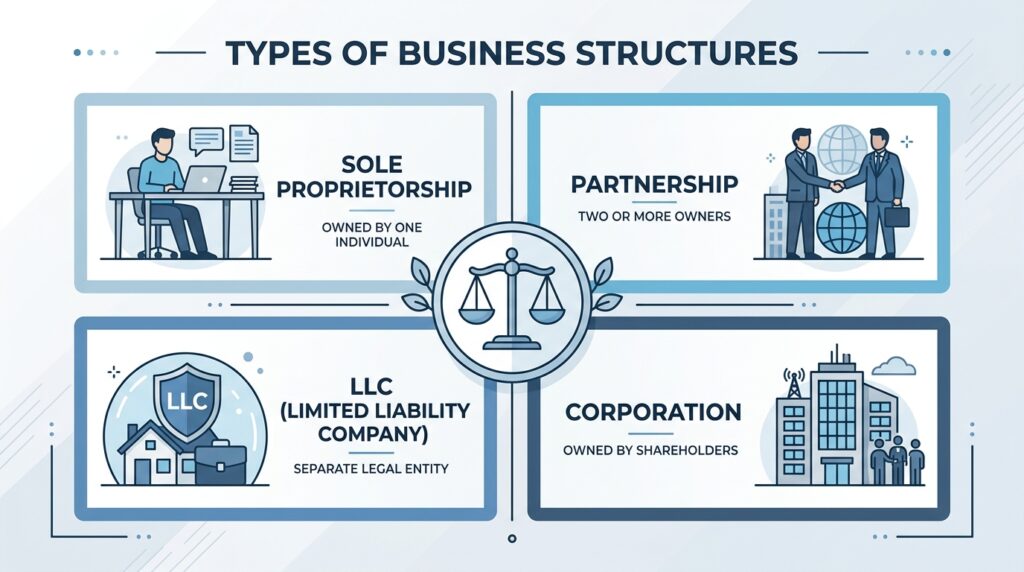
The initial step is to decide on your business structure, e.g., sole proprietorship, partnership, LLC, or corporation. Since each structure affects taxes, liabilities, and operations differently, it is vital to pick the one that aligns with your objectives.
For most early-stage entrepreneurs, the Limited Liability Company (LLC) is a popular choice. It offers personal liability protection without the complexity of a full corporation.
Your Legal Checklist After Creating a Business Plan:
- ✅ Choose and register your business structure with your state
- ✅ Register your business name (DBA if needed)
- ✅ Apply for an Employer Identification Number (EIN) from the IRS
- ✅ Obtain relevant business licenses and permits
- ✅ Open a dedicated business bank account
- ✅ Protect your intellectual property
Honestly, without the appropriate legal safeguards, owners of a business are basically left with no official way to respond if someone else uses their designs or branding. It’s essential to clearly understand how trademarking, copyrighting, and patenting differ, since each one is designed to protect a particular kind of intellectual property.
The U.S. Patent and Trademark Office (USPTO) is your go-to resource for trademark and patent filings.
4. Build a Brand That People Remember
Your business plan probably includes a mention of your brand — but now is the moment to really make it happen. Brand identity is much more than just the visual elements, like a logo and color palette.
Branding is much more than elements such as your company’s name and logo. Business owners need to diligently craft a brand strategy that not only generates awareness and recognition but also delivers a clear promise to the customer and has the ability to endure over time.
Having a solid brand strategy means:
- Identity: Your logo, name, typography, and visual system
- Mission Statement: Why your business exists and the values it stands for
- Value Proposition: What makes your offer uniquely better for your target customer
- Voice and Tone: How you communicate across social media, email, and your website
- Customer Promise: What people can always expect from you
Tools like Canva and Looka make it easier than ever for entrepreneurs to build a professional brand without a big agency budget.

5. Set Up Operations and Build Your Team
Your business plan probably includes a mention of your brand, but this is the time to really get it done. Brand identity goes way beyond just the visual elements, like a logo and color palette.
Branding is a lot more than just the elements like your company’s name and logo. Entrepreneurs should carefully develop a brand strategy that not only builds awareness and recognition but also communicates a clear promise to the customer and is capable of lasting over time.
A well-thought-out brand strategy will mean:

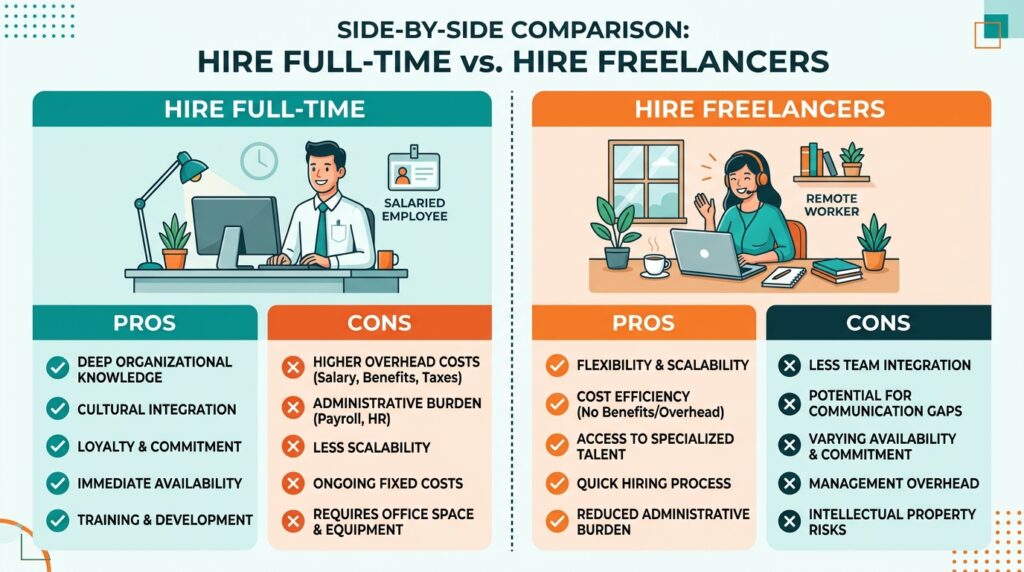
Do You Need to Hire Right Away?
Not every business needs employees on day one. Few entrepreneurs can manage every aspect of a new business alone. They should focus on what they can do well and delegate other tasks to a strong team — for example, hiring a web designer or financial consultant.
Platforms like Upwork and Fiverr are great starting points for finding skilled freelancers for specific tasks like web development, bookkeeping, or graphic design.
6. Develop and Execute Your Marketing Strategy
In fact, many business owners make this mistake. They produce an amazing product and then expect the customers to come rolling in by themselves. They simply don’t.
You must have a marketing section outlined in your business plan — now is the time to work on it. A business plan also involves a go-to-market strategy that defines the marketing plans in pre-launch, launch, and post-launch phases. After the business is legally registered, it’s the right time to start pre-launch marketing activities that may range from social media marketing to launching a blog and even traditional print marketing like fliers – all aimed at attracting potential customers before the business opening.
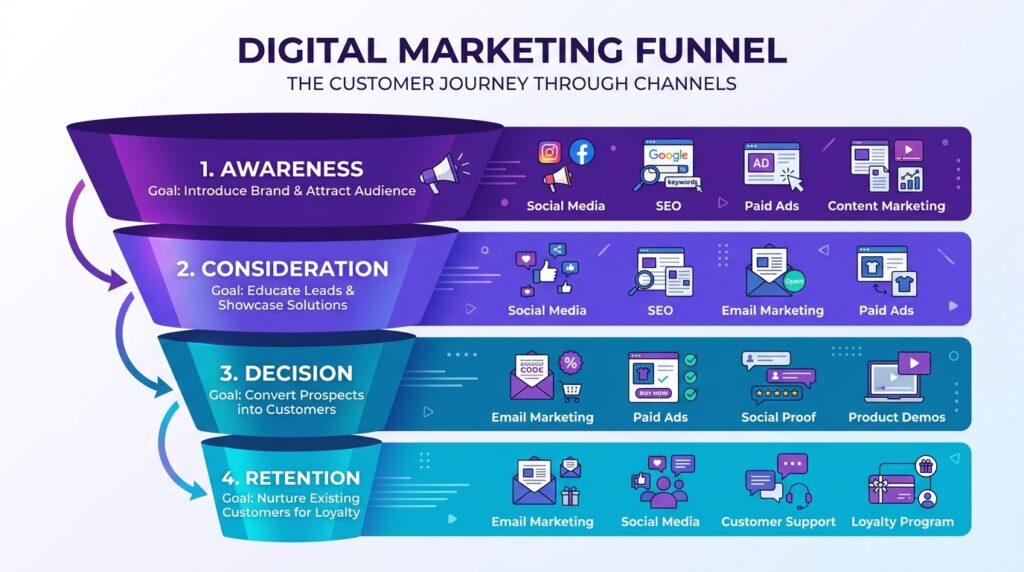
Key marketing channels to prioritize as a new entrepreneur:
- Search Engine Optimization (SEO): Helps your website rank on Google organically over time. Tools like Ahrefs or Semrush can guide your strategy.
- Social Media Marketing: Choose 1–2 platforms where your target audience spends the most time and go deep, not wide.
- Email Marketing: Build your list early. Mailchimp offers a free tier to get started.
- Content Marketing: Blog posts, videos, and podcasts that provide value and establish your authority.
- Paid Advertising: A small, well-targeted budget on Google or Meta can generate fast early traction.
The key is consistency. Show up for your audience before they become customers.
7. Network Aggressively and Build Strategic Partnerships
Your next investor, your best employee, your first big client — any of them could come from a conversation you haven’t had yet.
Never underestimate the power of networking. Attend industry events and conferences, connect with other entrepreneurs and business professionals, and make sure as many people as possible know about your business. The more people you know, the more opportunities you’ll have to secure funding and grow your business.
Start with:
- SCORE: Free mentorship from experienced business professionals
- LinkedIn: The most powerful professional networking platform available
- Local Chamber of Commerce: Great for community-based businesses and B2B referrals
- Industry-specific associations and meetups: Niche networks often yield the highest-quality connections
After meeting someone new, make sure to follow up with them to continue building the relationship. Send a personalized email or message and find ways to stay in touch over time. Networking should be about building genuine connections, not just collecting contacts.

8. Launch Your Business — Then Treat Your Plan as a Living Document
This is the big trap for a lot of entrepreneurs. They make a product that is good, but then they just sit back and wait for customers to come to them. They really do not.
Now, this is what you have been working for. Any entrepreneur gets a pretty big kick out of their effort finally being showcased, and their product being available to the public for purchase. In a perfect world, the production and marketing that are required will still meet the launch deadlines that were set in the business plan.
However, what most entrepreneurs do not realize is that the most challenging part actually starts after launching the product.
Keep a close eye on sales and marketing figures from the very beginning. Besides, if things go haywire, you definitely have to be able to change direction within a short period of time. It is a good idea to monitor the sales and marketing performance very regularly at the beginning, for example, one in a month or in a quarter, then less often when things become more normal and stable.
A business plan is not a one-time thing. It should keep changing and adjusting as your business, which is a little young, gets mature. You have to revisit your plan once in a while to ensure you are moving in the right direction and to have a plan of action when new problems and opportunities come your way.

⭐ Expert Tips: Hard-Earned Lessons From the Entrepreneurial Trenches
These aren’t textbook suggestions — they’re the kind of practical wisdom that only becomes obvious after you’ve made the mistakes. Keep them close.
Validate before you invest heavily. Most failed startups didn’t fail because of bad execution — they failed because they built something nobody actually wanted. Before committing serious time or money, test your core assumption with real people who aren’t your friends or family.
Let your customers reshape your plan. Your business plan sets the direction, but real-world customer feedback is what keeps you on the right road. Stay open to adjusting your offer, your messaging, or even your business model based on what you actually hear — not just what you assumed.
Hire for character first, skill second. In the early days of a business, culture is fragile. One wrong hire can derail team morale and momentum. You can train someone on a tool or process — you can’t easily train core values or work ethic.
Watch your cash more closely than your profit. A business can show profit on paper and still collapse because it ran out of cash at the wrong moment. Know your runway at all times. Understand when money is coming in and when bills are going out — and keep a buffer.
Build real relationships, not just a contact list. Networking only pays off when it’s genuine. Entrepreneurs who approach every connection with a “what can I get from this?” mindset rarely get far. The ones who lead with value and stay in touch consistently are the ones who get the warm introductions, the referrals, and the second chances.
📋 Quick Reference: Post-Business Plan Action Checklist
| Step | Action | Priority |
|---|---|---|
| 1 | Validate your business idea | 🔴 Critical |
| 2 | Secure startup funding | 🔴 Critical |
| 3 | Register your business legally | 🔴 Critical |
| 4 | Build your brand identity | 🟠 High |
| 5 | Set up operations & team | 🟠 High |
| 6 | Execute marketing strategy | 🟠 High |
| 7 | Build your network | 🟡 Important |
| 8 | Launch and iterate | 🔴 Critical |
❓ Frequently Asked Questions
Q1: What is the very first thing an entrepreneur should do after creating a business plan?
The very first step is validating your business idea before spending significant money or time on it. Conduct market research, talk to potential customers, and test whether there’s real demand. A business plan built on unvalidated assumptions is risky — validation turns those assumptions into facts.
Q2: How long does it take to go from a business plan to actually launching a business?
It varies widely depending on your industry, funding needs, and legal requirements. A simple online service business could launch in 30–60 days. A product-based business requiring manufacturing, permits, or significant funding may take 6–18 months. Your business plan’s timeline section should be your primary guide.
Q3: Do I need a lawyer after creating my business plan?
Not always — but for most entrepreneurs, it’s highly recommended. A business attorney can help you choose the right legal structure, review contracts, protect your intellectual property, and ensure you’re compliant with applicable regulations. Organizations like the Small Business Administration (SBA) also offer free legal resources for new entrepreneurs.
Q4: What must an entrepreneur do after creating a business plan to find investors?
To attract investors, prepare a compelling pitch deck that highlights your value proposition, target market, business model, revenue projections, and your team’s credentials. Then approach angel investor networks, venture capital firms, or platforms like AngelList. Your business plan is the foundation of every investor conversation.
Q5: Should I update my business plan after launching?
Absolutely — and frequently. Continual evaluation and adaptation of the business plan are essential to address unforeseen challenges or changes in the market. By monitoring key performance indicators and consistently reassessing the plan’s effectiveness, entrepreneurs can make necessary adjustments to stay competitive and achieve long-term success. Treat your business plan as a living document, not a one-time deliverable.
Conclusion: Your Business Plan Was Step One. Now Make It Real.
Writing a business plan is a major step. But it is only the start of your journey and not the point at which you finish.
Successful entrepreneurs who convert their great plans into profitable businesses have one characteristic in common: they act with resolve. They check the validity of their ideas before making the investment. They get the funding secured before they decide to scale. They put together the teams by complementing their own strengths and weaknesses. They embark on marketing even before the launch. And, they keep going, learning and making changes, etc.
Through your business plan, you draw the route. It is now your time to walk the path.
Just do one thing this week — confirm your business idea, look for a source of funding, or enter your business at the registrar. One action at a time, you will build the momentum.
Have questions about your specific business situation? Drop them in the comments below — or explore our related guides on how to write a business plan, how to find funding for a startup, and how to build a brand from scratch.
Also Read: How to Reset Garage Door Opener (Step-by-Step Guide)
How Long Does It Take to Fill a Cavity? Everything You Need to Know
Carpenter Ants vs Black Ants: Key Differences Explained