
What Is an LOI in Business? Meaning, Example, and Risks
If you are asking what is an loi in business, LOI stands for letter of intent. It records the main terms two parties are considering before they complete a final agreement. Think of it as a way to check whether you agree on the shape of a deal before spending more time and money on detailed negotiations.
An LOI can be useful when buying a company, leasing commercial space, forming a partnership, or planning a substantial supply arrangement. It does not automatically mean the deal is final, but some terms in the letter may create real obligations. This guide explains what to include, shows a simple example, and helps you spot the terms that deserve a closer look.
Quick answer: An LOI puts a proposed deal’s essential terms in writing and describes what must happen next. Its legal effect depends on the wording, the parties’ conduct, and applicable law; never assume that calling a document “nonbinding” settles every issue.
Key takeaways
- An LOI helps parties agree on the broad terms before drafting a detailed contract.
- Common terms include price, deal structure, timing, conditions, and a review period.
- A proposed purchase may be nonbinding while confidentiality or exclusivity terms are binding.
- An LOI is different from a purchase order, which normally identifies specific goods or services to order.
- Clear wording matters more than the document’s title. Have a qualified attorney review an important transaction before signing.
What is an LOI in business, and when is it used?
A letter of intent is a preliminary written outline of a proposed transaction. It gives the parties a common starting point for due diligence, negotiation, and the final paperwork. The American Bar Association’s overview of an acquisition describes an LOI as a blueprint for a potential deal that commonly identifies price and deal structure.
Imagine that you want to buy a small company. You and the owner have discussed a possible price, but you still need to examine the accounts, contracts, and equipment. An LOI can record the proposed price, what assets are included, how long you have to investigate, and whether the seller will pause talks with other buyers. It creates a clearer path to the next decision without pretending that every detail is settled.
For a new venture, the right sequence may start even earlier. If you are still testing whether an idea has customers and workable funding, our guide to what to do after creating a business plan covers those early decisions before you commit to a major deal.
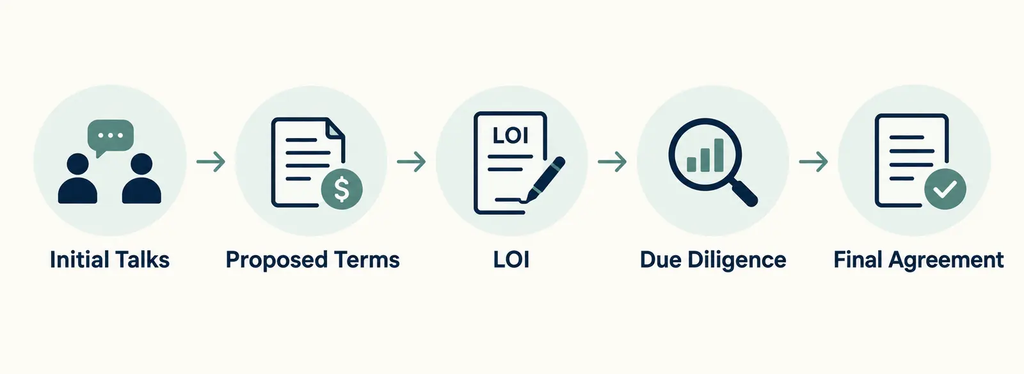
What is the purpose of an LOI?
The main purpose is to find out whether the parties agree enough to keep negotiating. Writing down the major terms can reveal a disagreement about price, timing, financing, or the assets being transferred before either side spends heavily on the final contract. It can also give advisers a practical outline to work from.
An LOI may set rules for the negotiation itself. For example, a buyer may ask for time to examine records while a seller asks the buyer to protect confidential information. A publicly filed business acquisition LOI illustrates how proposed transaction terms, access to records, confidentiality, exclusivity, and conditions can appear in one document. That filing is an example of a real transaction, not a template to copy.
An LOI is most useful when the proposed deal is substantial or has important open questions. For a routine purchase with settled price, quantity, and delivery details, a simpler ordering process may make more sense.
What should a business LOI include?
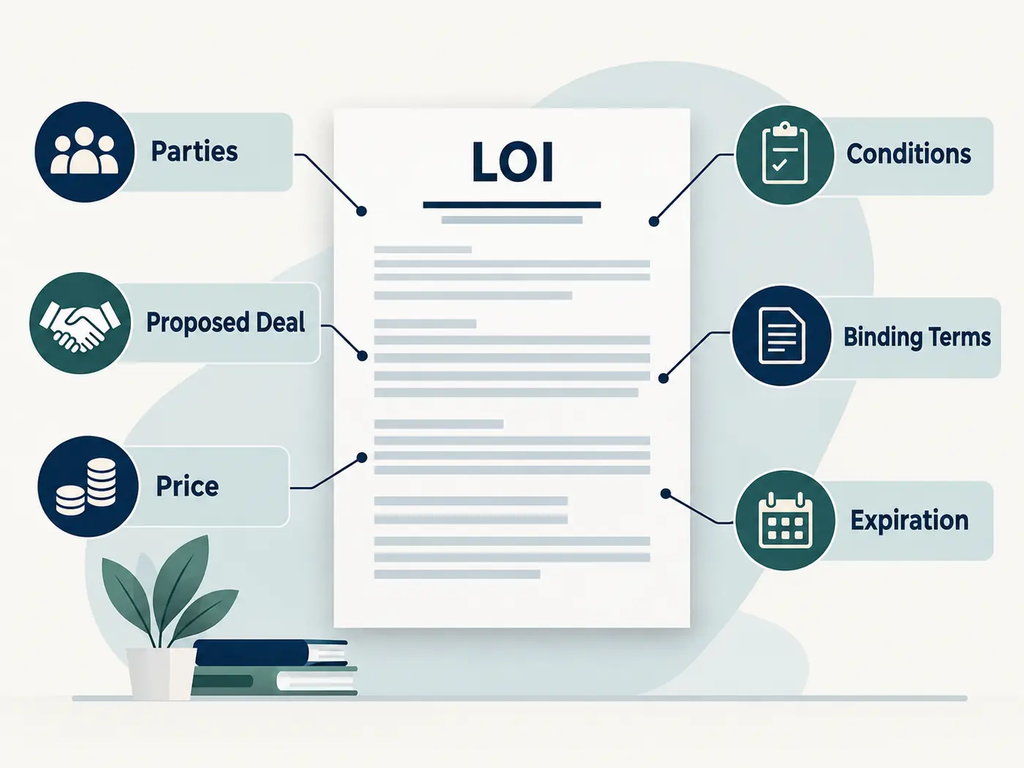
The contents depend on the transaction. A two-page letter for a straightforward arrangement will look different from a detailed acquisition LOI, but the following items give you a practical starting checklist.
| Item | Question to answer |
|---|---|
| Parties and deal | Who is involved, and what is being proposed? |
| Price and payment | Is the amount firm, an estimate, or subject to adjustment? |
| Structure and scope | Is this a purchase of assets, shares, services, property rights, or something else? |
| Conditions | What must happen before a final agreement or closing? |
| Due diligence | What information may each side review, and by when? |
| Timeline | When should review, drafting, and a decision occur? |
| Binding terms | Which provisions, if any, are meant to be enforceable now? |
| End point | When does the LOI expire, and what survives if talks stop? |
Name important exclusions as carefully as inclusions. In a business purchase, “all equipment” can hide a disagreement about leased machinery, personally owned tools, or inventory. In a service arrangement, describe the proposed work without letting a rough outline stand in for a detailed scope and acceptance criteria.
Is a letter of intent legally binding?
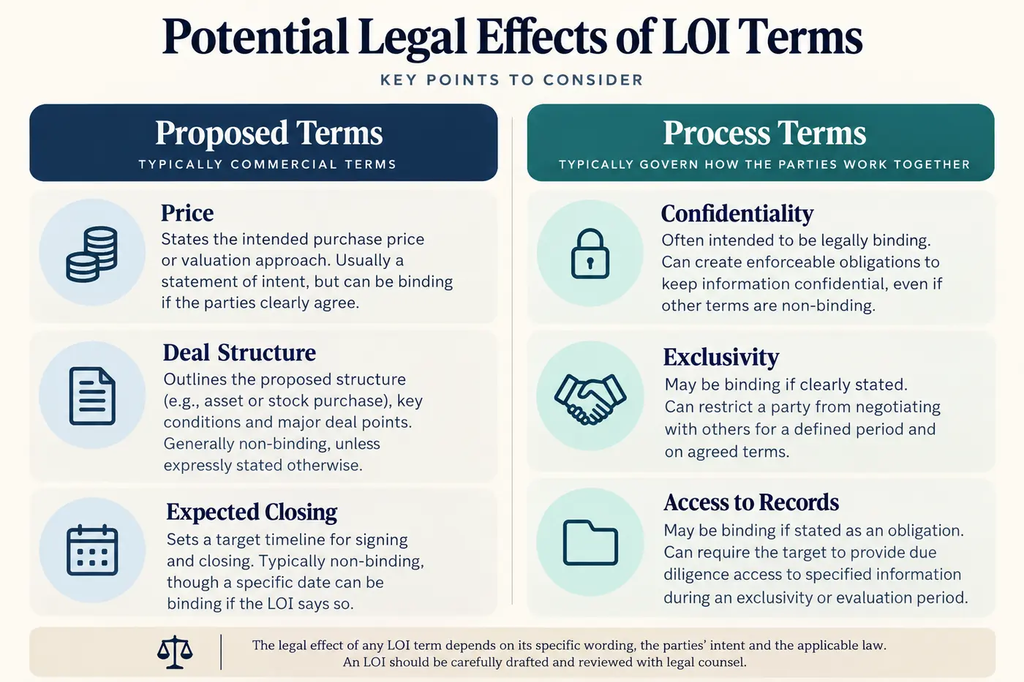
Sometimes, in whole or in part. The phrase “letter of intent” does not decide the legal result. The Legal Information Institute’s explanation of a contract sets out elements such as mutual assent and consideration, while an American Bar Association discussion of purchase agreements warns that an LOI intended to be nonbinding can still create obligations if drafted carelessly.
The safest practical approach is to identify the intended status of each category of terms. An LOI might say that price and the proposed acquisition are subject to a signed final agreement, while confidentiality and a limited exclusivity period take effect immediately. The filed LOI example expressly distinguishes its binding provisions from its proposed transaction terms.
Watch especially for language that says a party will buy, will sell, or must close without making the commitment conditional. Also review any promise to negotiate in a particular way, pay expenses, provide access to information, or stop speaking with other buyers. The governing law and the surrounding facts matter, so get legal advice before relying on a blanket “nonbinding” label.
Letter of intent sample: a simple business example
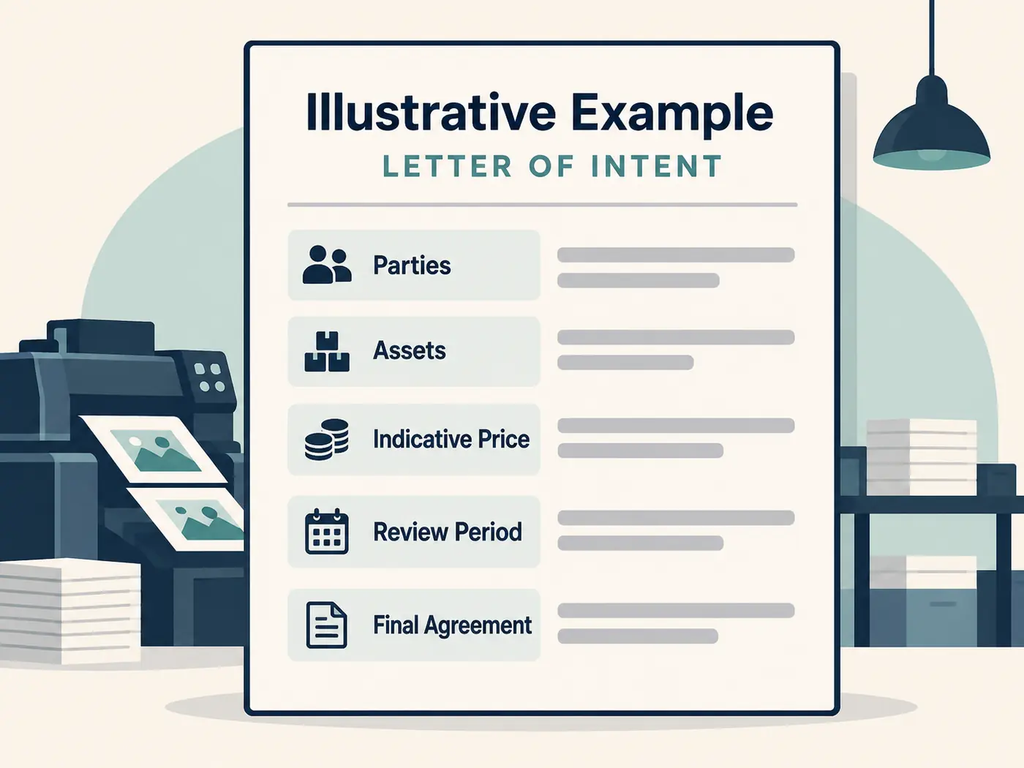
Suppose a buyer is interested in purchasing a neighborhood print shop. Both sides agree that more investigation is needed, but they want to capture the working proposal. The following is an illustration of content, not language ready for signature:
Parties: North Street Printing’s owner and a prospective buyer.
Proposed transaction: Buyer is considering the purchase of specified equipment, inventory, and business assets; the lease is subject to landlord approval.
Indicative price: $240,000, subject to reviewing records and agreeing on an inventory adjustment.
Review period: Buyer may review financial statements, equipment records, and major customer contracts for 30 days.
Confidentiality: Both parties intend to keep shared financial and customer information private.
Status: The proposed purchase would require a separately signed final agreement; any process obligations must be identified and reviewed separately.
The dollar figure and timeline above are fictional examples, not typical prices or recommended deadlines. In a real deal, you would spell out exactly what is included, what information can be shared, what happens if a condition fails, and when any exclusivity ends. A short sample helps you see the shape of an LOI; it cannot resolve the risks of a specific transaction.
LOI vs. purchase order, term sheet, and final contract
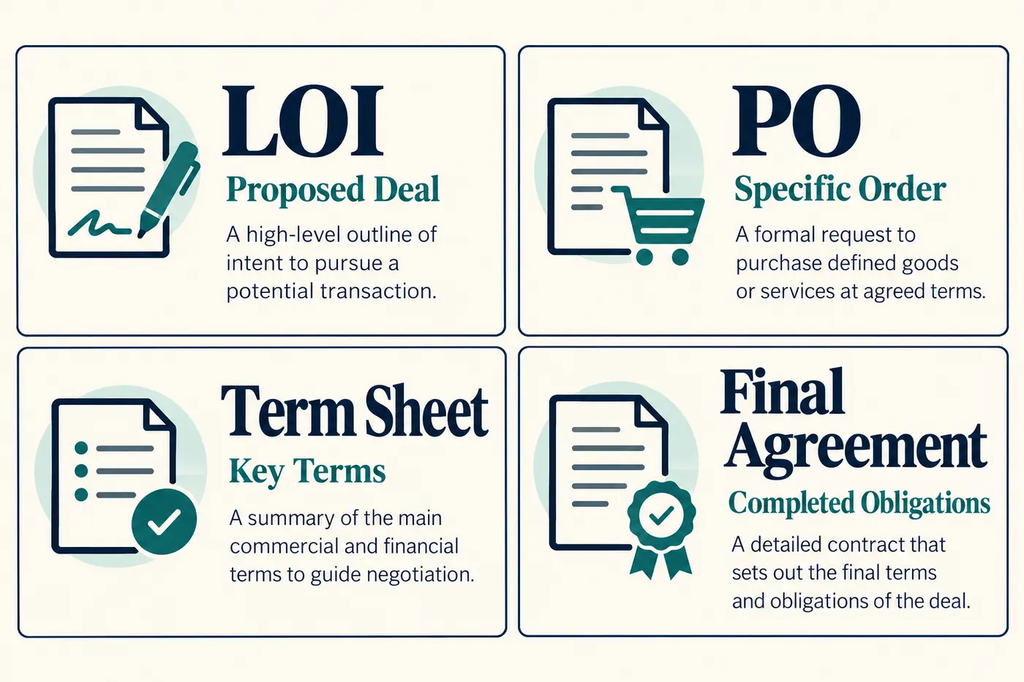
These documents can appear in the same transaction, but they answer different questions. A purchase order generally specifies what a buyer wants to order, while an LOI usually records a proposed relationship or deal before final terms are settled. The legal effect of a purchase order also depends on its wording and acceptance; the federal acquisition rule on quotations and orders offers one clear example of why an order and a preliminary quote are treated differently in a formal purchasing process.
| Document | Main job | Typical detail |
|---|---|---|
| LOI | Outline a proposed deal and negotiation process | Main commercial terms and conditions to resolve |
| Purchase order (PO) | Request identified goods or services | Items, quantities, prices, and delivery information |
| Term sheet | Summarize key proposed terms | Often a compact, list-style deal outline |
| Final agreement | Sets the parties’ completed obligations | Full operative terms, remedies, and signatures |
The title is less important than what the document actually says. An LOI and a term sheet can serve a similar purpose, and either can contain binding terms. For a service project, a statement of work usually describes deliverables and how they will be assessed; Stanford’s description of a statement of work shows how scope, timing, and price fit into that later project document.
If you are moving from a proposal to operating your own service business, starting a pest control business step by step offers an example of how planning, licensing, and customer arrangements become separate practical tasks. The distinction is useful: an LOI can frame a proposed deal, but it does not replace the detailed paperwork needed to carry it out.
How to prepare and review an LOI
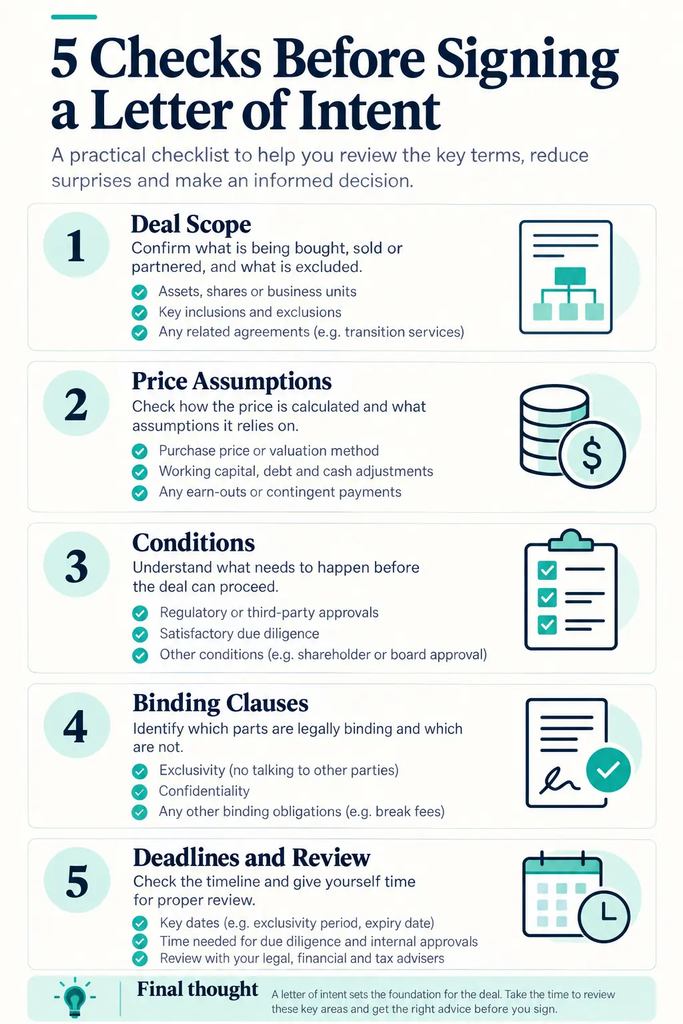
Start with the business questions before drafting formal wording. If you cannot clearly describe the proposed transaction, price assumptions, missing information, and decision timeline, the letter will probably create more confusion than clarity.
- Define the proposed deal. Identify the parties, the assets or services involved, and the major terms still open.
- List the conditions. Consider financing, approvals, record review, inspections, and a final signed agreement where relevant.
- Separate proposed terms from immediate obligations. Mark any intended confidentiality, exclusivity, access, expense, or termination terms for careful review.
- Check deadlines and exit routes. State when negotiations or an exclusivity period end and what happens if no deal is reached.
- Review before signing. Ask an attorney familiar with the transaction and applicable law to check important wording and local requirements.
One detail I would not overlook is the difference between permission to investigate and a promise to complete the deal. You may need access to documents to decide whether to proceed, but that access should not accidentally become a commitment to buy. Keep the sequence explicit.
Common LOI mistakes to avoid
The most frequent problem is vague wording where precision matters. If an exclusivity clause prevents a seller from talking to anyone else, it should have a clear scope and end date. If a price depends on inventory or debt, the adjustment method should be explained or expressly left for the final agreement.
Another mistake is treating an LOI as a shortcut around due diligence. A prospective buyer may need to verify accounts, contracts, liabilities, and ownership before agreeing to close. Parties should also avoid sharing sensitive information without understanding the confidentiality rules that apply to it.
Finally, do not assume a signed LOI guarantees completion. Financing can fail, facts can change, and the parties may never agree on the final terms. The point of a well-written LOI is to make those open questions visible early.
Conclusion
Understanding what is an loi in business starts with its role: it records a serious proposal and a path to a final decision. A useful LOI identifies the deal’s key assumptions, spells out the next steps, and makes clear which terms, if any, bind the parties now. Before you sign one, use the checklist above to mark every unresolved issue and have an attorney review the terms that could affect your rights.
Frequently asked questions
What is the purpose of the LOI?
Its purpose is to put the broad terms of a proposed deal in writing before the parties negotiate a full agreement. It can also organize due diligence, set a timetable, and establish rules for sharing information while discussions continue.
What is the difference between an LOI and a PO?
An LOI usually sketches a proposed transaction that still needs negotiation or investigation. A purchase order identifies goods or services a buyer wants to order, often with quantities, prices, and delivery details. Whether either document creates a legal obligation depends on its exact terms and the circumstances.
Who prepares the LOI?
Either side may prepare the first draft, often with help from its lawyer or business advisers. In an acquisition, the prospective buyer commonly proposes terms, but both sides should review and negotiate the wording before signing.
Is an LOI a legal document?
Yes, it is a document with possible legal consequences. Some LOIs are intended to leave the proposed deal open, yet particular clauses can still be enforceable. Have a qualified attorney review the document for your transaction and jurisdiction.
What is an LOI in real estate?
It is a preliminary outline of a proposed property sale or commercial lease. It may address price or rent, the property, the review period, contingencies, and a target date before a final purchase contract or lease is negotiated.
Can you back out after signing a letter of intent?
That depends on what you agreed to and on applicable law. A party may be free to end a proposed deal while still owing duties under a binding confidentiality or exclusivity clause. Read the termination and survival provisions before deciding what to do.