
What Is AE in Business?
If you have seen the abbreviation “AE” in a job posting, sales meeting, CRM dashboard, or company organization chart, you may wonder what AE is in business and what the person actually does.
In most sales and business contexts, AE stands for Account Executive. An Account Executive is usually responsible for working with prospective customers, understanding their needs, presenting a company’s product or service, negotiating terms, and helping turn qualified opportunities into paying customers.
The exact responsibilities are not identical at every company. An AE at a software company may focus heavily on demonstrations and closing qualified leads, while an Account Executive at a smaller business may handle everything from prospecting to closing and follow-up.
Quick Answer: What Does AE Mean in Business?
AE most commonly means Account Executive in business. An Account Executive is a sales professional who manages opportunities and client relationships with the goal of generating revenue.
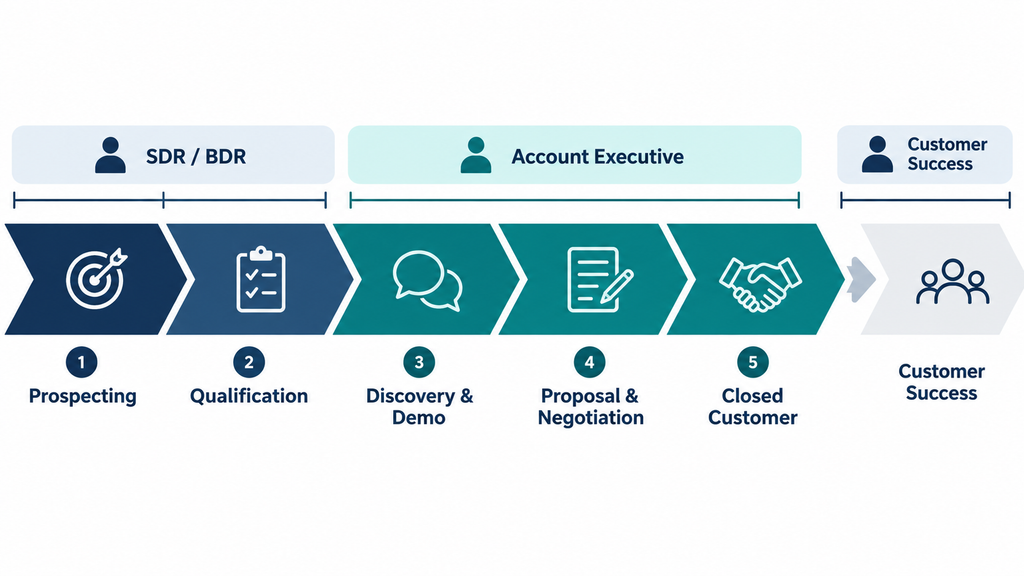
In many modern sales teams, an AE takes over after a Sales Development Representative, or SDR, qualifies a prospect. The AE then conducts discovery calls, explains the solution, manages objections, prepares proposals, negotiates terms, and works toward closing the sale.
Salesforce describes Account Executives as salespeople who build customer relationships and move qualified leads toward a deal, while HubSpot similarly describes the position as one responsible for managing client relationships and progressing opportunities through the purchasing process.
The important point is that an AE is usually much more than someone who simply delivers a sales pitch. The job combines sales, communication, problem-solving, relationship management, negotiation, and pipeline management.
What Does an Account Executive Do?
An Account Executive helps move a potential customer from interest to a purchasing decision.
Imagine that a company receives a lead from someone interested in its software. An SDR might initially contact that person, confirm that the company could be a good fit, and arrange a meeting. The Account Executive may then take responsibility for the opportunity.
A typical AE could:
- Research the prospect and company.
- Conduct a discovery meeting.
- Identify the prospect’s problems and priorities.
- Explain how the company’s product or service could help.
- Demonstrate the product when appropriate.
- Answer questions and handle objections.
- Prepare or discuss pricing and proposals.
- Negotiate contract terms.
- Ask for the business and close the deal.
- Coordinate the handoff to customer success or another post-sale team.
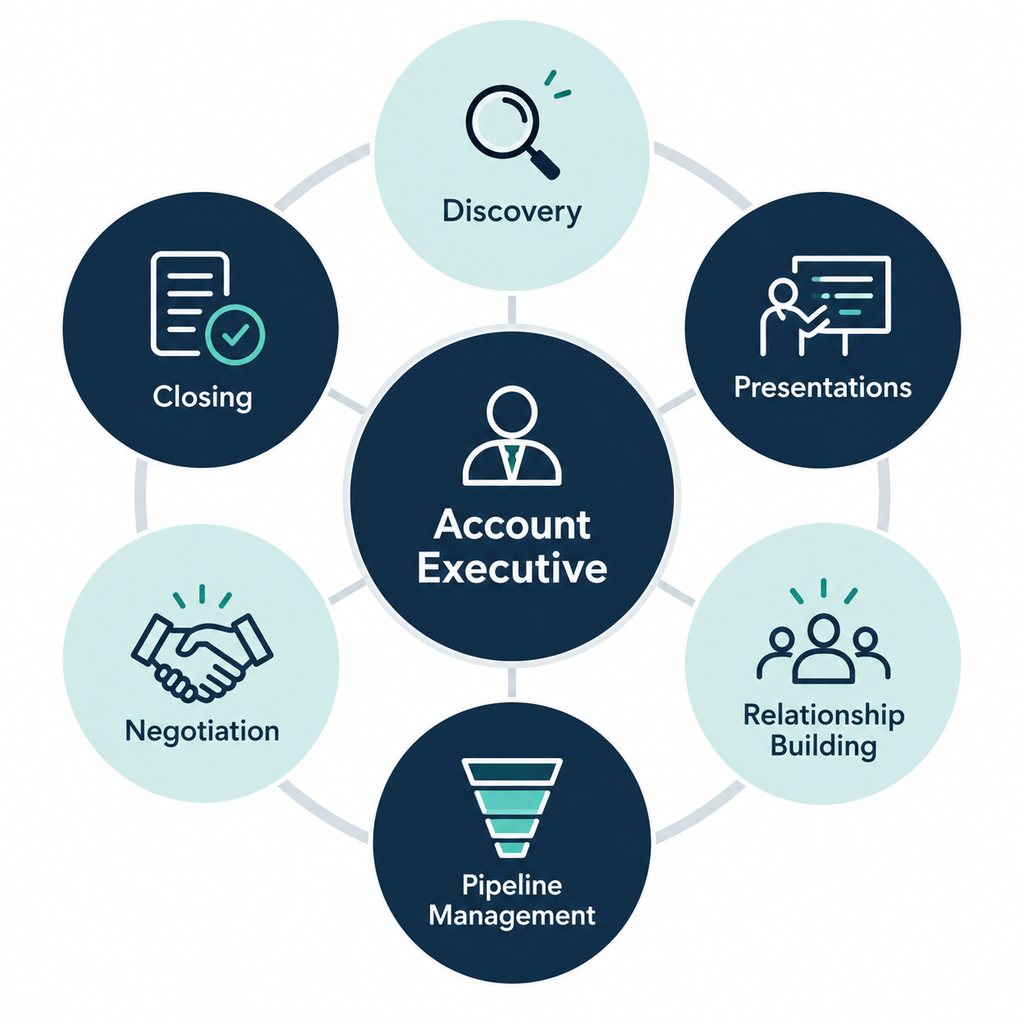
A current Salesforce explanation of the Account Executive role places particular emphasis on discovery, relationship building, presenting solutions, negotiation, and closing.
However, this workflow varies substantially between companies. An AE working at a startup may have to find many of their own prospects, while a larger sales organization may have SDRs or BDRs responsible for creating qualified opportunities.
What Are the Main Responsibilities of an AE?
There is no universal Account Executive job description, but several responsibilities appear repeatedly across current AE positions.
Running Discovery Calls
An AE needs to understand what the prospect is actually trying to accomplish before proposing a solution. That means asking useful questions about problems, priorities, current processes, timing, decision-makers, and desired outcomes.
Good discovery is not simply a checklist. The AE needs to listen carefully enough to determine whether the company’s solution genuinely fits the customer’s situation.
Presenting Products or Services
Once the AE understands the prospect’s requirements, the next job is explaining the solution in a relevant way.
That could mean:
- Giving a software demonstration
- Delivering a sales presentation
- Explaining service packages
- Preparing a proposal
- Creating a business case
- Answering technical or commercial questions
The strongest presentation connects specific capabilities to the customer’s actual problem instead of giving the same generic pitch to everyone.
Negotiating and Closing Deals
A major part of the AE role involves moving an interested prospect toward a final decision.
Negotiation could involve price, contract length, implementation terms, quantities, payment schedules, services, or other commercial conditions.
Closing does not necessarily mean pressuring someone into buying. In a consultative sales process, the AE should help both sides determine whether the agreement makes business sense.
Managing the Sales Pipeline
AEs commonly use customer relationship management software, or CRM software, to track opportunities.
For each deal, they may record:
- Contact information
- Company information
- Meeting notes
- Sales stage
- Estimated deal value
- Next action
- Decision-makers
- Expected close date
- Proposal status
Accurate pipeline records also help managers forecast potential revenue.
Building Client Relationships
Some AEs focus mainly on winning new customers. Others continue managing customer relationships after the initial sale.
This is one reason Account Executive job descriptions sometimes appear inconsistent. Indeed notes that Account Executives can both acquire new clients and maintain business relationships with existing customers, depending on the company and industry.
AE vs SDR: What Is the Difference?
One of the easiest ways to understand the AE role is to compare it with an SDR.
An SDR, or Sales Development Representative, generally focuses on generating or qualifying opportunities. An AE generally focuses on progressing qualified opportunities and closing business.
| Area | SDR | Account Executive |
|---|---|---|
| Primary focus | Prospecting and qualification | Managing and closing opportunities |
| Typical funnel stage | Top of funnel | Middle and bottom of funnel |
| Common tasks | Outreach, qualification, booking meetings | Discovery, demos, proposals, negotiation |
| Main goal | Create qualified opportunities | Generate closed revenue |
| Common metrics | Meetings, qualified leads, pipeline created | Revenue, quota, win rate, deal value |
Salesforce’s comparison of SDR and Account Executive responsibilities follows this general division.
However, never assume every company uses the titles in exactly the same way. A smaller company may hire a “full-cycle AE” who is expected to prospect, qualify, present, negotiate, and close without an SDR.
Account Executive vs Account Manager
These titles are also commonly confused.
An Account Executive is usually more focused on winning business. An Account Manager is often more focused on managing customers after the sale.
A simplified structure looks like this:
Account Executive → wins the customer
Account Manager → develops the ongoing account
An Account Manager might concentrate on retention, renewals, relationship management, service coordination, or expansion opportunities.
Yet the distinction is not universal. Some companies expect their AEs to continue managing accounts after closing them.
That is why I recommend reading the responsibilities instead of judging a role only by its title.
What Is an AE in Tech?
If someone asks, “What is an AE in tech?” they are usually referring to an Account Executive selling technology products or services.
Software companies are one of the industries where the AE title is especially common.
A technology AE may:
- Run software demonstrations
- Conduct discovery calls
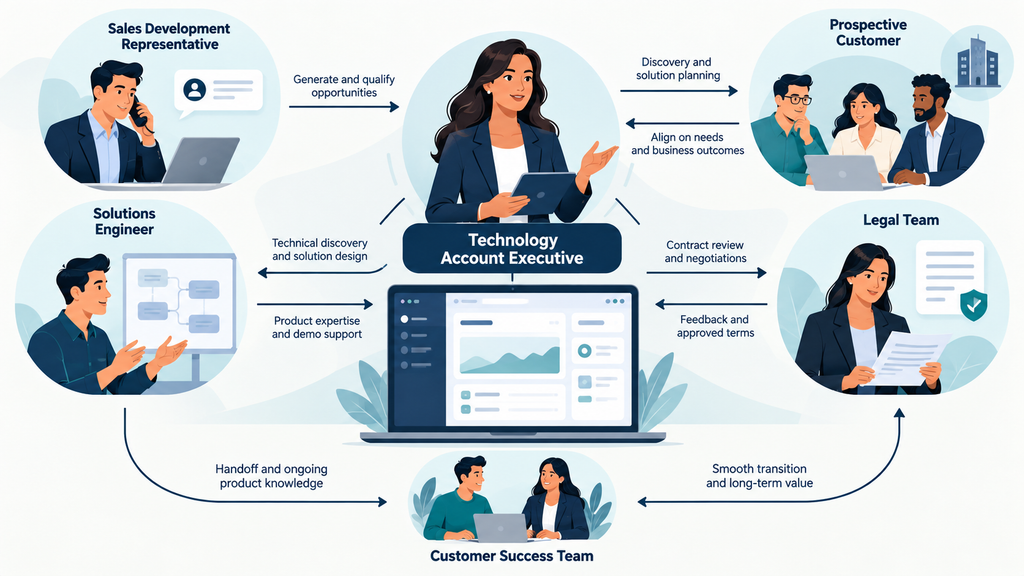
- Work with technical specialists
- Build business cases
- Manage multiple decision-makers
- Discuss implementation requirements
- Negotiate subscription agreements
- Maintain sales forecasts
- Work toward a revenue quota
For example, current HubSpot Account Executive roles include responsibilities such as prospecting, discovery, demonstrating software, managing opportunities, negotiating, and closing business.
Technology deals can also involve multiple stakeholders. An AE might need approval from finance, IT, operations, management, legal, procurement, and the eventual users of the product before a purchase can happen.
What Skills Does an Account Executive Need?
The best AE skills combine communication with commercial judgment.
Communication
Account Executives speak with prospects, customers, managers, technical specialists, and other internal teams. They need to explain complex ideas clearly without overwhelming the listener.
Active Listening
Sales is not only about talking.
An AE who understands the prospect’s priorities can make a much more relevant recommendation than someone who immediately launches into a sales pitch.
Negotiation
Account Executives often have to balance what the buyer wants with what their company can reasonably offer. Negotiation skills help them find workable terms without unnecessarily damaging value.
Business Acumen
A strong AE understands that customers do not normally buy a product merely because it has interesting features.
They buy because they expect the product or service to solve a problem, reduce a cost, create revenue, save time, lower risk, or deliver another meaningful outcome.
Organization
One AE may manage many open opportunities simultaneously.
That makes follow-ups, scheduling, CRM updates, proposals, and next steps important. A forgotten follow-up can mean losing a deal that was otherwise progressing well.
CRM Skills
Many AE jobs require experience with CRM systems.
These platforms help sales teams track prospects, contacts, communications, pipeline stages, forecasts, and closed business.
If you are building your own organization rather than pursuing an AE career, understanding where sales fits into the wider company is equally important. This guide to what an entrepreneur should do after creating a business plan explains how staffing, operations, marketing, and execution fit together after the planning stage.
What Is an AE Job Like Day to Day?
There is rarely one identical daily schedule.
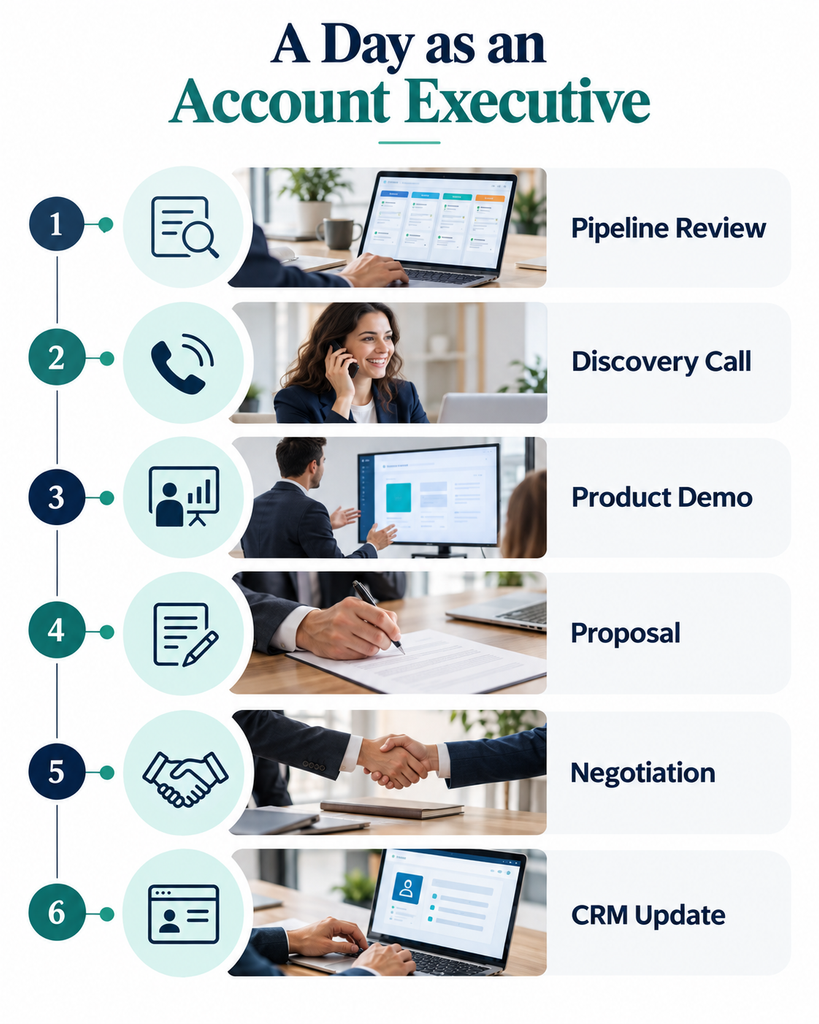
A typical AE day could include checking the CRM in the morning, reviewing upcoming deals, preparing for meetings, conducting discovery calls, giving demonstrations, following up on proposals, negotiating with prospects, coordinating internally, and updating forecasts.
A simplified day might look like this:
| Time | Possible AE Activity |
|---|---|
| Morning | Review pipeline and priority opportunities |
| Late morning | Discovery calls |
| Midday | Product demonstration or presentation |
| Afternoon | Follow-ups and proposals |
| Later afternoon | Negotiations or internal deal meetings |
| End of day | Update CRM and prepare next actions |
Some Account Executives spend substantial time prospecting as well. Others receive most opportunities from marketing, SDRs, BDRs, partnerships, or inbound inquiries.
HubSpot’s description of its current AE roles illustrates this variation. Some positions explicitly include outbound lead generation alongside discovery, demonstrations, pipeline management, and closing.
How Is an Account Executive Measured?
Because an AE is usually a revenue-producing role, performance tends to be measurable.
Depending on the organization, management may monitor:
- Sales revenue
- Quota attainment
- Number of closed deals
- Win rate
- Average deal value
- Pipeline value
- Sales-cycle length
- Forecast accuracy
- Conversion between sales stages
Not every company uses all of these metrics.
An AE selling a high-volume service might close many relatively small transactions. An enterprise technology AE might work on only a handful of large opportunities over several months.
The correct performance measures depend on the business model.
For business owners, revenue also needs to be separated from profitability. A company can produce more sales without creating proportional profit. Rarely Notes’ guide to building profitable business revenue demonstrates why businesses need to evaluate customer acquisition, retention, costs, and gross profit rather than focusing on sales volume alone.
Account Executive Salary: How Much Does an AE Make?
Account Executive compensation varies widely.
Salary depends on factors such as:
- Industry
- Experience
- Location
- Company size
- Market segment
- Deal complexity
- Sales quota
- Commission structure
- Individual performance
According to Indeed’s current Account Executive salary data, the reported average base salary was about $84,177 per year, with reported average commission of $20,000 per year, based on data updated September 20, 2026. These numbers can change over time and should be treated as a current market reference rather than a guaranteed salary.
This distinction matters because many sales roles use variable compensation.
You may also see the abbreviation OTE, which means on-target earnings. OTE generally combines base salary with the variable compensation someone is expected to earn when they achieve the specified performance target.
For example, an AE compensation package may include:
Base salary + commission or bonus = potential total compensation
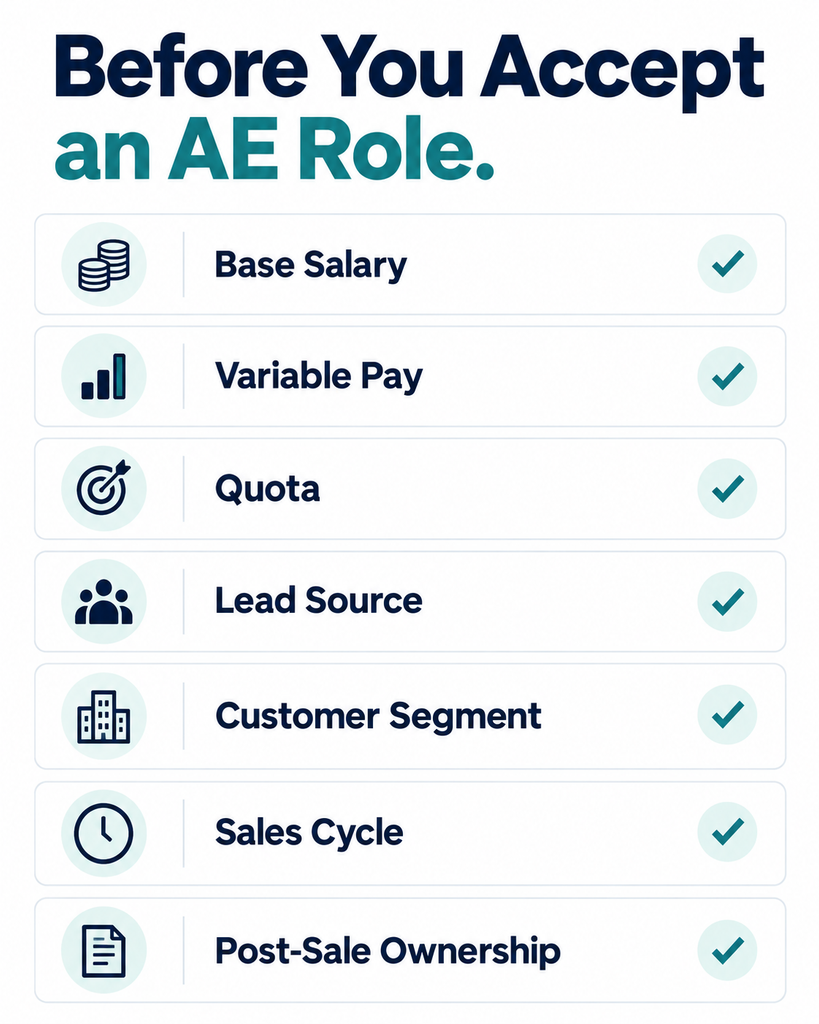
The actual structure varies substantially between employers, so applicants should compare base salary, variable pay, quota, commission rules, benefits, and expectations rather than looking only at a headline OTE number.
How Do You Become an Account Executive?
There is no single mandatory path.
Indeed’s Account Executive career guide notes that many employers prefer candidates with undergraduate education, while relevant sales experience is also important.
A common sales-career route looks like:
SDR/BDR → Account Executive → Senior AE → Enterprise or Strategic AE
Another person may move into account executive work from customer service, account management, retail sales, recruiting, business development, marketing, or another client-facing position.
If you want to become an AE, I would concentrate on six areas:
- Learn how a professional sales process works.
- Develop strong communication and listening skills.
- Get comfortable speaking with customers.
- Learn basic CRM and pipeline management.
- Practice discovery, presentation, and negotiation.
- Gain measurable sales experience whenever possible.
A bachelor’s degree can help for some positions, but actual hiring requirements vary considerably. Always read current job postings for the industry you want to enter rather than assuming every employer expects the same qualification.
What Should You Look for in an AE Job Description?
The title alone does not tell you enough.
Before applying, look for details about:
Prospecting Expectations
Does the company provide qualified leads, or are you responsible for finding your own?
Customer Segment
Selling to small businesses is different from selling to large enterprises with multiple stakeholders and lengthy approval processes.
Sales Cycle
Some deals close quickly. Others can require several months of discussions, reviews, demonstrations, approvals, and negotiations.
Quota
Understand what performance target the company expects you to achieve.
Compensation
Look at base salary, variable compensation, OTE, commission rules, accelerators, bonuses, and benefits.
Existing vs New Business
Determine whether the role focuses on acquiring new customers, expanding existing accounts, or both.
Post-Sale Responsibilities
Find out whether the AE hands customers to customer success or continues managing the relationship.
These questions make it much easier to compare two positions that both use the title “Account Executive” but are actually very different jobs.
Is an Account Executive a Sales Position?
Usually, yes.
An Account Executive is typically a sales-focused position with responsibility for generating or protecting revenue. However, the title is used across several industries, and its exact meaning can shift.
Advertising, public relations, technology, professional services, media, financial services, and other industries may all employ Account Executives.
In advertising or agency environments, for example, the role may involve more coordination between the client and internal creative teams. In software sales, an AE may spend much more time conducting discovery, demonstrating products, negotiating contracts, and managing a revenue quota.
Glassdoor’s Account Executive job description also reflects this variety, describing responsibilities ranging from developing new accounts to maintaining client relationships and negotiating agreements.
Why Are Account Executives Important to a Business?
Account Executives operate close to the point where customer interest becomes revenue.
Marketing may create awareness. SDRs may generate meetings. Product teams may build the solution. Customer success may support clients after purchase.
But someone still has to understand the buyer, connect the solution to the buyer’s requirements, manage the commercial process, and move the opportunity toward an agreement.
That is usually where the AE becomes important.
A strong AE can also provide valuable feedback to the wider organization. Because Account Executives regularly speak with potential customers, they may repeatedly hear questions about pricing, missing features, competitors, implementation concerns, customer priorities, or reasons deals fail.
Those conversations can help sales leaders, marketers, product teams, and executives understand what is happening in the market.
Frequently Asked Questions
What does AE mean in business?
AE most commonly stands for Account Executive in a business or sales context. The Account Executive typically manages sales opportunities, builds prospect or client relationships, presents solutions, negotiates terms, and helps close deals.
What is AE business?
When someone refers to “AE” in a business setting, they are normally talking about the Account Executive position rather than a type of business. The exact job varies by employer, but the role is generally connected to sales, client relationships, and revenue generation.
What is an AE in sales?
An AE in sales is an Account Executive who typically works with qualified prospects and moves them through later stages of the sales process. Common responsibilities include discovery calls, demonstrations, proposals, negotiation, pipeline management, and closing business.
What is an AE job?
An AE job is generally a client-facing sales position. Account Executives communicate with potential customers, understand their needs, recommend appropriate solutions, manage sales opportunities, and work toward agreed revenue or sales goals.
What is an AE in tech?
An AE in tech is normally a technology Account Executive who sells software, hardware, cloud services, or another technology solution. Technology AEs may run product demonstrations, coordinate with technical specialists, manage complex sales processes, and negotiate contracts.
Is an Account Executive higher than an SDR?
In many sales organizations, Account Executive is a common next step after SDR or BDR because AEs usually take responsibility for closing revenue. However, company hierarchies and titles differ, so you should not assume that every organization structures these positions identically.
Do Account Executives make commission?
Many Account Executive positions include variable compensation such as commissions or performance bonuses in addition to base salary. The exact percentage, quota, payment schedule, and commission rules vary by employer, industry, and sales model.
Conclusion
So, what is AE in business? In most business and sales conversations, AE means Account Executive, a professional who helps turn sales opportunities into customers by understanding needs, presenting solutions, managing relationships, negotiating agreements, and closing business.
What makes the role slightly confusing is that no two companies define it exactly the same way. Some AEs receive qualified leads from SDRs, some prospect for their own opportunities, and some continue managing accounts long after the first sale.
If you are considering an AE career, do not judge an opportunity by the title alone. Review the sales cycle, target customer, lead source, quota, base salary, commission structure, responsibilities, and post-sale expectations. Those details will tell you far more about the actual job than the letters “AE” ever will.