Is Toymail Still in Business? Here’s What Really Happened
If you typed ” Is toymail still in business into Google, you probably owned one of those cuddly wifi toys, or you saw an old Shark Tank clip and got curious. Maybe you found a Talkie in a closet and wondered if you could still use it. Whatever brought you here, you deserve a straight answer instead of another recycled blog post.
So here it is, right away: no, Toymail is not still in business. The company shut down years ago. But that one line does not tell you the whole story, and the whole story is actually more interesting than most people realize.
I dug through funding records, Shark Tank archives, court filings, and interviews with the founder to put together the most complete picture you will find anywhere online. This is not a copy-paste job. You will find the real timeline, the real numbers, the conflicting net worth claims floating around other sites, and what the founder is doing now.
Let’s get into it.
Quick Answer: Is Toymail Still in Business?
No. Toymail closed its doors around late 2018 and filed for bankruptcy that November. Its website went dark, its social media accounts stopped posting by early 2019, and the company has had no active operations since. Some old Talkie toys still float around on Amazon and eBay through resellers, but there is no company behind them anymore, no app support, and no customer service.
That is the short version. Now let’s talk about how it got there, because it is a genuinely good lesson in what happens after a Shark Tank win.
What Was Toymail, Exactly?
Before we go further, a quick primer for anyone who has never seen the show or the product.
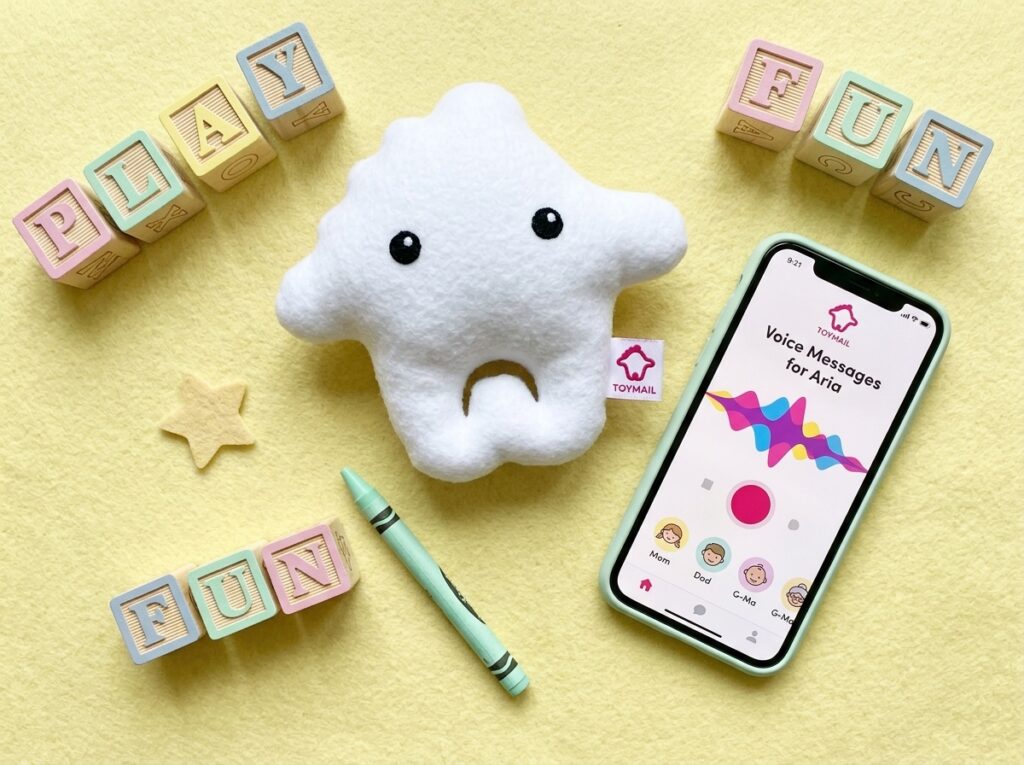
Toymail made wifi connected plush toys called Talkies. Think of a stuffed animal that could send and receive short voice messages, kind of like a walkie-talkie for kids who were too young for a phone. Parents, grandparents, and friends recorded messages through a companion app, and the toy played them back. Kids could talk back the same way.
The pitch was simple and honestly pretty smart. Parents were nervous about giving young kids screens or phones, but they still wanted an easy way to stay in touch during the day, at daycare, or when traveling between two households. Toymail promised a connection without a screen.
How the Talkie Actually Worked
Setting up a Talkie was meant to be simple enough for a busy parent to handle in a few minutes. You connected the toy to your home wifi network through the companion app, created a family account, and invited approved contacts, usually parents, grandparents, or close family friends. Once that was set up, anyone on the approved list could send a short voice message straight to the toy from their phone, no matter where they were.
The child did not need a screen, a login, or even the ability to read yet. They simply picked up the toy, and it played the message. To reply, the child pressed a button on the toy and spoke, and the recorded reply went back through the app to whoever had sent the original message. It was designed around the idea that very young kids should be able to stay in touch with loved ones without facing the usual technology hurdles that come with phones or tablets.
Later on, Toymail tried to build on this foundation with its Cloud subscription service, adding features such as bedtime sound playback, scheduled reminders read aloud by the toy, and playful voice filters that could make messages sound silly or fun for younger kids. The idea was to turn a one-time toy purchase into an ongoing relationship with the brand, similar to how a streaming subscription keeps customers coming back long after the initial signup.
Toymail’s Shark Tank Story: The $600K Deal Explained
Toymail was founded in 2013 by Gauri Nanda, who co-founded the company with Audry Hill. Nanda was not a first-time founder either. She had already built a name for herself with Clocky, the alarm clock on wheels that literally runs away from you so you have to get out of bed to shut it off.
The Pitch: What They Asked For
Toymail appeared on Shark Tank Season 8, and going into the pitch, Nanda asked for $250,000 in exchange for 2.5 percent equity, which valued the company at around $10 million.
What is less known, and honestly more interesting, is that the founders almost never made it on the show at all. Toymail’s producers reached out first, and the founders turned down the initial invitation because they wanted the product to be as polished as possible before going on national television. They waited, refined the toy, and only then agreed to appear. That patience paid off in a big way.
The Deal: What Actually Happened
On air, Chris Sacca and Lori Greiner offered $600,000 for 5 percent equity, and the founders accepted. That pushed the company’s implied valuation up to roughly $12 million, well above what Nanda had originally pitched.
Here is the detail that most articles skip entirely, and it matters a lot if you are trying to understand why later “Toymail net worth” numbers online look so inflated. Despite the enthusiastic on-air agreement, the investment never actually closed after due diligence. This happens more often on Shark Tank than viewers realize. A handshake deal on camera does not always survive the paperwork stage. So while Toymail got the exposure of a Shark Tank deal, it did not necessarily get the full $600,000 in the bank, as the episode implied.
Before the show, Toymail was not starting from zero either. By the time Nanda appeared on Shark Tank, Toymail had already raised $1.5 million from Amazon, Verizon, and Y Combinator, which is part of why the sharks were interested in the first place.
Why Did Toymail Go Out of Business?
This is the part most articles gloss over with one vague sentence. Here is the fuller picture based on what actually happened.
Hardware is brutally expensive. Toymail was not a simple app. It was a physical device with Wi-Fi chips, batteries, speakers, and a molded plush housing, all of which needed to be manufactured, shipped, and supported. That is a completely different cost structure than a software startup, and it eats cash fast.
Retail pressure squeezed margins. Getting shelf space at big retailers is not free. Retailers take their cut, demand marketing support, and expect steady inventory, all of which strains a small company’s cash flow long before it becomes profitable.
Recurring revenue never really stuck. Toymail tried to build a subscription layer called Toymail Cloud, with add-on apps for bedtime sounds, reminders, and voice filters. The idea was smart on paper, providing the company with recurring income rather than relying solely on one-time toy sales. In practice, converting toy buyers into long-term subscribers is hard, especially for a product aimed at young kids whose interests and habits change fast.
Competing with Amazon Echo and giant toy brands. Around the same time, voice assistants like Amazon Echo were becoming common in homes, and toy giants had far more resources to iterate quickly. A small connected toy startup was competing against companies with entire R&D departments and massive distribution networks.
Put those pressures together, and by November 2018, Toymail filed for bankruptcy and ceased operations. Its website and social accounts went silent by 2019, and the brand has remained inactive ever since.
The Due Diligence Problem, Explained Simply
A lot of people assume that once a deal is shaken on live TV, the money shows up in the company’s bank account soon after. That is rarely how it works, and Toymail is actually a good example of why.
After the cameras stop rolling, both sides bring in lawyers and accountants to review the company’s actual financials, contracts, intellectual property, and projections. This is called due diligence, and it is where a surprising number of Shark Tank deals quietly fall apart or get renegotiated. Sometimes the sharks find something in the numbers they did not like. Sometimes, the founders decide the terms are not actually workable once they see them on paper. Either way, the on-air agreement is really just the starting point of a negotiation, not the finish line.
For a hardware company like Toymail, this stage would have involved scrutinizing manufacturing costs, supplier contracts, existing debt, and how sustainable the subscription revenue really was. Given how the company’s finances played out afterward, it is reasonable to think this stage surfaced concerns that made the full $600,000 investment harder to justify at the valuation everyone agreed to on camera.
The Bigger Connected Toy Market Problem
Toymail was not operating in a vacuum. The mid 2010s saw a wave of connected toy startups trying to bring wifi, apps, and voice features into traditional toys. Very few of them survived long-term. The pattern tends to repeat itself: a company gets attention for a clever idea, raises a modest amount of funding, and then runs into the reality that consumer hardware requires constant reinvestment in new tooling, firmware updates, cloud infrastructure, and customer support, all of which cost money long after the initial product ships.
Larger companies with deeper pockets could absorb those costs while they built market share. Smaller startups like Toymail had to hit profitability much faster, with far less room for error, and far less patience from investors if growth slowed even briefly.
If you are building any kind of physical-product business yourself, this story is a genuinely useful case study of how quickly manufacturing and inventory costs can outpace a young company’s revenue. It is worth reading up on how founders typically pay themselves as a business owner and how liability and business protection actually work before scaling a hardware idea, since those decisions shape how much runway a company really has when growth stalls.
Toymail After Shark Tank: The Full Timeline
Here is the timeline laid out clearly, since most of the confusion online stems from articles that mix up dates.
| Year | What Happened |
|---|---|
| 2013 | Gauri Nanda and Audry Hill founded Toymail in New York City |
| 2013 to 2016 | The company develops the Talkie toy and secures early backing, including support tied to Amazon, Verizon, and Y Combinator |
| Feb 2017 | Toymail airs on Shark Tank, Season 8, Episode 17. Founders agree on air to $600,000 for 5 percent equity from Chris Sacca and Lori Greiner |
| 2017 to 2018 | Company expands product lineup and launches Toymail Cloud subscription apps (Sleepie, Remindie, Voicie) |
| Nov 2018 | Toymail files for bankruptcy and ceases operations |
| 2019 | Website and social media accounts go permanently inactive |
| 2020s | No new products, no company activity. Old inventory occasionally resold on Amazon and eBay by third parties |
Interestingly, Toymail was not the only company on that particular episode dealing with a tricky path forward. The same Shark Tank episode also featured Edn Wallgarden, a self-contained hydroponic gardening system, and included an update segment on Insta-Fire, a fire-starting product from an earlier season. If you are curious, Insta-Fire is actually one of the rare companies from that batch that is still thriving today, which makes for an interesting contrast when you compare the two outcomes side by side.
Toymail Net Worth: Why the Numbers Online Do Not Agree
This is where it gets messy, and it is worth calling out directly because it is genuinely confusing when you read a few different articles back-to-back.
You will find wildly different “Toymail net worth” figures scattered across the internet, everything from $3 million to ongoing valuation estimates as if the company were still operating and growing today. Here is the honest breakdown of where these numbers actually come from.
| Claim | Source Basis | Is It Accurate Today |
|---|---|---|
| $10 million valuation | Based on the founders’ initial ask of $250,000 for 2.5 percent | Accurate as a historical pitch valuation, not a current figure |
| $12 million valuation | Based on the on-air deal of $600,000 for 5 percent | Accurate as a historical Shark Tank moment, not a current figure |
| $1.64 million total funding raised | Startup funding trackers | This reflects total lifetime funding across investors, not current worth |
| Ongoing valuation estimates around $3 million | Various net worth aggregator sites | Not verifiable, since the company has had no active operations, revenue, or filings since 2018 |
The honest answer is that Toymail does not have a meaningful net worth today because it is not an operating company. Any site quoting a specific current valuation for a defunct, non-trading private company is guessing, not reporting. The only verifiable numbers are the historical ones tied to the Shark Tank deal and total funding raised before the shutdown, which independent company trackers put at roughly $1.64 million raised over three rounds from 17 investors, while other financial databases list total funding closer to $2.24 million. The discrepancy itself tells you something important, since even professional data firms do not fully agree on the final numbers for a company that shut down without much public reporting.
Can You Still Buy a Toymail Talkie?
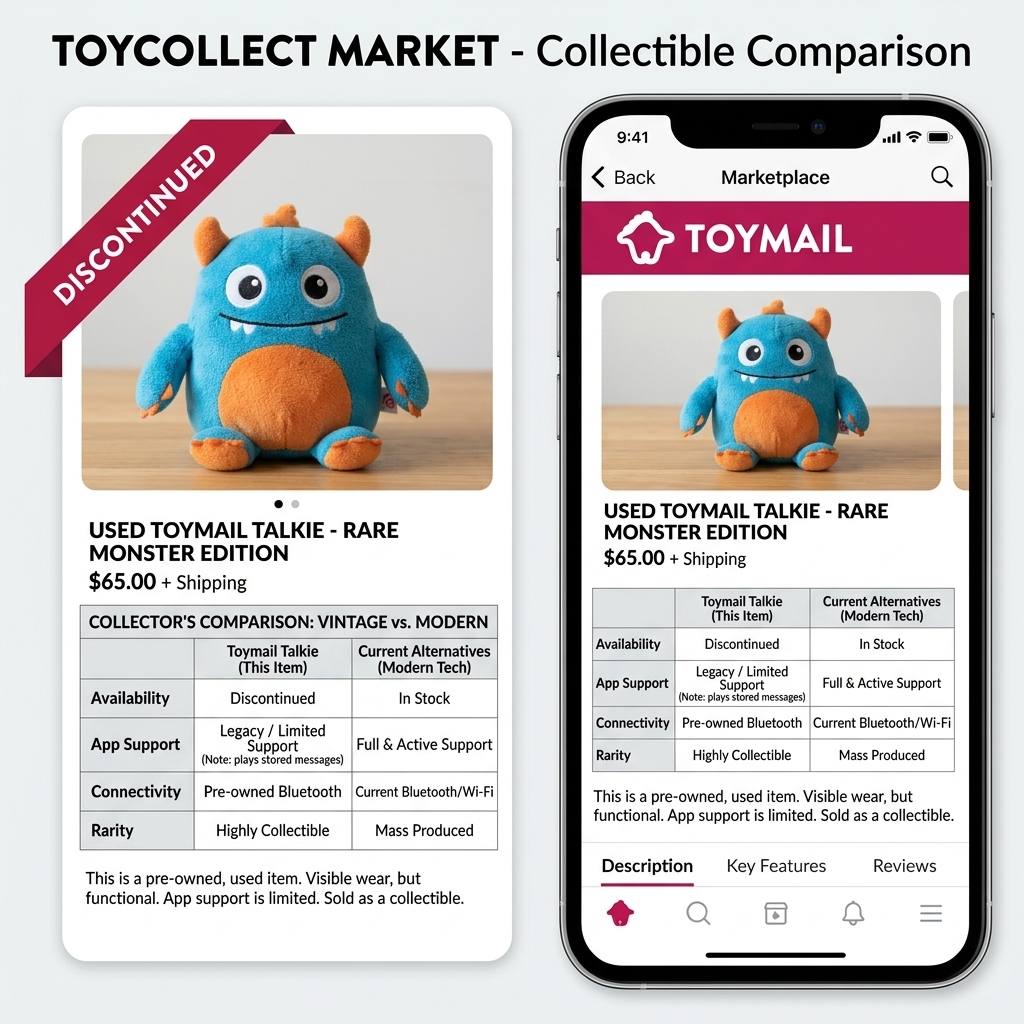
Technically, sometimes, yes. You may still find used Talkie toys listed on Amazon through third-party sellers or on eBay from people clearing out old kids’ items. There is no official Toymail store, no new stock being manufactured, and no guarantee the companion app still functions, since server-side support for a defunct startup’s app is never guaranteed to stay online indefinitely.
If you are buying one secondhand, treat it purely as a collector’s item or a curiosity rather than something you are depending on for daily use. There is no customer support to call if it stops working, and no warranty of any kind.
What Happened to Gauri Nanda After Toymail?
This is the part with the most human interest, and it deserves more attention than it usually gets.
After Toymail shut down, Gauri Nanda returned to one of her earlier inventions, Clocky, the alarm clock on wheels that runs away when it rings. Clocky is still sold today and has kept a loyal following for years, which is a nice bit of continuity for a founder whose bigger, more ambitious startup did not survive.
Nanda’s background is genuinely impressive outside of Toymail, too. She studied electrical engineering and computer science at the University of Michigan before earning a master’s degree in Media Arts and Sciences from MIT, where she originally developed the concept for Clocky as a class project. She was later named one of MIT Technology Review’s 35 Innovators Under 35, and appeared on Forbes’ 30 Under 30 list. Toymail did not work out, but it was one chapter in a career built on inventing quirky, purpose-driven products, and by most accounts, she has continued working at that intersection of technology and everyday behavior since the shutdown.
Lessons for Entrepreneurs: What Toymail’s Story Actually Teaches
Since so many people land on this article while researching startups or thinking about launching their own product, here are the practical takeaways worth sitting with.
- A great Shark Tank moment is not the same as a closed deal. Toymail’s $600,000 offer never fully closed after due diligence, which is more common than most viewers assume. Never treat an on-air handshake as guaranteed funding.
- Hardware businesses burn cash differently than software ones. If you are weighing a physical product idea, look closely at manufacturing, shipping, and retail margins before you scale, the same way you would when starting a sticker business or any other product-based venture where unit costs matter from day one.
- Recurring revenue has to be earned, not assumed. Toymail’s subscription layer was a smart idea that never fully caught on. Building a loyal, paying subscriber base takes more than a good feature; it takes sustained engagement.
- Protect yourself before you scale. Founders juggling manufacturing, retail partners, and cash flow should understand early on whether their setup actually covers theft or inventory loss, since physical-product businesses carry risks that pure-service businesses do not.
- One product line is risky. Toymail leaned almost entirely on the Talkie toy. Diversifying revenue streams earlier might have given it more room to survive a rough patch, a lesson that applies whether you are running a toy company or starting an HVAC business with a single service offering.
Other Shark Tank Products From the Same Episode
Since people researching Toymail often end up curious about the rest of that episode, too, here is some quick context. Toymail’s Shark Tank appearance shared airtime with Edn Wallgarden, a hydroponic home-gardening system, and Hotels by Day, a daytime hotel-booking startup, alongside an update on Insta-Fire, the fire-starting product from an earlier season. Insta-Fire in particular has had a notably different outcome, with reported annual revenue reaching into the millions in the years after its own Shark Tank deal, a useful contrast if you want to see how differently two Shark Tank companies from around the same era can turn out.
What Replaced Toymail in the Market?
One question that naturally follows is what parents use now instead, since the underlying need Toymail tried to solve did not go away just because the company did.
A few paths have taken their place. Some families now rely on smartwatches built specifically for kids, which allow calls, texts, and location sharing with parental controls, without giving a young child a full smartphone. Others lean on Amazon’s own Echo devices with kid-focused features, using voice assistants already built into the home rather than a separate proprietary toy. Some simply stick with older, lower-tech solutions, such as a shared family messaging app on a parent’s phone or a basic walkie-talkie set for short-range use around the house or yard.
None of these options recreates the exact experience Toymail offered, a screen-free plush toy dedicated entirely to voice messages between family members. That specific niche has largely remained empty since Toymail’s shutdown, which is part of why the brand still gets searched years later. People remember the idea fondly, even if the company behind it did not survive.
Expert Tips: How to Spot Whether a Startup Is Really Still Active
If you are ever unsure whether a small company you found online is actually still operating, here are a few quick checks that work well beyond just Toymail.
- Check whether the official website loads and has been updated recently, not just whether the domain still exists.
- Look at social media accounts for actual posting activity in the last 6 to 12 months, not just a profile that still technically exists.
- Search company registries or funding trackers, since bankruptcy filings and “closed” statuses are usually publicly recorded.
- Be skeptical of any site quoting a specific, confident “current net worth” for a company with no recent public activity. That is usually a guess dressed up as a fact.
Pros and Cons of What Toymail Attempted
What Toymail Got Right
- A genuinely useful idea for screen-free communication with young kids
- Strong early backing, including ties to Amazon, Verizon, and Y Combinator
- A memorable, well-executed Shark Tank pitch that boosted brand visibility
Where Toymail Struggled
- High hardware manufacturing and retail costs
- Difficulty converting toy buyers into long-term subscribers
- A Shark Tank deal that never fully closed after due diligence
- Heavy reliance on a single product line in a fast-moving, competitive market
FAQs
Is Toymail still in business in 2026?
No. Toymail has had no active operations since it filed for bankruptcy in November 2018, and its website and social accounts have been inactive since 2019.
Why did Toymail go out of business?
A mix of high manufacturing costs, retail margin pressure, difficulty building recurring subscription revenue, and competition from bigger, better-funded toy and voice assistant companies led to its 2018 bankruptcy filing.
Did the Toymail Shark Tank deal actually happen?
Founders agreed on air to $600,000 for 5 percent equity from Chris Sacca and Lori Greiner, but the investment reportedly never fully closed after due diligence, which is not unusual for Shark Tank deals.
What is Toymail’s net worth today?
There is no verifiable current net worth, since the company has not operated since 2018. Figures you see online quoting a specific present-day valuation are estimates, not confirmed facts.
Can I still buy a Toymail Talkie toy?
You may find used ones through third-party sellers on Amazon or eBay, but there is no official manufacturer, customer support, or guaranteed app functionality behind them anymore.
Is Toymail the same company as Toymail Cloud?
Toymail Cloud was the subscription add-on service Toymail launched after its Shark Tank appearance, offering features like bedtime sounds and voice filters through the same Talkie toy. It was part of the same company, not a separate business, and it shut down along with the rest of Toymail in 2018.
Final Thoughts
So, is Toymail still in business? No, and it has not been for years. But the story behind its rise and fall is a genuinely useful one if you care about startups, Shark Tank deals, or just what happens after the cameras stop rolling. A smart idea, real early funding, and a viral TV moment were not enough to overcome the brutal economics of connected hardware and recurring revenue.
What makes Toymail’s story stick with people is not just the bankruptcy filing itself, but the gap between how promising things looked in February 2017 and how quietly it all ended less than two years later. That gap is where the real lesson lives, for anyone dreaming about their own product idea, their own Shark Tank moment, or their own leap from a good concept to a lasting company.
If you found this breakdown useful, you might also like digging into other founder stories and small business lessons here on the site, especially if you are weighing your own product idea before you build it.