After a Las Vegas crash, it can be difficult to know whether you should manage the insurance claim yourself or speak with a professional. A Las Vegas car accident lawyer may be worth considering when an injury, disputed facts, or financial pressure make the process more complicated than a straightforward vehicle repair claim.
Not every collision requires an attorney. A low-impact accident with no injuries, clear responsibility, and a reasonable property-damage payment may be resolved directly with the insurer. However, the decision becomes more important when pain develops later, the other driver denies responsibility, or an insurer offers less than the claim is worth.
When Legal Help May Make Sense
It may be time to seek legal guidance if the accident caused significant injury, a hospital visit, ongoing treatment, missed work, permanent limitations, or the loss of a loved one. These situations can involve more than immediate medical bills. They may also include future treatment, reduced earning ability, rehabilitation costs, and the effect an injury has on daily life.
Legal help can also be useful when fault is unclear. Nevada crashes may involve conflicting driver statements, incomplete police reports, witness accounts, camera footage, road conditions, or multiple contributing drivers. A lawyer can evaluate available information rather than relying solely on an insurance adjuster’s version of events.
Put Medical Care First
Your health should come before paperwork or settlement discussions. Adrenaline can hide symptoms immediately after a collision, and problems such as headaches, neck pain, back pain, dizziness, numbness, and concentration difficulties may appear hours or days later. Seek emergency help for severe symptoms, and follow up with an appropriate medical provider if pain or other concerns develop.
Keep records of each appointment, diagnosis, prescription, referral, work restriction, and bill. It can also help to keep a brief daily note describing symptoms and how they affect sleep, work, driving, household tasks, or family responsibilities. Clear records can provide a more complete picture than medical invoices alone.
Preserve Evidence Early
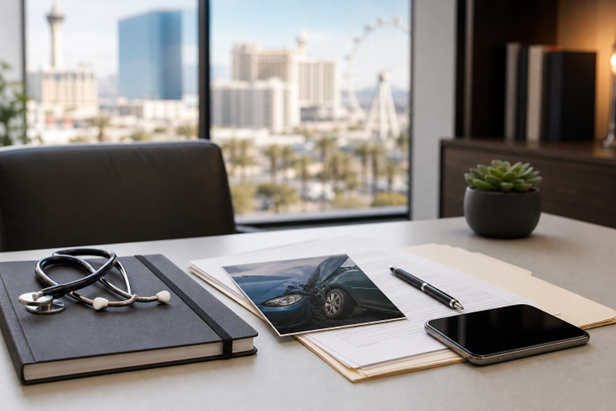
Evidence can disappear quickly after a crash. Vehicles are repaired, debris is cleared, surveillance footage may be overwritten, and witnesses can become difficult to locate. If it is safe to do so, take photographs of vehicle positions, damage, license plates, traffic signals, lane markings, weather conditions, and visible injuries.
Save contact information for witnesses and make a written account while your memory is fresh. Focus on observable facts, including the time, location, direction of travel, traffic conditions, and what you saw or heard. Avoid guessing about speed, fault, or injuries you cannot confirm.
When a crash is not investigated at the scene, Nevada drivers should understand the circumstances that may require a report. The Nevada DMV explains that a traffic crash report may need to be filed within 10 days when the accident caused injury, death, or more than the applicable property-damage amount. Reviewing the current rule is important because reporting obligations depend on the details of the collision.
Be Careful With Insurance Communications
Report the accident to your own insurer as required by your policy, but be thoughtful when discussing injuries or fault with any insurer. Adjusters may request a recorded statement, medical authorization, repair estimate, or settlement release soon after the crash. A quick offer can be tempting when bills are arriving, but it may not account for treatment that has not yet occurred.
Before agreeing to a settlement, understand what rights you may be giving up. A signed release can end the claim even if symptoms worsen later. It is also helpful to review your own coverages, including medical payments, collision, comprehensive, and uninsured or underinsured motorist coverage. Nevada consumers can review how auto insurance coverage works to better understand the roles of policy limits, deductibles, and optional protections.
Recognize Complex Accident Claims
Some claims are more complicated from the beginning. Consider speaking with a lawyer promptly if the crash involved any of the following:
- A commercial truck, delivery vehicle, taxi, limousine, or company-owned car.
- An Uber, Lyft, or other rideshare vehicle.
- A pedestrian, bicyclist, motorcyclist, or passenger with substantial injuries.
- A driver who was uninsured, underinsured, intoxicated, or who left the scene.
- Multiple vehicles, multiple insurers, or conflicting accounts of fault.
- A dangerous road condition, defective vehicle part, or suspected negligent maintenance.
These cases may involve several insurance policies, businesses, government entities, or legal theories. Early review can help identify who may be responsible and what evidence should be preserved before it is lost.
Do Not Wait Until Important Deadlines Approach
Waiting too long can make a claim harder to investigate. Witnesses forget details, photographs disappear, and repair work can change the physical evidence. There are also legal deadlines that may limit the time available to bring a claim, and different rules may apply when a government agency or public vehicle is involved.
Speaking with a lawyer does not require filing a lawsuit. An early consultation can help you understand the next steps, evaluate whether an offer is reasonable, and decide whether handling the matter independently is still practical.
What To Look For In A Lawyer
Choose a lawyer whose practice includes personal injury matters and who can explain the process in plain language. During an initial conversation, ask about communication, fees, case handling, expected documentation, and whether the lawyer has experience with claims similar to yours.
You should also feel comfortable asking direct questions. A helpful attorney should explain the strengths and challenges of the case without promising a particular result. The facts, available coverage, medical evidence, and actions of all involved parties can affect the outcome.
Common Questions
Should I hire a lawyer for a minor accident?
Possibly not. If there are no injuries, fault is clear, and the insurer fully addresses the property damage, a lawyer may not be necessary. Seek advice if pain appears later, the claim becomes disputed, or a settlement offer seems incomplete.
Can I speak to an insurance adjuster before hiring a lawyer?
Yes, but keep statements accurate and limited to facts you know. Do not guess about fault, minimize symptoms, or sign a final release until you understand its consequences.
What should I bring to a consultation?
Bring crash photographs, insurance information, the police report if available, medical records, bills, correspondence, witness details, repair estimates, and a timeline of events. Even incomplete records can help begin the discussion.
Conclusion
Hiring a personal injury lawyer in Las Vegas can be especially helpful when an accident causes real injury, disputed liability, significant financial loss, or insurance resistance. Protect your health, preserve the facts, keep your records organized, and avoid making rushed decisions. The earlier you understand your options, the better prepared you may be to make an informed choice about your claim.
 Air Conditioning Business " width="1068" height="596">