
Key Takeaways: Marine Equipment Maintenance
- A clear maintenance plan helps crews identify small faults before they become serious failures.
- Critical systems need risk-based checks, not just calendar reminders.
- Accurate records support safer work, better repair decisions, and smoother inspections.
- Routine inspections should cover mechanical, electrical, safety, and emergency equipment.
- Reviewing faults and near misses helps improve the plan over time.
Marine maintenance is not simply a matter of preventing inconvenience. A small leak, a loose connection, a worn seal, or a weak battery can develop into a problem affecting propulsion, steering, fire protection, or emergency response. A practical plan provides crews with a consistent way to identify and address defects while they are still manageable.
Start with the systems that keep the vessel safe and operational, then build routines around the equipment, operating conditions, and available crew skills. Keeping essential marine plumbing parts and supplies available can also reduce downtime when hoses, fittings, valves, pumps, or seals need replacement.
Why Marine Equipment Maintenance Matters
Salt spray, vibration, heat cycles, moisture, and heavy use can accelerate wear on machinery, wiring, coatings, fasteners, and seals. A cooling-water seep may appear minor during a routine round, but ignoring it can eventually reduce cooling performance and force an engine shutdown. Maintenance should therefore protect people, the vessel, cargo, and voyage schedules, rather than focus only on repair costs.
Start With A Complete Equipment Inventory
Create one working list for fixed systems, portable equipment, emergency gear, and items stored outside the machinery space. Record the equipment name, location, manufacturer, model, serial number, operating limits, manuals, special tools, spare parts, and the person responsible. Clearly mark anything whose failure could affect propulsion, steering, power, pumping, communications, or firefighting.
Suggested Inventory Fields
- Equipment ID and system served.
- Likely result if the item fails.
- Inspection interval, last service date, and next due date.
- Open defects, required parts, and the responsible person.
Rank Equipment By Risk
Not every item needs the same level of attention. For each component, consider the consequence of failure, the likelihood of failure, how easily a defect can be detected, and whether a dependable backup exists. High-risk equipment may require visual condition checks, functional testing, measurements, and planned replacement. Lower-risk items may need only periodic inspection and corrective repair when faults appear.
Set Practical Maintenance Schedules
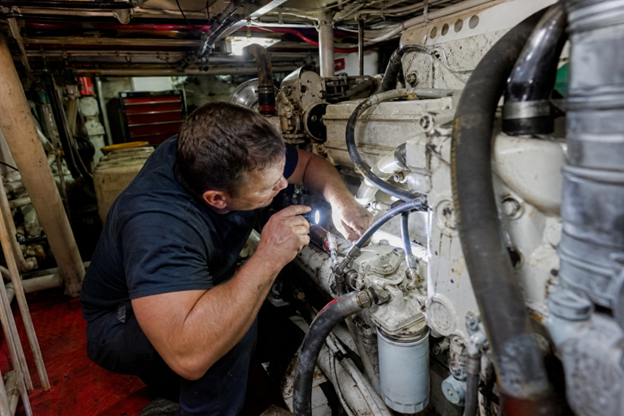
Use a mix of calendar-based, usage-based, condition-based, and corrective maintenance. Daily rounds can focus on leaks, alarms, heat, vibration, noise, and visible damage. Weekly tasks can include fluids, belts, filters, batteries, hoses, and emergency access. Monthly and annual work can cover deeper servicing, calibration, load testing, corrosion checks, and aging parts. Follow the manufacturer’s instructions, operating hours, vessel conditions, and documented failure history before changing an interval.
Inspect Critical Systems First
Prioritize propulsion equipment, generators and batteries, switchboards, steering gear, bilge pumps, fire systems, navigation tools, radios, and lifting equipment. Check engines, cooling circuits, exhaust components, fuel delivery, hydraulic lines, strainers, valves, cables, breakers, winches, wires, hooks, and guards according to the vessel’s procedures.
Simple Operating Checklist
- Before departure: Check fluid levels, alarms, emergency equipment, communications, steering response, and visible leaks.
- During operation: Monitor temperatures, pressures, vibration, electrical indications, and unusual sounds or odors.
- After return: Record defects, clean affected areas, replenish consumables, and schedule follow-up work.
Make Maintenance Work Safer
Routine maintenance can expose workers to moving machinery, electrical energy, pressure, hot surfaces, fuel, and confined spaces. Review the task first, isolate all relevant energy sources, control the isolation point, release trapped pressure, and verify that the equipment is safe before work begins. Use appropriate tools and personal protective equipment, then test the repair under controlled conditions. Stop work when conditions change, or the task no longer matches the plan.
Use Digital Records Without Losing Good Judgment
A spreadsheet or maintenance platform can organize due dates, photos, readings, manuals, invoices, and repair notes. Use clear defect labels such as monitor, repair soon, or remove from service. Keep an offline copy during periods of poor connectivity and limit changes to critical records. A completed task alone is not proof of readiness. The record should state what was inspected, what was found, what was repaired, and whether a functional test was completed.
Learn From Faults, Near Misses, And Alerts
Review recurring defects and ask a practical question: “What would happen here if this part failed without warning?” The BSEE safety alerts provide incident and near-miss lessons that can help offshore crews examine maintenance, lifting, electrical, fire, and personnel-safety controls. Compare relevant lessons with onboard procedures, update checklists when needed, and discuss them during toolbox talks.
Prepare For Inspections And Audits
Inspection readiness improves when records are orderly, and the vessel reflects them. Keep service documents easy to locate, close defects when possible, explain open items, check certificates and calibration dates, and confirm that emergency gear is accessible and marked. Before departure, walk through likely inspection areas and ensure crew members can describe how to operate critical systems.
Inspection Readiness Checklist
- Service records and manuals are available.
- Open defects have owners, controls, and target dates.
- Emergency equipment is accessible and visibly maintained.
- Required tests, certifications, and calibrations are current.
Build A Review Cycle That Works
Hold a short monthly review to examine overdue tasks, repeat failures, spare-part levels, and intervals that no longer fit actual operating conditions. Ask crew members which systems are difficult to inspect or repair. Update the plan after major repairs, equipment upgrades, route changes, or changes in the operating area. Every unresolved action should have a named owner and a deadline.
Conclusion
A useful marine equipment maintenance plan is clear, practical, and regularly updated. By inventorying equipment, ranking risks, conducting safety inspections, documenting results, and learning from faults, crews can reduce avoidable surprises and approach each voyage with greater operational readiness.
For more practical articles on a range of topics, explore Rarely Notes.