
If the thought of sitting in a dental chair makes your palms sweat, you’re not alone. One of the biggest questions people have before a dental appointment is: how long does it take to fill a cavity, really?
The good news? It’s usually much faster than you’d expect — and a whole lot simpler than the internet makes it seem.
Whether you’ve just been told you have a small cavity or you’re trying to plan your lunch break around an appointment, this guide breaks down exactly what happens, how long each step takes, and what you can do to make the whole process go smoothly.
Let’s get into it.
What Is a Dental Cavity Filling and Why Do You Need One?
Before we talk time, let’s quickly cover the basics.
A dental cavity is a permanently damaged area in the hard surface of your tooth that develops into a tiny hole. It’s caused by a combination of bacteria, sugary food, and poor oral hygiene — over time, acids produced by bacteria eat away at your tooth enamel.
A filling is the standard treatment to stop that damage from progressing. Your dentist removes the decayed tooth material, cleans the area, and fills it with a material that restores the tooth’s shape and function.
Without treatment, a small cavity becomes a big problem — think root canals, crowns, or even tooth loss. That’s why catching it early and getting it filled fast is always the better choice.
Quick stat: According to the Centers for Disease Control and Prevention (CDC), over 90% of adults in the U.S. have had at least one cavity during their lifetime. You’re definitely not alone.
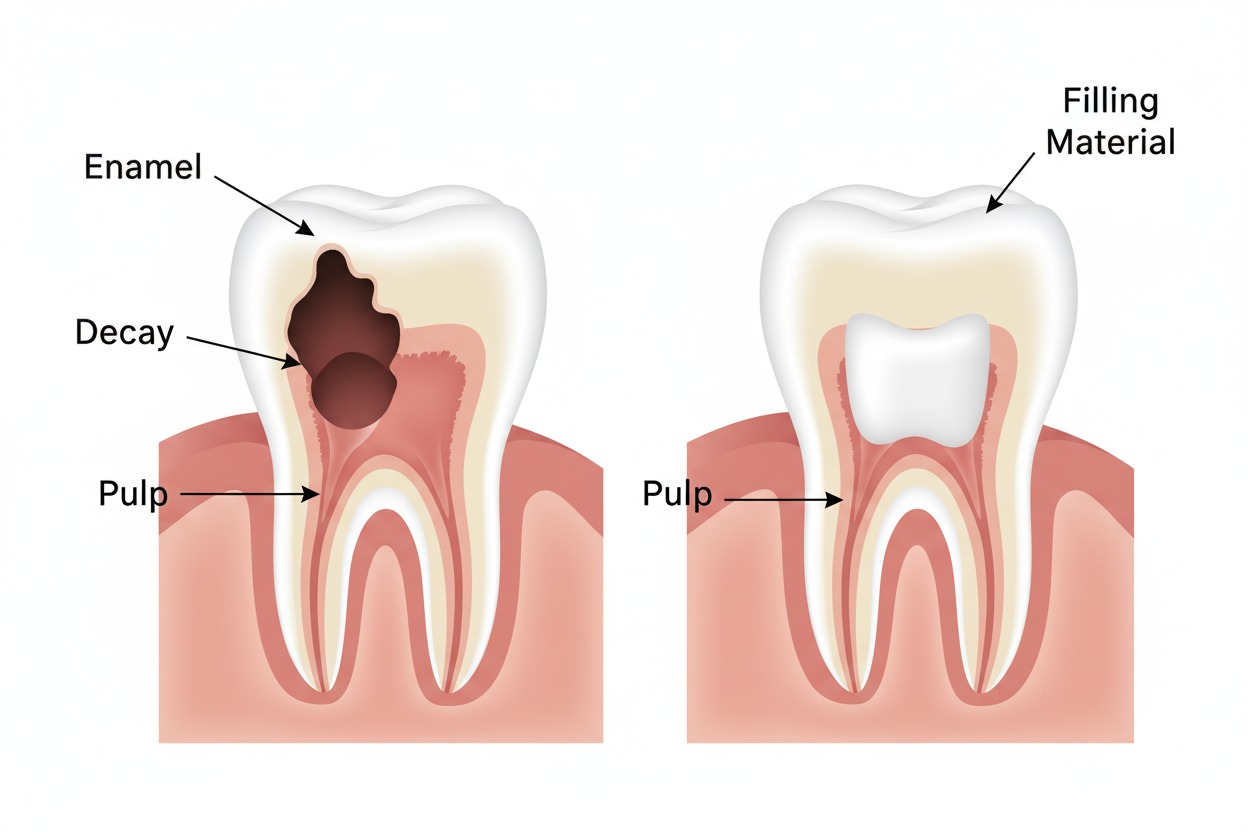
How Long Does It Take to Fill a Cavity? The Short Answer
For a simple, single-surface cavity, most dental fillings take between 30 and 60 minutes from the moment you sit in the chair to the moment you walk out.
If you have multiple cavities, or if the cavity is large or in a tricky location, you’re looking at anywhere from 60 to 90 minutes — sometimes split across two visits.
Here’s a quick breakdown to give you a sense of the timeline:
| Cavity Type | Estimated Time |
|---|---|
| Small/single-surface cavity | 30–45 minutes |
| Medium cavity (1–2 surfaces) | 45–60 minutes |
| Large or deep cavity | 60–90 minutes |
| Multiple fillings in one session | 90–120 minutes |
| Complex filling (near pulp/nerve) | 90+ minutes or 2 visits |
These are estimates — your dentist will give you a more specific timeframe based on your X-rays and the actual condition of the tooth.
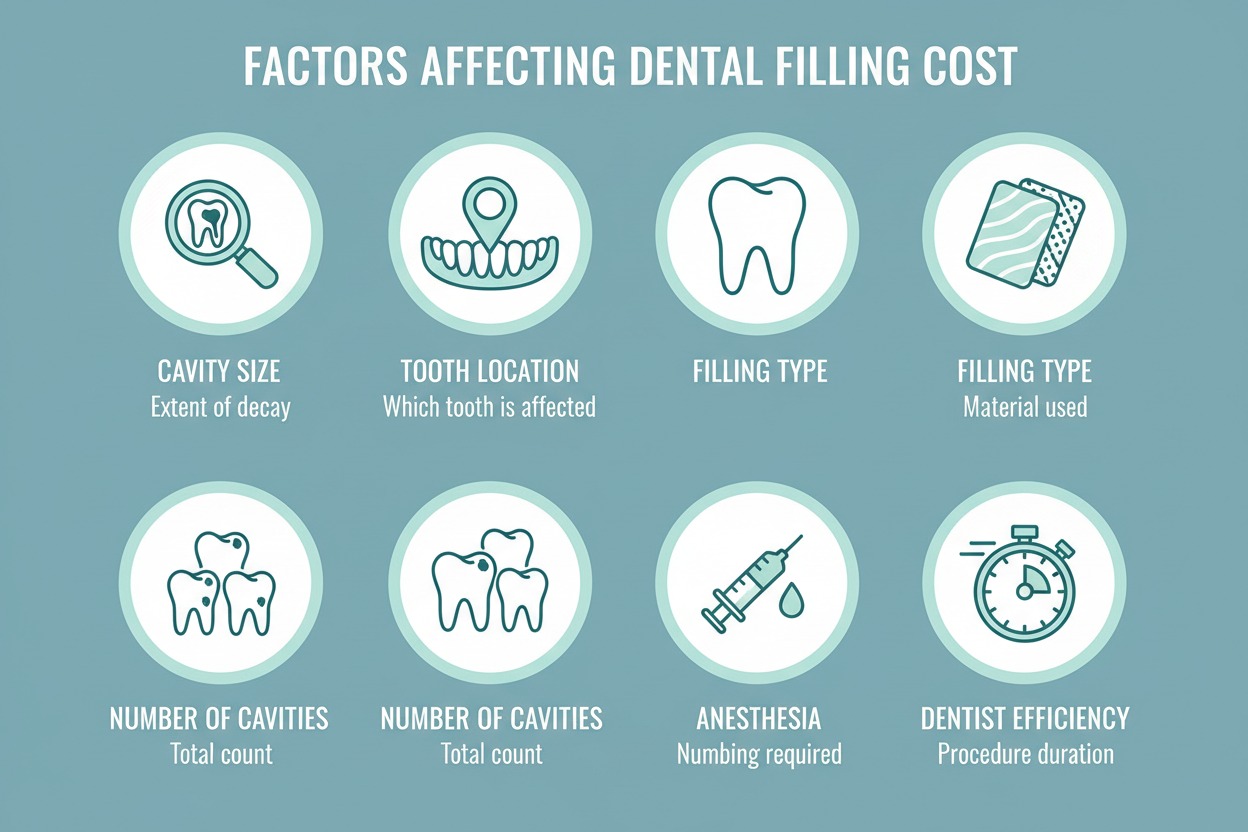
What Factors Affect How Long It Takes to Get a Cavity Filled?
Not all cavities are created equal. Several things can make a filling faster or slower. Understanding these factors helps you set realistic expectations before you walk through the door.
1. Size and Depth of the Cavity
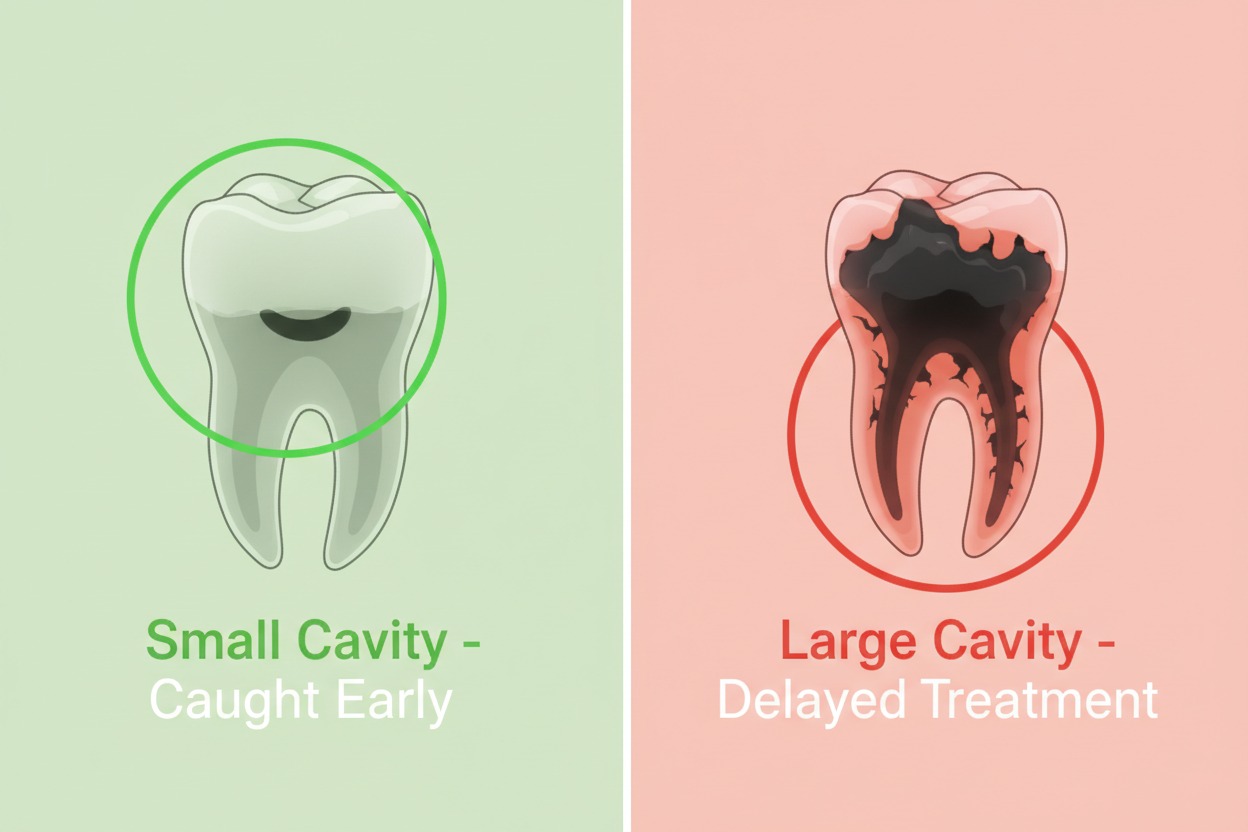
This is the biggest factor. A small cavity that’s caught early — maybe one your dentist spotted on a routine X-ray before you even felt it — takes far less time to treat than one that’s been quietly growing for a year or two.
Small cavities only affect the outer enamel layer. Larger cavities can reach the dentin (the softer layer underneath) or even get dangerously close to the pulp (the innermost part of the tooth containing nerves and blood vessels). Deeper work = more time.
2. Location of the Tooth
Back molars are harder to access than front teeth. They have more surfaces, more grooves, and require more maneuvering with tools. A filling on a front incisor might take 20 minutes. The same job on a lower second molar could take 45–60 minutes.
Teeth near the back of the mouth also make it harder to keep the area dry — which matters a lot for certain filling materials.
3. Type of Filling Material Used
The filling material your dentist uses directly affects how long the appointment takes:
- Composite resin (tooth-colored): Applied in layers and cured with a UV light after each layer. Takes longer than amalgam but looks natural.
- Amalgam (silver): Can be placed in one step. Quicker to apply, but sets over time on its own.
- Glass ionomer: Used for specific situations (like cavities near the gumline). Sets relatively quickly.
- Gold or ceramic inlays: These require impressions and a lab. Usually need two separate appointments.
Most modern dental offices use composite resin for everyday fillings. It’s safe, durable, and blends seamlessly with your tooth color — but it does require a bit more chair time than older silver amalgam.
4. Number of Cavities Being Treated
If your dentist schedules you to treat two or three cavities in the same session, your appointment will naturally run longer. Many dentists will batch fillings on the same side of the mouth together to minimize the number of times you need to be numbed.
5. Anesthesia and Numbing Time
Before drilling begins, your dentist will numb the area with a local anesthetic (usually lidocaine). This takes a few minutes to kick in fully — typically 5–15 minutes.
If you metabolize anesthesia faster than average (some people do), your dentist may need to add more, which adds time.
6. Patient Comfort and Cooperation
This sounds blunt, but it’s true: appointments go faster when the patient can stay still, keep their mouth open comfortably, and doesn’t need frequent breaks. If anxiety is an issue for you, talk to your dentist ahead of time — many offer options like nitrous oxide or oral sedation to keep you comfortable throughout.
7. Dentist Experience and Technology
An experienced dentist with modern equipment — digital X-rays, advanced curing lights, CEREC same-day systems — works faster and more efficiently. Some advanced dental offices can even do same-day ceramic fillings using CAD/CAM technology, which used to require lab time.
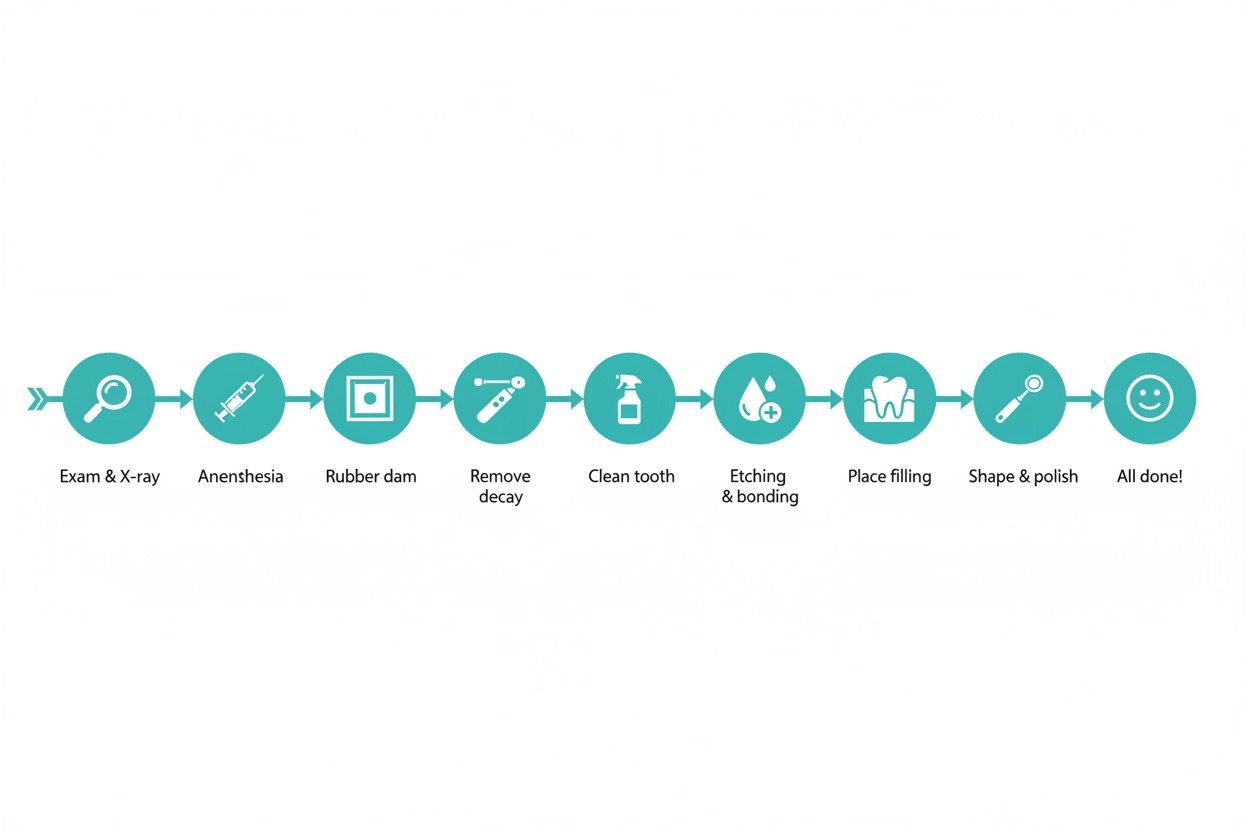
Step-by-Step: What Actually Happens During a Cavity Filling
Knowing exactly what’s going to happen during your appointment takes a lot of the anxiety out of it. Here’s the full breakdown of the process, step by step.
Step 1: Examination and X-Rays (5–15 minutes)
If you’re coming in for a scheduled filling after a previous checkup, your dentist already has X-rays and knows what they’re working with. But if this is a same-day discovery, expect a brief examination and possibly a new X-ray to assess the extent of the decay.
Digital X-rays give your dentist a clear view of how deep the cavity goes and whether any neighboring teeth are affected.
Step 2: Local Anesthesia (5–15 minutes)
Your dentist will apply a topical numbing gel to your gum first (so you barely feel the injection), then administer a local anesthetic injection near the affected tooth. You’ll feel pressure — sometimes a brief sting — but within 5–10 minutes the area will be fully numb.
You’ll know it’s working when your lip, cheek, or tongue feels tingly or heavy. That’s completely normal.
Step 3: Rubber Dam Placement (2–5 minutes, if used)
Many dentists use a rubber dam — a thin sheet of rubber stretched over a frame — to isolate the tooth being worked on. It keeps the area dry, protects you from swallowing debris, and makes the dentist’s job significantly easier.
Not every office uses rubber dams, but the American Dental Association (ADA) recommends them, especially for composite resin fillings where moisture control is critical.
Step 4: Removing the Decayed Tissue (5–20 minutes)
This is the part people usually dread — the drill. Your dentist uses a dental handpiece (the drill), air abrasion, or a laser to remove all decayed tooth material. The goal is to clear out every bit of infected/damaged tissue while preserving as much healthy tooth structure as possible.
The numbing means you shouldn’t feel pain — just vibration, pressure, and the sound of the drill. If you ever feel sharp pain during this step, raise your hand to signal your dentist immediately.
Step 5: Cleaning and Preparing the Tooth (2–5 minutes)
Once the decay is removed, the cavity is cleaned with an antibacterial solution to kill any remaining bacteria. If the decay was deep and close to the nerve, your dentist may apply a liner or base (often made of calcium hydroxide or glass ionomer) to protect the pulp.
Step 6: Etching and Bonding (for Composite Fillings) (3–5 minutes)
For tooth-colored composite fillings, your dentist applies an acid etch to slightly roughen the tooth surface, then a bonding agent. This helps the filling material adhere tightly to the tooth and prevents future leakage.
Step 7: Placing the Filling Material (5–20 minutes)
Now the cavity is filled. For composite resin:
- The material is placed in thin layers
- Each layer is hardened (“cured”) using a special blue UV light for 20–40 seconds
- This process is repeated until the cavity is completely filled and the tooth is restored to its natural shape
For amalgam fillings, the material is mixed and packed into the space, then shaped before it hardens on its own over the next few hours.
Step 8: Shaping, Polishing, and Bite Check (5–10 minutes)
Once the filling is placed, your dentist will shape it to match the natural contours of your tooth and polish it smooth. Then comes the bite check — you’ll be asked to bite down on a piece of carbon paper that shows where the filling is making contact.
If the filling is even slightly too high, you’ll feel it immediately when biting. Your dentist will file it down until your bite feels perfectly natural.
Step 9: You’re Done!
That’s it. The entire process, from sitting down to walking out, typically takes 30–60 minutes for a simple filling.
How Long Does It Take to Fill a Small Cavity Specifically?
Small cavities are the best-case scenario in dentistry. If your dentist caught it early — maybe on a routine checkup X-ray before you ever felt any sensitivity — the whole appointment can be over in 20–30 minutes.
Here’s why small cavities go so fast:
- Less decay to remove = less drilling time
- Shallower preparation = no need for liners or extra protection steps
- Smaller filling volume = fewer layers to cure
- Minimal risk of complications = no unexpected surprises mid-procedure
If your dentist says “we caught a small one,” take that as a win. Book the appointment, get it filled quickly, and it’s done before you’ve finished your morning coffee.
Waiting, on the other hand, is what turns a 30-minute appointment into a 90-minute ordeal — or worse, a root canal.
How Long Does It Take to Get a Cavity Filled the Same Day?
Yes — in most cases, you can have a cavity filled the same day it’s diagnosed.
If you come in for a routine cleaning, your hygienist and dentist may spot a new cavity on your X-ray. Depending on schedule availability and the dentist’s workload, they may offer to fill it right then and there before you leave.
Same-day fillings are common for:
- Small to medium cavities discovered during a checkup
- Cavities in patients with open appointment slots
- Dental offices with in-house equipment and materials ready
You might need to come back another day if:
- The cavity requires a crown, inlay, or onlay (which needs lab fabrication)
- The dentist is fully booked and can’t extend the appointment
- The decay is deep and requires a specialist referral (endodontist)
- You need a pre-medication or special preparation beforehand
If convenience matters to you, call ahead and ask if same-day treatment is possible. Many modern dental practices actively accommodate this.
How Long Does the Numbing Last After a Filling?
This is something most people forget to factor in when planning their day around an appointment.
After your filling is done, the local anesthesia will still be active. Depending on the type used and where the injection was given, numbness can last anywhere from 1 to 4 hours after your appointment ends.
During this time:
- Avoid eating on the numb side to prevent accidentally biting your cheek or tongue
- Be careful with hot beverages — you won’t be able to gauge temperature accurately
- Don’t prod or poke the numb area (it feels strange, but you could hurt yourself)
If you received anesthesia in your lower jaw (mandibular block), expect numbness to last longer — sometimes up to 3–4 hours — because more tissue is numbed with that injection.
This is worth knowing if you have a work presentation or lunch meeting right after your appointment.

How Long Does a Cavity Filling Last?
Getting a filling isn’t a one-and-done permanent solution — it’s a long-term fix that has a lifespan.
Here’s what you can expect from different filling materials:
| Filling Type | Average Lifespan |
|---|---|
| Composite resin (tooth-colored) | 5–10 years |
| Amalgam (silver) | 10–15 years |
| Glass ionomer | 3–7 years |
| Gold inlay/onlay | 15–30+ years |
| Ceramic/porcelain | 10–15 years |
Fillings wear down over time due to chewing, grinding, and exposure to temperature changes. Regular dental checkups allow your dentist to catch a failing filling before it becomes a bigger problem.
Maintaining good oral hygiene, limiting sugary foods, and wearing a night guard if you grind your teeth (bruxism) all extend the life of your fillings significantly.
What to Expect After Getting a Cavity Filled
Once your appointment is done and you’re back in the real world, here’s what the next few hours and days typically look like.
Immediately After (First Hour)
- Your mouth will still be numb — this is normal
- Avoid eating hard food until the numbness fully wears off
- Don’t drink alcohol for at least 24 hours if you had sedation
- Stick to soft foods like yogurt, soup, or a smoothie
The First 24–48 Hours
Tooth sensitivity after a filling is extremely common, especially with composite resin. You may notice:
- Temperature sensitivity (hot or cold drinks cause a brief zing)
- Bite sensitivity (pressure when chewing feels different)
- Gum soreness around the injection site
This usually resolves on its own within a few days. Over-the-counter pain relievers like ibuprofen or acetaminophen can help manage any discomfort.
When to Call Your Dentist
Some things are normal. Others aren’t. Call your dentist if:
- Sensitivity hasn’t improved after 2 weeks
- You feel sharp pain when biting down (the filling may be too high)
- The filling feels cracked or you notice a gap
- You develop severe pain or swelling
Don’t wait and hope it goes away — a quick phone call and a minor adjustment can prevent a much bigger issue later.

Expert Tips: How to Make Your Cavity Filling Appointment Go Faster and Smoother
Based on what dental professionals consistently recommend, here are the most effective ways to make your filling appointment as quick and stress-free as possible.
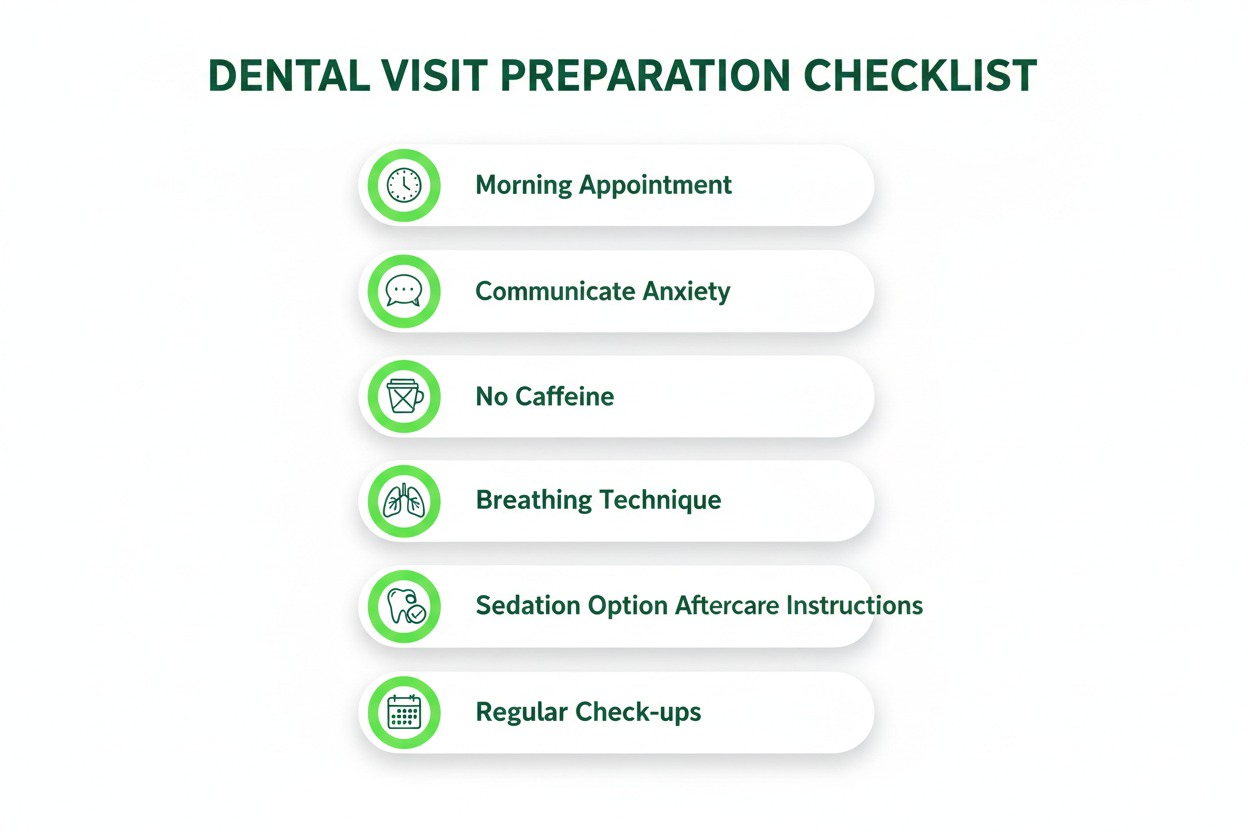
✅ Book First Thing in the Morning
Morning appointments are usually the fastest. Your dentist is fresh, the schedule isn’t yet backed up, and you’re not waiting for the person before you to run over. Ask for the first available morning slot.
✅ Communicate Your Anxiety
If you’re nervous, tell your dentist. They can offer topical numbing gel before the injection, explain every step before they do it, or give you a signal (like raising your hand) if you need a break. Dentists who know their patients are anxious go slower and communicate more — which paradoxically often makes the appointment feel faster.
✅ Avoid Caffeine Before Your Appointment
Caffeine makes some people more sensitive to sensations and more prone to anxiety. If you’re already nervous, a black coffee beforehand can heighten your awareness in a way that’s not helpful. Try water or herbal tea instead.
✅ Practice Breathing Techniques
Deep, slow breathing through your nose activates your parasympathetic nervous system and actually lowers your perception of discomfort. Try inhaling for 4 counts, holding for 4, and exhaling for 4. You can practice this in the chair between steps.
✅ Ask About Sedation Options
For patients with severe dental anxiety, options like nitrous oxide (laughing gas) or oral conscious sedation can make the appointment feel like it flew by. Nitrous wears off quickly, so you can even drive yourself home afterward in most cases.
✅ Follow Post-Care Instructions
Your dentist will give you aftercare instructions. Following them precisely — especially avoiding chewing on the new filling for 24 hours with amalgam — prevents problems that would require a return visit.
✅ Keep Up with Regular Checkups
The single best thing you can do to make fillings faster and less painful? Catch cavities early. A twice-yearly dental checkup means cavities are found when they’re small — which means shorter, simpler, cheaper appointments every time.
How Long Does It Take to Get a Cavity Filling vs. Other Dental Procedures?
To give you a better sense of perspective, here’s how a typical filling compares to other common dental procedures:
| Procedure | Typical Duration |
|---|---|
| Dental filling (small) | 30–45 minutes |
| Dental filling (large) | 45–90 minutes |
| Dental crown (prep visit) | 60–90 minutes |
| Root canal | 90–120 minutes (or 2 visits) |
| Tooth extraction (simple) | 20–40 minutes |
| Teeth cleaning | 45–60 minutes |
| Dental implant (placement) | 60–120 minutes |
| Teeth whitening (in-office) | 60–90 minutes |
A filling is one of the faster and less involved procedures in dentistry. Root canals — which become necessary when a cavity is left untreated and reaches the nerve — take two to three times longer and are significantly more complex and uncomfortable.
That’s the most compelling argument for treating a cavity early: it saves you time, money, and discomfort.
Composite vs. Amalgam Fillings: Which Takes Longer?
This is one of the most common questions people have, and the answer matters for planning your schedule.
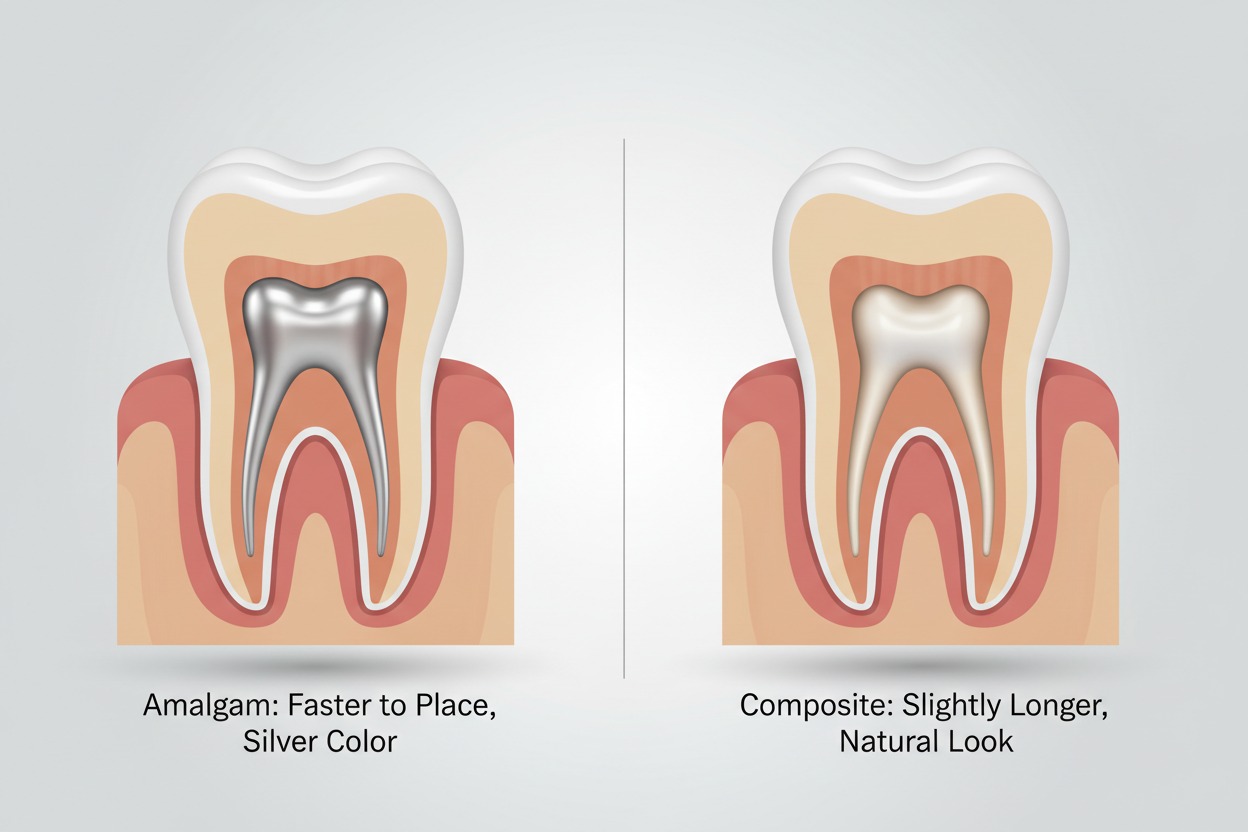
Amalgam fillings are faster to place. The material is mixed and packed into the cavity in one step. Total placement time can be 10–20 minutes once the tooth is prepped.
Composite resin fillings take longer because they’re placed in multiple thin layers, each of which must be light-cured individually before the next is added. This can add 10–20 minutes to the total procedure time.
However, most dentists now default to composite for most fillings because:
- They’re tooth-colored and virtually invisible
- They bond directly to the tooth, requiring less healthy tooth removal
- They’re free from the mercury debate that surrounds amalgam
- They’re more aesthetically versatile
The time difference is typically just a matter of 15–20 minutes — and for most people, the cosmetic and structural benefits of composite resin are well worth it.
The American Dental Association has stated that both types are safe and effective for restoring teeth.
Does Getting a Cavity Filled Hurt?
Let’s address the elephant in the room.
The answer is: it shouldn’t. Not with modern anesthesia.
What you WILL feel:
- A slight pinch or sting from the numbing injection (brief — usually under 5 seconds)
- Pressure and vibration during drilling (not pain, just sensation)
- Possible soreness in the gum around the injection site afterward
What you WON’T feel (when properly numbed):
- Sharp pain during drilling
- The filling being placed
- The bite adjustment
If at any point during the procedure you feel sharp pain — not pressure, but actual pain — raise your hand immediately. That’s a signal to your dentist that the area isn’t fully numb. They’ll pause and administer more anesthetic before continuing. Never tough it out.
Post-procedure sensitivity is the most common complaint, and it’s almost always temporary. Research in dental literature consistently shows sensitivity after composite fillings typically resolves within 2–4 weeks in the vast majority of cases.
Can a Cavity Be Filled in One Visit?
Yes — in almost all cases, a standard cavity filling is completed in a single appointment.
The only exceptions are:
- Inlays and onlays: These are lab-fabricated restorations for larger cavities. They require an impression on visit one and placement on visit two.
- Severe decay requiring a crown: If the cavity is too large for a filling, a crown may be needed. Traditional crowns require two visits (prep + placement), though some offices with CEREC technology can do same-day crowns.
- Deep decay near the pulp: Sometimes a dentist will place a sedative dressing and wait to see if the pulp recovers before completing the final restoration.
For the vast majority of standard cavities? One visit, done.
How Long to Wait Between Cavity Fillings?
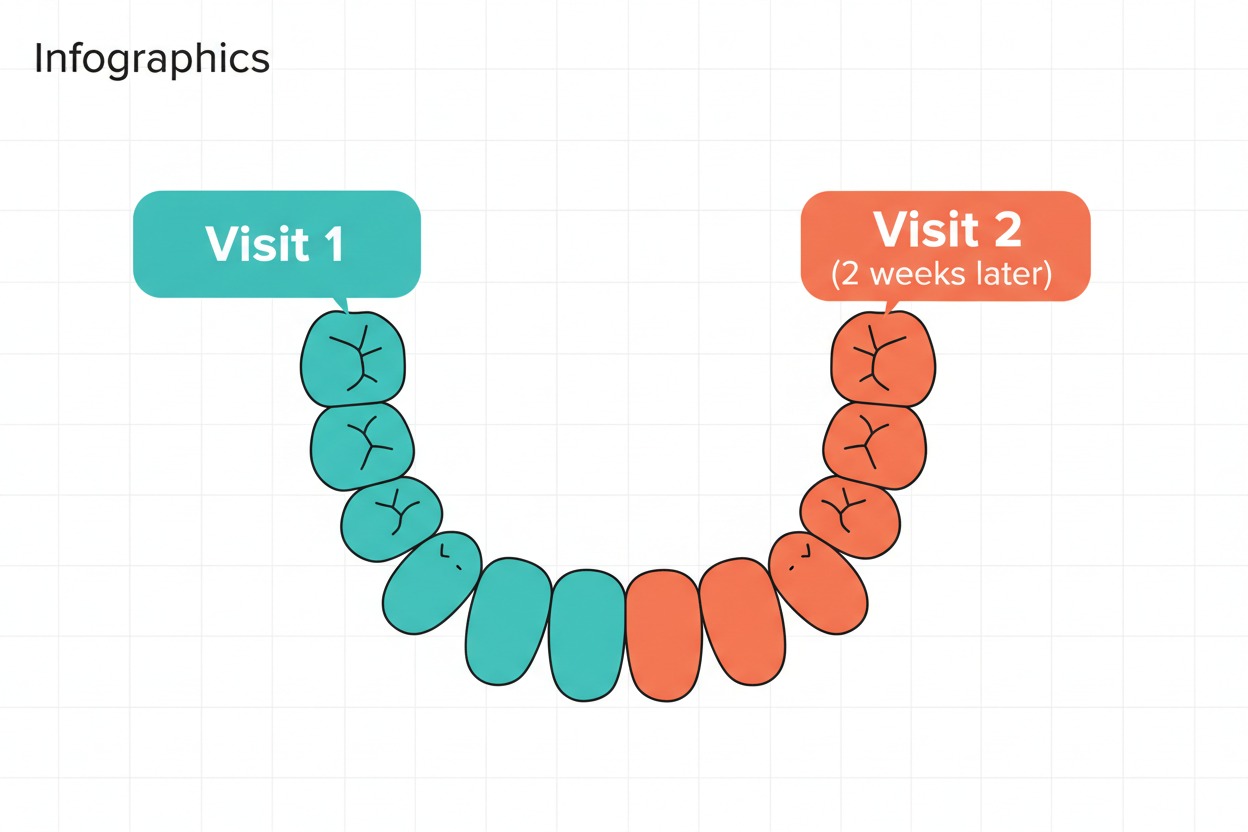
If you have multiple cavities, your dentist will likely spread them across a couple of appointments rather than doing them all in one marathon session. Here’s why:
- Numbing half the mouth at once is impractical (you’d barely be able to talk or eat properly)
- Fatigue — yours and the dentist’s — increases the risk of errors in long sessions
- It allows you to assess how the first filling feels before proceeding with others
Typically, your dentist will book fillings on one side of your mouth first, wait 1–2 weeks for the area to heal, then address the other side. This gives each quadrant time to recover and gives you a chance to report any issues with the initial work before moving on.
Special Situations: When Filling a Cavity Takes Longer
Most cavity fillings are routine. But certain situations add complexity — and time. Here are the most common ones.
Deep Cavities Near the Nerve
If the decay has reached close to or into the dental pulp, your dentist faces a careful balancing act: remove enough decay to stop progression without exposing or irritating the nerve. This takes extra time and may involve placing a protective liner to soothe the nerve before sealing the tooth.
In some cases, deep cleaning triggers irreversible pulpitis (inflammation of the pulp), which would then require a root canal. Your dentist will discuss this possibility with you if it’s a risk.
Cavities in Back Molars
The further back in the mouth, the harder it is to access, dry, and fill the tooth. Molars also have more surfaces and grooves that decay can hide in. Expect an appointment that runs toward the longer end of the range for molar fillings.
Children and Pediatric Fillings
Filling cavities in kids — especially anxious or younger children — requires more patience and time. Pediatric dentists are trained specifically to work at a child’s pace, use behavior management techniques, and keep the experience positive. Appointments may be shorter in procedure but require more overall time for communication and reassurance.
Patients With Special Medical Needs
Patients on blood thinners, those with certain heart conditions requiring antibiotic premedication, or individuals with jaw joint issues (TMJ) may require additional preparation time or modified procedures. Always disclose your full medical history and current medications to your dentist.
How Much Does a Cavity Filling Cost?
The cost of a filling varies based on material, location, and whether you have dental insurance. Here are typical ranges without insurance:
| Filling Type | Average Cost (Per Tooth) |
|---|---|
| Composite resin (1 surface) | $150–$300 |
| Composite resin (2–3 surfaces) | $200–$450 |
| Amalgam (1 surface) | $75–$150 |
| Gold inlay | $800–$1,500+ |
| Ceramic/porcelain inlay | $650–$1,200 |
With dental insurance, your out-of-pocket cost is typically 20–50% of the above, depending on your plan.
GoodRx Dental and the National Association of Dental Plans (NADP) are good resources for understanding what your insurance might cover and finding affordable providers in your area.
If cost is a concern, ask your dentist about payment plans, dental discount plans, or community dental clinics that offer sliding-scale fees.
Frequently Asked Questions About Cavity Fillings
Q1: How long does it take to fill a cavity with composite resin?
Composite resin fillings typically take 45–60 minutes for a single tooth. The extra time (compared to amalgam) is because the material is applied in layers, with each layer cured under UV light for 20–40 seconds before the next is added. For a small cavity, the time can be as low as 30 minutes.
Q2: How long does it take to get a cavity filling if I’m getting multiple teeth done?
If you’re having multiple fillings done in one session, expect 90–120 minutes on average. Most dentists limit same-session fillings to one quadrant of the mouth (upper or lower, left or right) to minimize the numbing area and reduce fatigue. Complex cases may be split across two separate appointments.
Q3: How long does it take to fill a small cavity compared to a larger one?
A small cavity can be filled in as little as 20–30 minutes total (including numbing). A larger, multi-surface cavity can take 60–90 minutes. The size of the cavity affects how much material needs to be removed, how many layers of filling are needed, and whether protective liners are required.
Q4: Is it okay to eat before a cavity filling appointment?
Yes — you should eat a light meal before your appointment. Once you’re numbed, you’ll need to avoid eating until the anesthesia wears off (1–4 hours). Going hungry through your filling and the recovery period afterward isn’t fun. Avoid very sugary foods immediately before your appointment.
Q5: How long after a filling can I eat normally?
With composite resin fillings, you can eat as soon as the numbing wears off — typically 1–2 hours after the appointment. With amalgam fillings, wait at least 24 hours before eating on that side, since amalgam takes longer to fully harden. In both cases, avoid very hard, sticky, or extremely hot/cold foods for the first 24–48 hours.
Conclusion: Don’t Overthink It — Just Go Get It Done
Here’s the truth: the anxiety you feel leading up to a cavity filling almost always takes longer than the filling itself.
A small cavity filled promptly? That’s 30–45 minutes of your day. A cavity ignored for a year? That can turn into a root canal — 90+ minutes, multiple visits, and significantly more money.
Now you know exactly how long it takes to fill a cavity — from the quick 20-minute fix for a tiny early-stage cavity to the 90-minute appointment for something that’s had time to grow. You know what happens at each step, what factors affect the time, and how to make the whole experience smoother.
The best thing you can do? Book the appointment.
If you haven’t had a dental checkup in the last six months, find a dentist near you through the American Dental Association’s verified directory. The earlier a cavity is found, the faster and cheaper it is to treat.
Your future self — with healthy teeth and a lighter wallet — will thank you.
This article is for informational purposes only and does not constitute dental or medical advice. Always consult a licensed dental professional for diagnosis and treatment.
Visit the HomePage for more interesting and engaging blog posts.