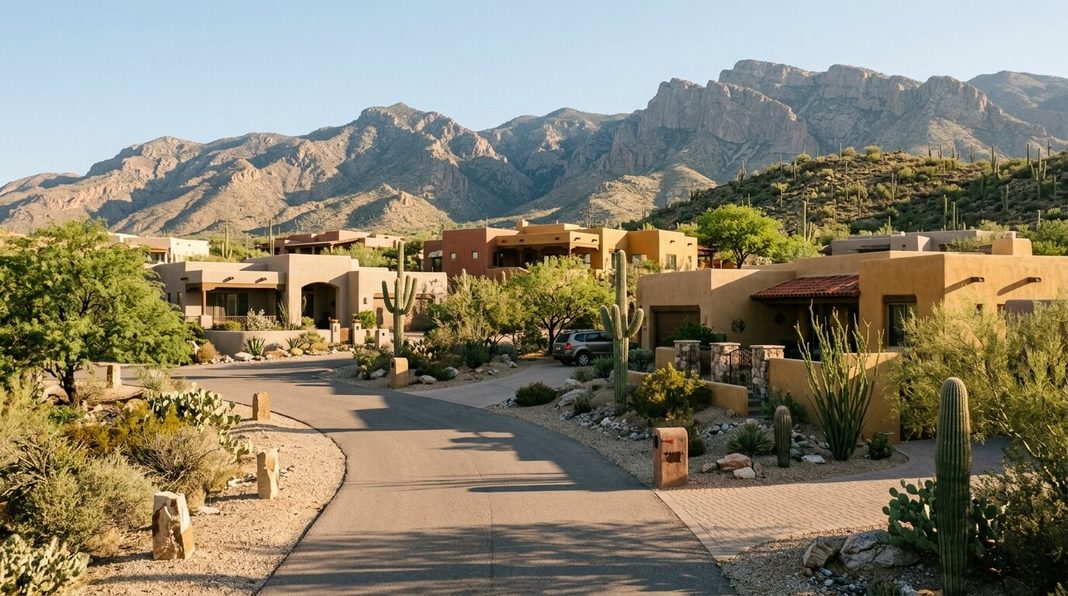
Key Takeaways: Choosing the Right Tucson, Arizona Neighborhood
- Compare Tucson neighborhoods based on lifestyle, commute, and daily needs.
- Consider heat, cooling costs, water use, landscaping, and maintenance.
- Review terrain, drainage, views, lot conditions, and property access.
- Verify utilities, jurisdiction, schools, HOA rules, and future development.
- Compare similar properties using recent sales and local market data.
- Revisit neighborhoods and inspect homes carefully before making an offer.
Choosing where to live in Tucson, Arizona, is about more than comparing square footage and listing photos. The metropolitan area stretches across a broad desert valley, with neighborhoods shaped by mountain terrain, major road access, home age, municipal boundaries, and the everyday realities of heat and monsoon weather.
Buyers exploring Tucson homes for sale can use Gray St. Onge’s area guide and property search to compare options across Tucson and nearby lifestyle communities, including the Catalina Foothills, Oro Valley, and Dove Mountain. With detailed coverage of local homes, neighborhoods, and market segments, Gray St. Onge offers a useful local perspective for buyers deciding how they want to live in Southern Arizona.
Why Neighborhood Choice Matters in Tucson
Two similarly priced homes can create very different routines. One may offer a short drive to the University of Arizona, downtown dining, or medical care. Another may offer more space, newer construction, trail access, or wide mountain views, but require more time in the car. A practical comparison should focus on the life a home supports after the excitement of the first tour fades.
Begin by defining your non-negotiables. Each household should rank its five most important priorities, from 1 to 5, before scheduling multiple tours. This helps keep a dramatic view, polished kitchen, or resort-style backyard from outweighing daily needs.
Start With Your Daily Priorities
- Maximum acceptable commute time to work, school, or regular appointments.
- Preferred home size, lot size, and need for a garage, office, guest suite, or pool.
- Access to trails, parks, golf, dining, shopping, and cultural venues.
- School, healthcare, or nearby family considerations.
- Comfort level with an older home, new construction, HOA rules, and ongoing maintenance.
Compare Tucson’s Major Area Types
Central Tucson
Central neighborhoods can offer convenient access to downtown, the university area, established restaurants, and older residential streets. Housing character can change quickly from one block to another, so inspect renovation quality, parking arrangements, street activity, and nearby commercial uses rather than judging an area from a single showing.
Catalina Foothills
The Catalina Foothills appeal to buyers who value mountain settings, established desert landscaping, views, and proximity to foothill recreation. Hillside and wash-adjacent properties deserve extra attention during due diligence. Review drainage paths, retaining walls, driveway grades, road access, and the condition of exterior features that may be harder to maintain on sloped terrain.
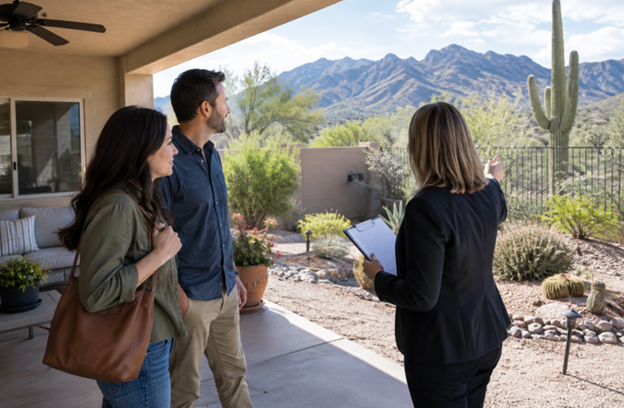
Oro Valley, Dove Mountain, and Marana
Northwest communities often attract buyers looking for planned neighborhoods, newer homes, desert open space, golf, and access to Interstate 10. The tradeoff can be a longer trip to central Tucson destinations. Review HOA documents, fees, planned construction phases, nearby vacant land, and the location of grocery stores, healthcare, and other services you expect to use often.
East and Southeast Tucson
East and Southeast Tucson offer established residential areas and access to Davis-Monthan Air Force Base and the Rincon Mountain District.
Look Beyond the Listing Price
The purchase price is only one part of the ownership budget. Build realistic monthly and annual estimates that include the mortgage payment, property taxes, homeowners’ insurance, HOA dues, summer cooling costs, pool service, landscaping, irrigation repairs, roof care, stucco maintenance, and fuel or vehicle costs for the commute.
Desert landscaping can reduce turf maintenance, but it is not maintenance-free. Trees, irrigation lines, gravel areas, drainage features, and native plantings still need periodic attention. A low-water yard works best when it is designed for the lot and maintained consistently.
Our Brentwood home buying guide applies the same focus on budgeting and property condition, where everyday needs and ongoing expenses shape a practical purchase decision.
Treat Water and Heat as Home-Buying Factors
Tucson’s climate makes shade, cooling, and water use central questions for ownership. During a tour, ask about the age and service history of the air-conditioning system, roof insulation, attic ventilation, window orientation, exterior shade structures, pool equipment, and irrigation zones.
Pay particular attention to west-facing glass, uncovered patios, and sparse shade near living spaces. A smaller, well-shaded home with efficient cooling may feel more comfortable in summer than a larger home with limited heat control.
Test the Commute and Confirm Local Services
Visit a potential neighborhood more than once. Drive the complete route from the driveway to work, school, or a regular appointment in the morning and again in the late afternoon. A mileage estimate doesn’t always reflect traffic, school pickup patterns, road construction, or the time it takes to reach major corridors.
Also, confirm whether the home is within the City of Tucson, Oro Valley, Marana, or unincorporated Pima County. Jurisdiction can affect utility providers, road maintenance, trash service, regulations, taxes, and future development review. School attendance boundaries should always be verified directly with the relevant district.
Understand Views, Lots, and Desert Terrain
A view can significantly affect a home’s value and enjoyment, but buyers should ask whether it could change. Look for nearby vacant parcels, planned development, washes, culverts, slopes, and drainage channels. Consider whether maintenance vehicles and emergency services can easily access the property, especially on narrow roads or steep driveways.
Outdoor areas deserve the same inspection as the interior. If possible, stand on the patio at different times of day, note where shade falls, and consider how often you will realistically use the pool, outdoor kitchen, fire feature, or view deck during warmer months.
Use Market Data as a Comparison Tool
Current market figures can help frame a decision, but citywide numbers shouldn’t decide it for you. Compare similar homes in the same area by looking at recent sale prices, price per square foot, days on market, active inventory, price reductions, and sale-to-list price patterns. A custom foothills home, a central historic property, and a newer northwest home can behave very differently even when their asking prices are close.
Questions to Ask During a Home Tour
- How old are the roof, HVAC system, water heater, and pool equipment?
- Has the property had drainage, roof leaks, or flooding concerns?
- What do summer utility bills typically look like?
- Are there pending HOA assessments, rule changes, or major projects?
- Which utilities and services serve the property?
- What nearby development, road work, or construction is planned?
- What repairs did the seller complete, and were permits required?
A Simple Neighborhood Comparison Method
After each visit, score the area from one to five in these categories: commute convenience, home condition, outdoor access, monthly ownership costs, nearby services, and overall comfort with the lot and terrain. Add short notes about what you observed, not just what you remember. The clearest choice is often the neighborhood that scores well across several practical categories rather than perfectly in only one.
Final Steps Before Making an Offer
- Revisit the neighborhood at another time of day.
- Confirm jurisdiction, utility providers, and service arrangements.
- Review inspection findings with qualified professionals.
- Estimate annual maintenance, insurance, and summer utility costs.
- Check nearby development plans and comparable recent sales.
The right Tucson neighborhood is not necessarily the newest, highest-priced, or most photographed. It is the place that supports your real routine, budget, comfort with desert ownership, and future plans.