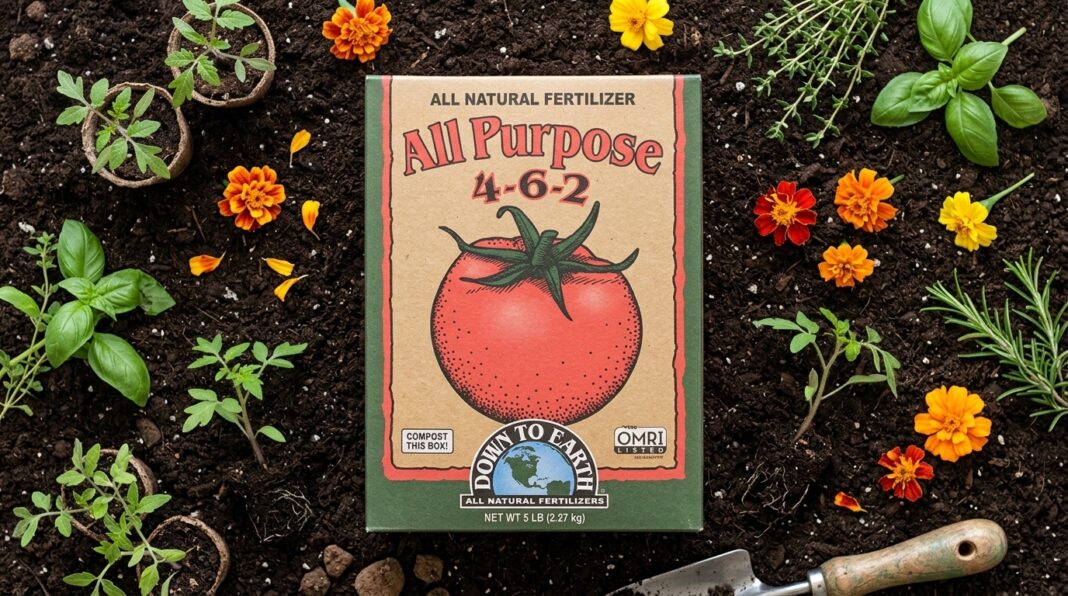
How to Use Down to Earth All Purpose Mix 4-6-2 (Introduction)
Imagine this: you came back from the garden center with a box of Down to Earth All Purpose Mix 4-6-2, and now you are looking at it, wondering – Where do I start?
You are not the only one. This is one of the top-selling organic fertilizers, and for a good reason. However, if you have never used a granular organic fertilizer, the label instructions might seem a little confusing.
Well, the good news is that this product is truly great for beginners once you know how to use it.
This article explains how to use Down to Earth All Purpose Mix 4-6-2 for all types of plants, including tomato transplants, container herbs, and even fruit trees already growing. We will discuss the proper application rates, timing, common mistakes that you should avoid, and even share some expert tips that will help you maximize the benefits of your purchase.
Here we go.
What Is Down to Earth All Purpose Mix 4-6-2?
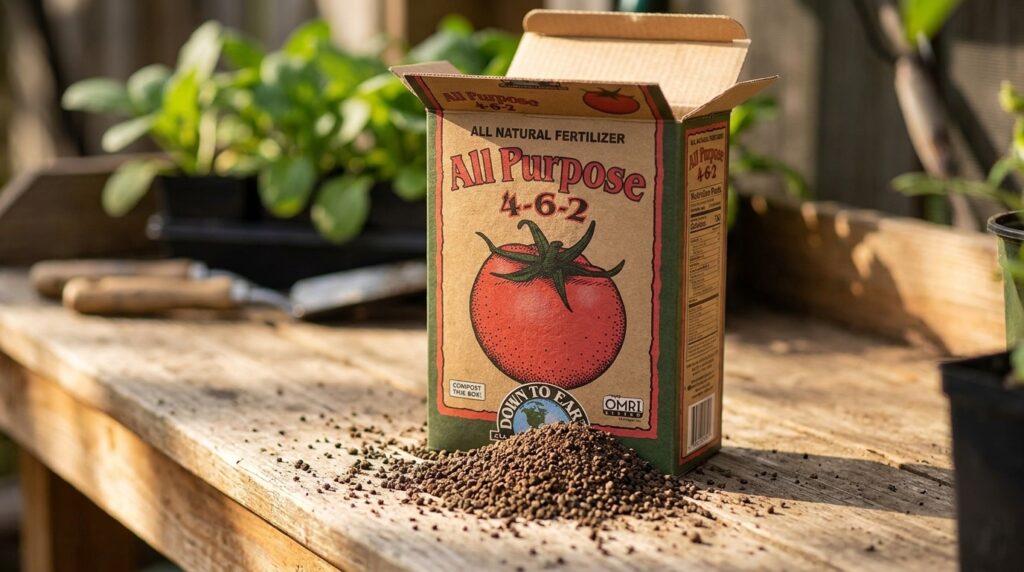
Before you start applying it, you need to understand what you’re working with.
Down to Earth is an Oregon-based company. It has been producing natural and organic fertilizers since 1977. Their All Purpose Mix 4-6-2 — sometimes listed as model 7801 in its 6-pound size — is their flagship original blend.
The numbers 4-6-2 refer to the NPK ratio:
| Nutrient | Amount | Role in Plant Health |
|---|---|---|
| Nitrogen (N) | 4% | Leaf and stem growth |
| Phosphorus (P) | 6% | Root development, flowering, fruiting |
| Potassium (K) | 2% | Overall vigor, disease resistance |
Beyond NPK, this fertilizer also provides:
- Calcium (Ca): 8% — critical for cell wall strength and preventing blossom end rot
- Magnesium (Mg): 1% — essential for chlorophyll production
- Sulfur (S): 2% — supports enzyme function and nutrient uptake
What’s Inside the Bag?
The formula is derived from a blend of premium organic ingredients:
- Fish Bone Meal — slow-release phosphorus and calcium
- Blood Meal — fast-acting nitrogen boost
- Feather Meal — sustained nitrogen release
- Alfalfa Meal — natural growth stimulant, adds organic matter
- Rock Phosphate — long-term phosphorus source
- Langbeinite — a natural source of potassium, magnesium, and sulfate
- Kelp Meal — trace minerals and natural growth hormones
- Humates — enhances microbial activity and nutrient uptake
This combination creates a well-rounded, OMRI-listed organic fertilizer that feeds plants and the soil simultaneously.
Why the 4-6-2 Ratio Works So Well
Phosphorus content that is a little bit higher (6%) is the feature that makes this mix really all-purpose. Phosphorus stimulates root development and flowering — so it helps transplants, fruit-producing crops, and flowering plants equally.
The fairly low nitrogen content (4%) is enough to give continuous growth without the sudden increase-and-decrease cycle typical of high-nitrogen synthetic fertilizers.
Is Down to Earth All Purpose Mix 4-6-2 Right for Your Garden?
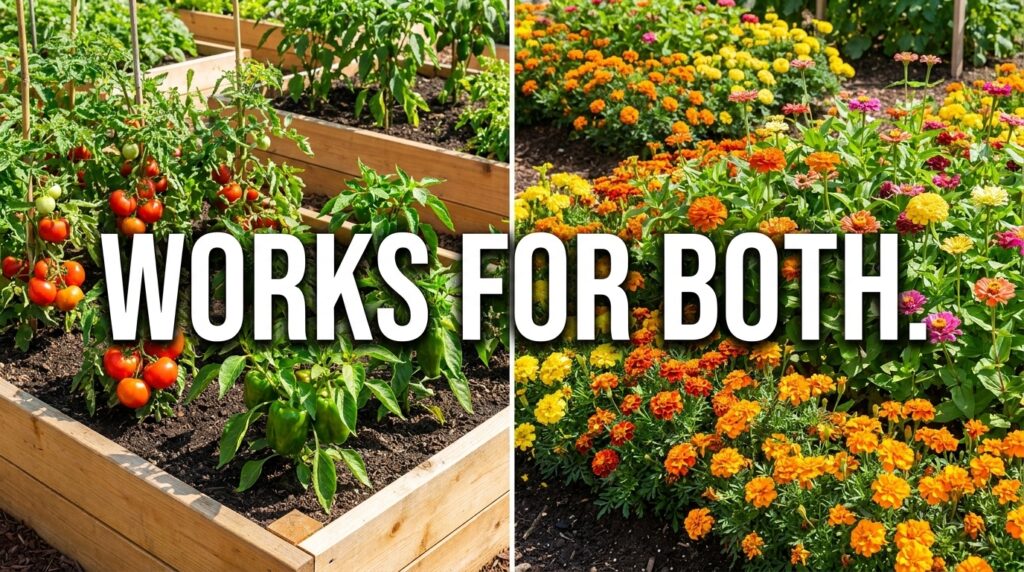
This fertilizer is appropriate for a remarkably wide range of plants. Here’s where it shines:
Vegetables & Fruiting Crops:
- Tomatoes, peppers, cucumbers, zucchini, eggplant
- Potatoes, beets, carrots, and other root vegetables
- Beans, peas, and squash
Herbs:
- Basil, rosemary, thyme, parsley, cilantro
Flowers:
- Annuals and perennials, dahlias, roses, bulbs
Trees & Shrubs:
- Fruit trees, ornamental shrubs, and newly planted trees
Container & Indoor Plants:
- Potted vegetables, houseplants, and window boxes
One point to highlight: given that this fertilizer is granular and slow-release, the most efficient way to use it is by integrating it into the soil rather than dissolving it in water. Fertilizer like this is not a liquid feed — it is a type of soil additive that decomposes at a slow pace, providing nutrients to your plants for several weeks or even months.
How to Use Down to Earth All Purpose Mix 4-6-2 — Application by Plant Type
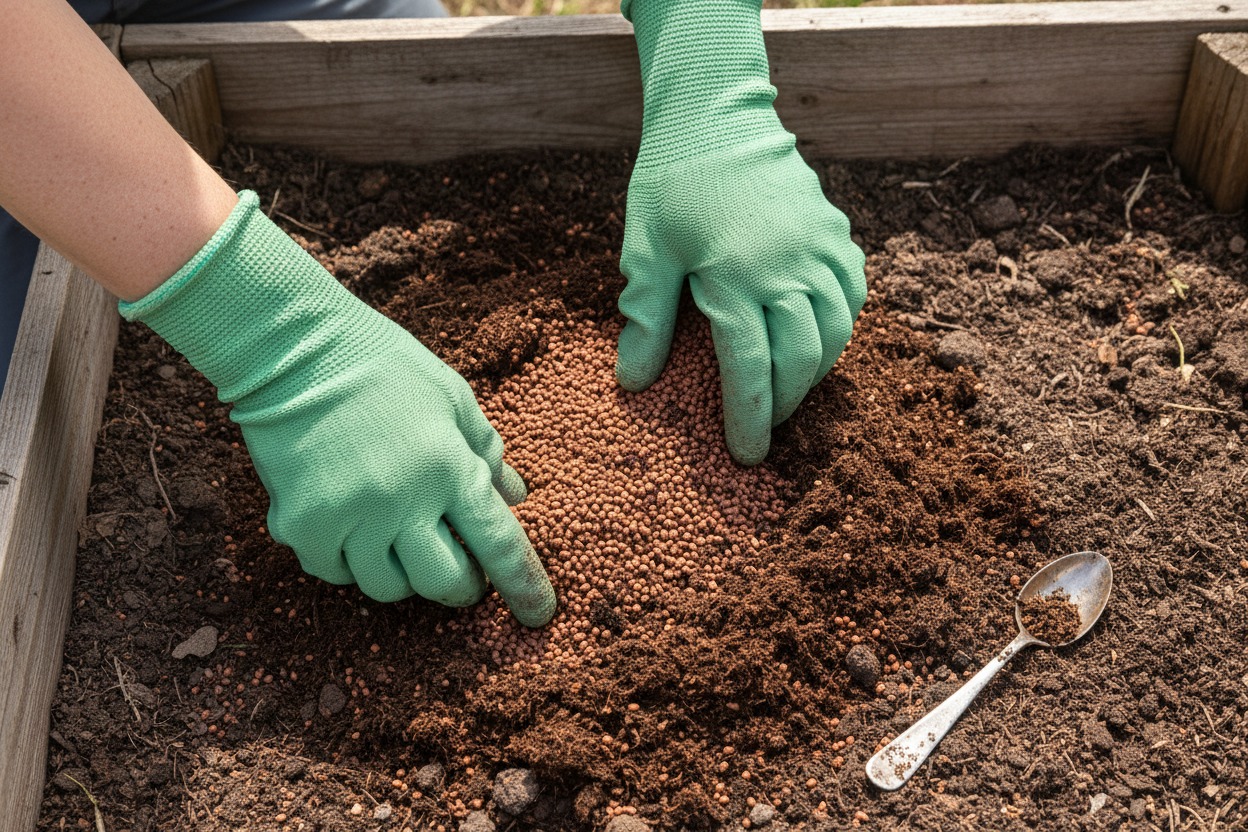
Here’s the practical breakdown you came for. Rates vary depending on what you’re growing. So follow these guidelines closely.
Preparing a New Garden Bed
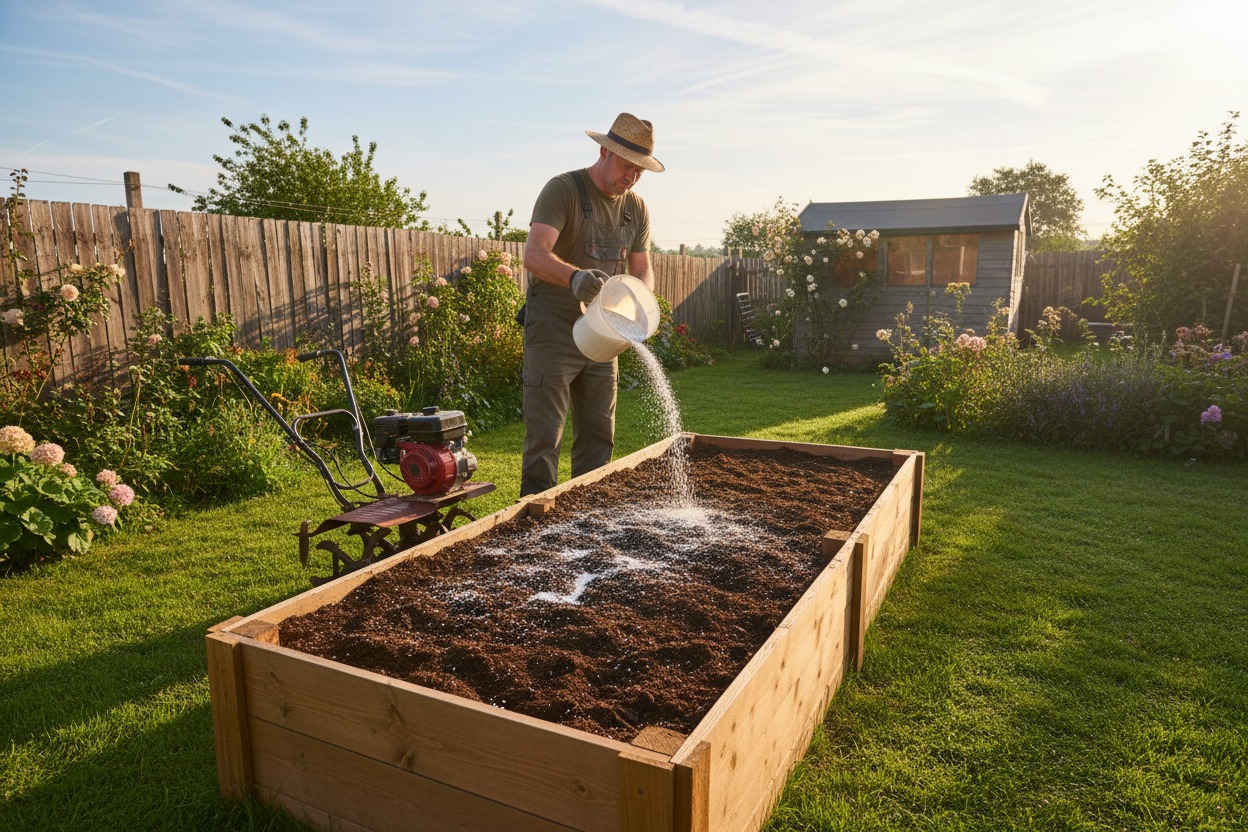
If you’re starting from scratch, breaking ground on a new vegetable bed or flower border is your starting point.
Application Rate:
Apply 2.5 to 5 lbs per 100 square feet, then thoroughly mix it into the top 3 inches of soil.
Step-by-step:
- Clear the area of weeds and debris
- Measure your square footage
- Weigh or measure your fertilizer (use the handy conversion: 2½ cups ≈ 1 lb)
- Broadcast evenly across the soil surface
- Use a garden fork or tiller to work it into the top 3 inches
- Water lightly to activate microbial breakdown
- Let it sit for a few days before planting, if possible
This initial soil prep sets up a nutrient bank that your plants will draw from throughout the season.
Feeding Transplants (General Vegetables, Herbs & Flowers)
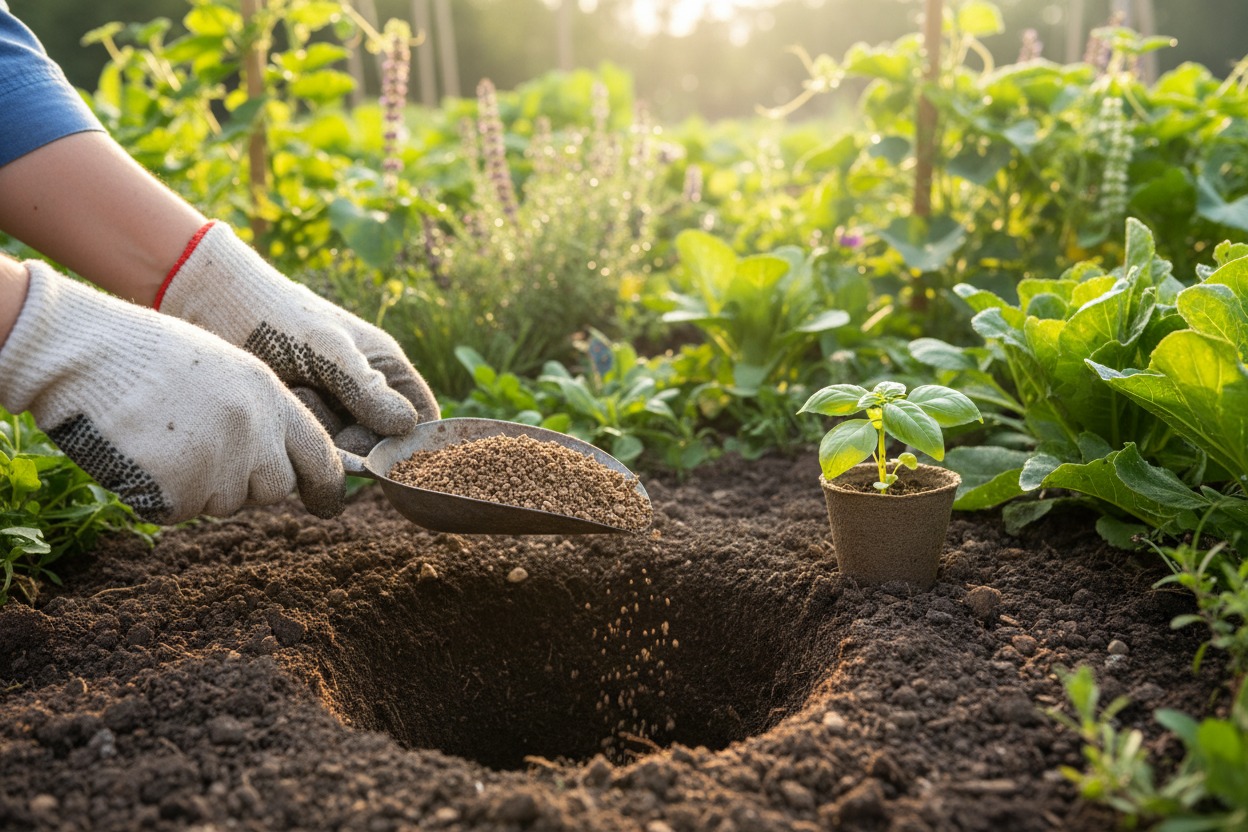
When you’re moving seedlings from their starter pots into the ground, this is your moment to set them up for success.
Application Rate:
Add 1 to 2 tablespoons per planting hole, mix it with the backfill soil, then plant and water in well.
Why this works:
Mixing fertilizer into the backfill (the soil that goes back around the roots) ensures the nutrients are close enough to be absorbed, but not so concentrated that they burn tender new roots. This “non-burning” formula is one of the things gardeners love most about it.
Tomato-Specific Application
Tomatoes are heavy feeders, and Down to Earth 4-6-2 is specifically called out as a go-to choice for them.
For 4″ tomato starts:
Prepare transplant holes and mix 2 to 3 tablespoons of the backfill soil with each hole for each plant.
For 1-gallon tomato transplants:
Use ¼ to ½ cup per plant, mixed into backfill.
For established tomatoes:
Side-dress ¼ to ½ cup per plant (depending on plant size), once each month during the growing season. Lightly work it into the soil surface around the base of the plant, then water in.
Side-Dressing Established Plants
Side-dressing is exactly what it sounds like: you apply fertilizer to the side of an established plant without disturbing the roots.
Application Rate:
2 to 4 oz per plant (depending on size), once monthly during the growing season.
How to side-dress:
- Create a shallow ring or trench around the plant, a few inches from the stem
- Sprinkle the measured fertilizer
- Lightly rake or scratch it into the top inch of soil
- Water thoroughly
For reference: ½ cup ≈ 3.2 oz, and 1 tablespoon ≈ 0.4 oz.
Container Plants & Potted Gardens
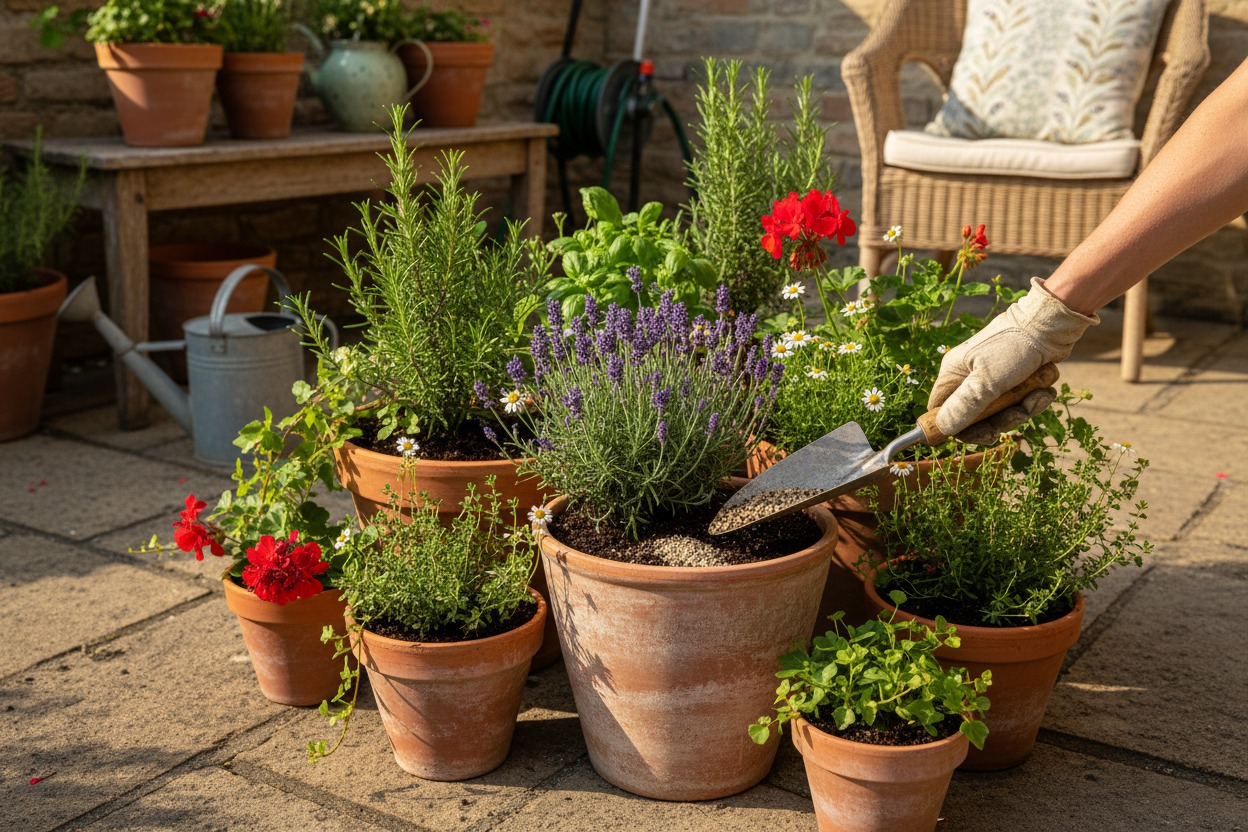
Container plants are a slightly different situation because the soil volume is limited and nutrients deplete faster.
For new container plantings:
Add 1 to 2 tablespoons per gallon of potting soil and mix thoroughly before planting. Alternatively, for larger batches, use 5 to 10 lbs per cubic yard of soil mix.
For established container plants:
Lightly mix 1 to 2 tablespoons per gallon into the soil surface once each month during the growing season.
Because container soil doesn’t have the same buffering capacity as garden soil, always water your containers after application to prevent salt buildup.
Trees & Shrubs
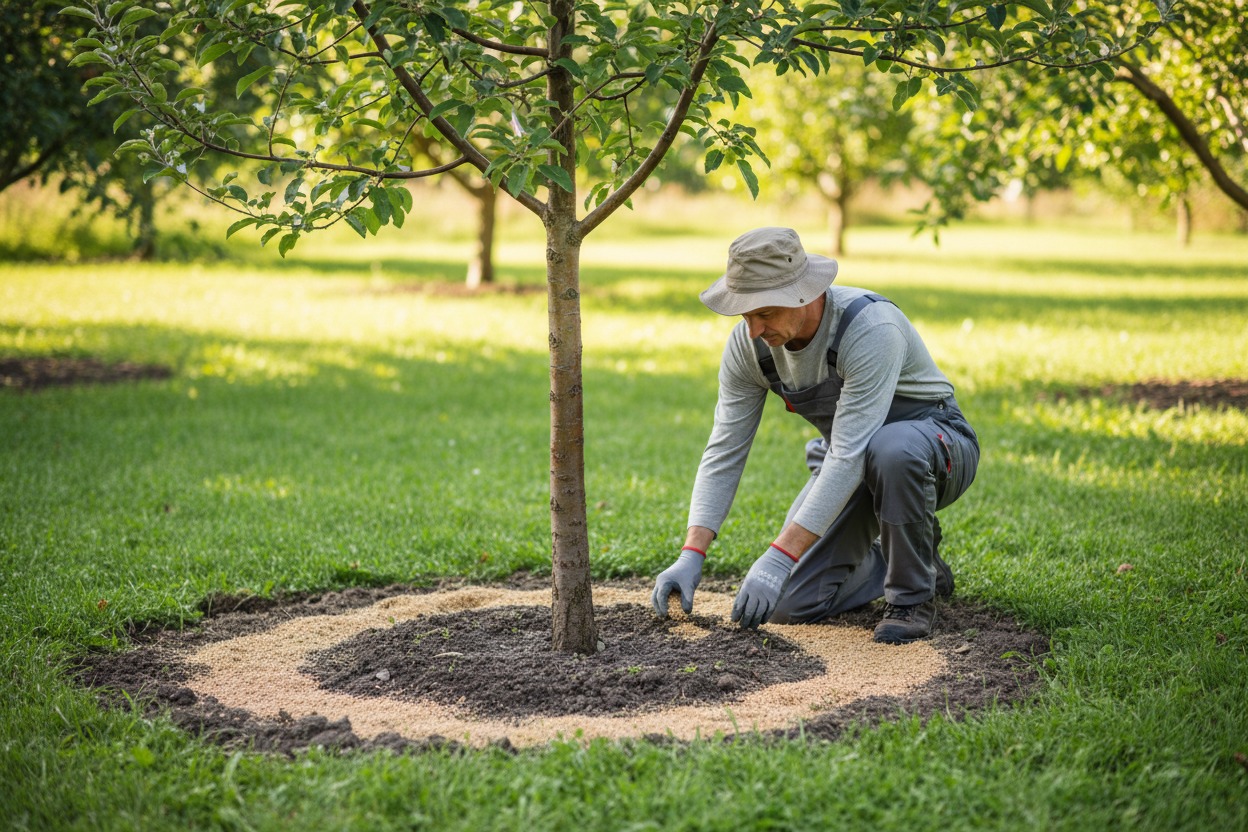
This fertilizer works beautifully for both ornamental trees and productive fruit trees.
For established trees:
Spread 1 lb per 1 inch of trunk diameter, spreading from the base outward to the drip line. Lightly mix into the soil surface and water in well.
For newly planted trees:
Prepare the transplant hole and mix 1 to 2 cups of the backfill soil into it.
Apply once in early spring, as growth begins, and again mid-summer if the tree shows signs of slowing.
Lawns
Application Rate:
Apply 10 lbs per 1,000 square feet, three to four times per year.
For lawns, use a broadcast spreader and water in after application. The granular formula breaks down slowly, making it much safer than synthetic lawn fertilizers that can burn grass in dry conditions.
Large-Scale Row Crops & Acreage
For farmers or large-scale growers, the recommended rate is 750 to 1,000 lbs per acre, adjusted depending on specific crop needs or required pounds of actual nitrogen per acre.
Application Timing: When to Fertilize
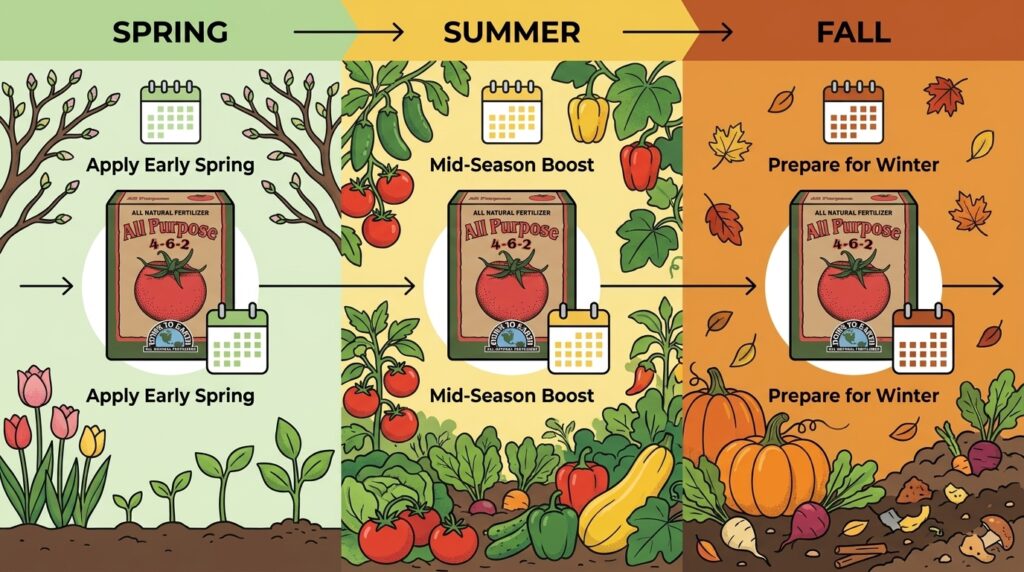
Timing matters as much as the rate. Here’s a seasonal breakdown:
Early Spring (Before Planting):
Amend your beds 1 to 2 weeks before planting. This gives the granules time to begin breaking down so nutrients are available as soon as roots start reaching.
At Transplanting:
Mix into the planting hole as described above. This is arguably the most impactful single application you’ll make.
Monthly During the Growing Season:
Side-dress established plants every 4 weeks. This maintains a steady nutrient supply without overloading the soil.
Dormant Season for Trees & Shrubs:
Apply in early spring before budbreak, when natural soil moisture will carry nutrients down to the root zone.
Expert Tip: One experienced organic gardener from Renee’s Garden notes: “In early spring, when perennials are still dormant and spring rains are expected, broadcast sparingly then cover with a layer of mulch. The fertilizer breaks down slowly and, as plants wake up, they sprout back with vigor.”
How Down to Earth 4-6-2 Feeds Your Soil (Not Just Your Plants)
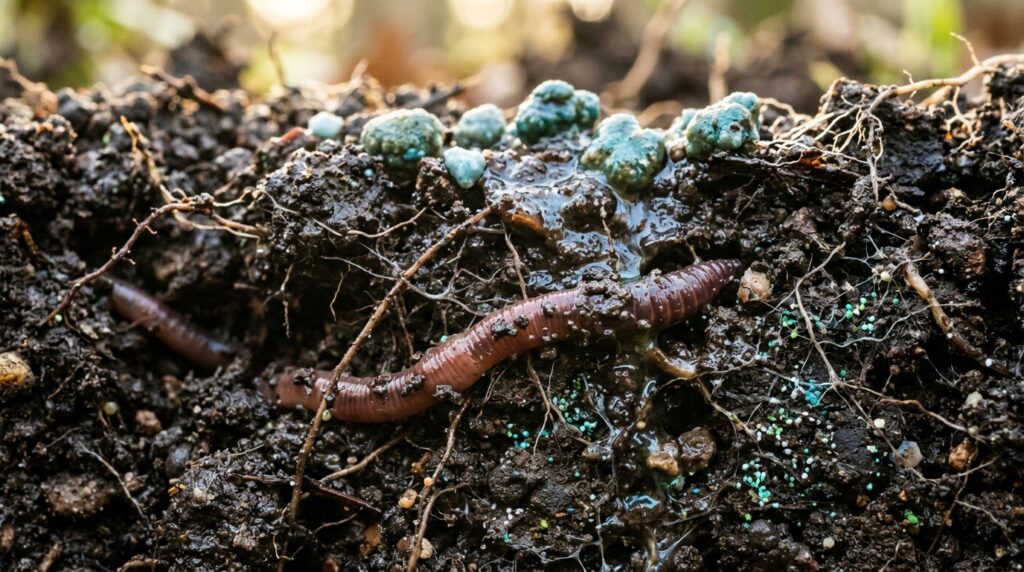
Here is something that many gardeners who are starting out do not realize: really, the great thing about organic fertilizers such as this one is not just about directly providing nutrients to plants.
It is about nourishing the soil food web.
Bacteria, fungi, and other soil organisms feed on the granules as they start to decompose. In turn, these microbes produce nutrients that plant roots can absorb – a process that is much more intricate and advantageous than simply dissolving synthetic chemicals.
The Organic Materials Review Institute (OMRI) gave this product its stamp of approval, as each component meets the strict requirements of organic production: no synthetic growth stimulants, no poultry waste as fillers, no artificial anything.
If you keep using Down to Earth 4-6-2 regularly, the soil’s condition, its ability to hold water, and the diversity of soil organisms will actually be enhanced. You will not only be nourishing the tomatoes of this year but also creating a great garden for the future years.
Pros and Cons of Down to Earth All Purpose Mix 4-6-2
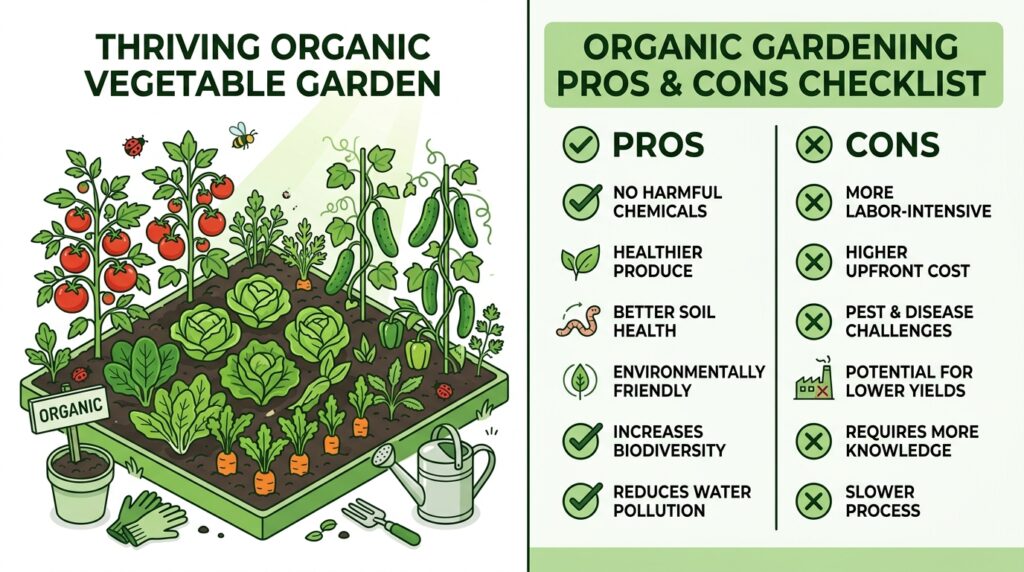
✅ Pros
- Non-burning formula — safe for seedlings and transplants right at planting time
- Slow-release nutrition — feeds plants steadily over 1 to 4 months, not in one hit
- Genuinely all-purpose — works across vegetables, flowers, herbs, trees, containers, and lawns
- OMRI Listed — certified safe for organic production
- Builds soil health — feeds beneficial microbes and improves long-term soil structure
- Multiple ingredients — provides macro and micronutrients beyond just NPK
- Available in multiple sizes — from 1 lb to 25 lb bags; the 6 lb box (model 7801) is a popular mid-size option on Amazon
❌ Cons
- Slower results — won’t produce the dramatic 1-week green-up you’d get from a liquid synthetic fertilizer
- Slight odor — organic ingredients (especially blood and fish bone meal) have a distinct smell when first applied
- Requires watering in — won’t work effectively without moisture to activate breakdown.
- Not for acid-loving plants exclusively — if you’re growing blueberries or azaleas, their dedicated acidic formulas may be better suited
Common Mistakes to Avoid
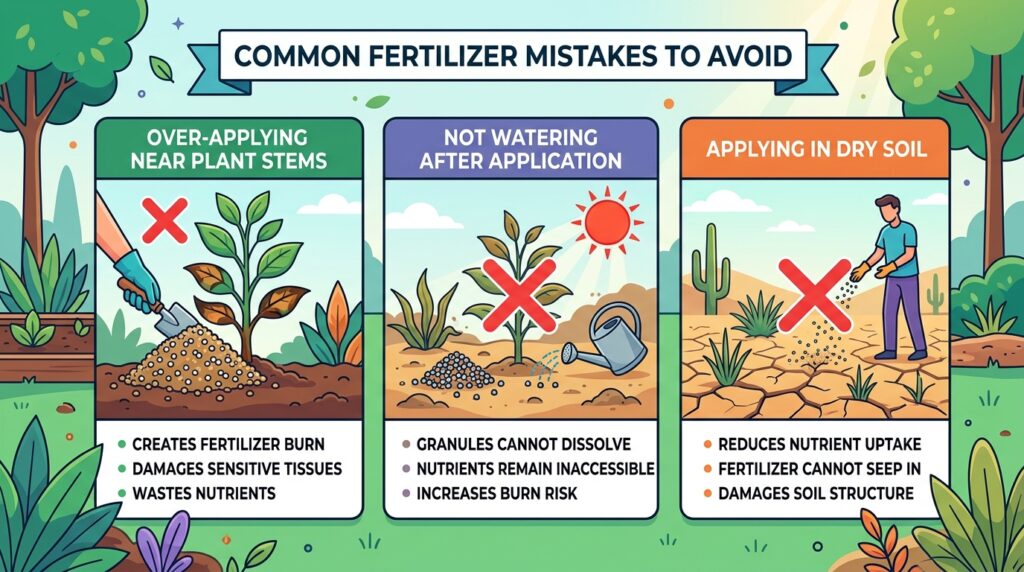
Even a great product can underperform if you don’t use it right. Watch out for these:
1. Piling it against the plant stem
Always keep granules a few inches away from the main stem or trunk. Direct contact with concentrated organic matter can cause rot or attract pests.
2. Not watering after application
Granular organic fertilizers need moisture to start breaking down. Always water in after applying, especially in dry conditions. Without water, those nutrients aren’t going anywhere.
3. Over-applying the thinking “more is better.”
The application rates are carefully worked out. Doubling the dose doesn’t double the growth — it can disrupt soil pH and nutrient balance, and in containers, especially, it can damage roots.
4. Applying to dry, compacted soil
If your soil is bone dry and crusted over, the granules won’t break down properly. Lightly water the area first, apply, then water again.
5. Skipping monthly side-dressing
A single spring application is not enough for heavy-feeding crops like tomatoes and peppers. Set a monthly reminder during the growing season.
Expert Tips to Get the Most Out of Every Bag
Combine with compost for a powerhouse bed prep
Down to Earth 4-6-2 and well-aged compost are a perfect pairing. Compost adds bulk organic matter and biology; the fertilizer adds concentrated, balanced nutrition. Use them together when prepping new beds, and you’ll start with a genuinely excellent growing medium.
Use the measurement conversions on the label
The official conversions are: 2½ cups ≈ 1 lb; ½ cup ≈ 3.2 oz; 1 tablespoon ≈ 0.4 oz. Keep these handy, and you won’t need a postal scale every time.
Layer under mulch for spring perennial beds
Broadcast lightly over dormant perennials and bulbs, then cover with mulch. As spring rains fall, the nutrients filter down to the root zone just as the plants wake up — perfect timing with no extra effort.
Combine with a liquid kelp feed during peak fruiting
Down to Earth’s granular formula provides the foundation, but during peak tomato or pepper production, adding a liquid kelp or fish emulsion mid-cycle gives plants an immediate boost alongside the slow-release granules.
Store properly between seasons
Keep the bag sealed in a cool, dry place. Moisture degrades organic granules, leading to clumping or premature breakdown. A sealed container in the garage or shed is ideal.
Down to Earth 4-6-2 vs. Other Fertilizer Options
| Feature | Down to Earth 4-6-2 | Synthetic Granular | Liquid Organic |
|---|---|---|---|
| Release Speed | Slow (weeks–months) | Fast (days) | Fast (days) |
| Burns Plants? | No | Risk of burning | Low risk |
| Soil Health | Improves over time | Can degrade | Minimal improvement |
| Organic Certified? | Yes (OMRI) | Generally no | Varies |
| Ease of Use | Easy | Easy | Requires mixing |
| Cost Per Application | Moderate | Low | Moderate–High |
For most home gardeners growing vegetables and flowers organically, the slow-release organic approach of Down to Earth 4-6-2 wins on almost every practical dimension.
Frequently Asked Questions (FAQs)
1. How often should I apply Down to Earth All Purpose Mix 4-6-2?
For mature plants, a monthly application during the active growing season through side-dressing the plant’s base is recommended. In the case of new plantings, one application at transplant time will be enough – afterwards, continue applying monthly. Usually, trees and shrubs require one or two applications yearly.
2. Can I use Down to Earth 4-6-2 on all vegetables?
Yes. This fertilizer is specifically designed for a wide range of vegetables, including tomatoes, peppers, zucchini, cucumbers, potatoes, and leafy greens. It’s also appropriate for herbs, flowers, and fruiting trees. Its phosphorus-forward NPK ratio makes it especially well-suited for fruiting and flowering crops.
3. Will Down to Earth All Purpose Mix burn my plants?
No – this is actually one of its main features. The granular fertilizer composition provides nutrients gradually and is the non-burning type of fertilizer, which means it won’t cause harm even if you put it straight into the soil around the roots of the transplants. However, it is best to adhere to the instructions and not to exceed the quantity.
4. What is the Down to Earth 6-pound All Purpose 4-6-2 Mix 7801?
The model number 7801 refers specifically to the 6-pound size of the Down to Earth All Purpose Mix 4-6-2, as listed on Amazon and other retailers. It’s the same product and formula as other sizes — just packaged in a 6-pound box, which is a popular mid-size option for home gardeners who want more than a 5 lb box without committing to a 25 lb bag.
5. Is Down to Earth 4-6-2 safe for organic gardening?
Yes. This fertilizer is OMRI Listed (Organic Materials Review Institute) and CDFA Registered, meaning it meets strict standards for use in certified organic crop production. It contains no synthetic chemicals, growth stimulants, or low-quality fillers. Certified organic growers should still confirm with their certifying agent before use, as individual program requirements can vary.
Conclusion
If you have reached this point, you now possess knowledge about Down to Earth All Purpose Mix 4-6-2 that exceeding what many gardeners learn by just reading the bag label.
The essence is really straightforward: this is a tremendously versatile, beginner-safe, organically certified fertilizer that can work effectively for an astonishing variety of plants and situations. The secret lies in determining the correct application rate for the right plant at the right time — and subsequently, regular monthly side-dressing during the growing season.
Prepare your soil, use the mix when transplanting, and side-dress monthly. Water it in every time. The organic components will gradually continue to build the soil.
Eventually, your plants will be thanking you when the time of harvest arrives.
Ready to put this knowledge to work?
Pick up Down to Earth All Purpose Mix 4-6-2 on Amazon or directly from the Down to Earth website, and start building the garden you’ve been planning.
Have a question about your specific plants or growing situation? Drop it in the comments — we’d love to help.
Disclaimer: This article is for educational purposes. Always follow the manufacturer’s label instructions and consult your local agricultural extension service for region-specific guidance. Certified organic growers should verify product eligibility with their certifying agent.