Key Takeaways: Common Causes Of Serious Truck Accidents
- Serious truck crashes often result from a combination of driver, vehicle, cargo, roadway, and weather factors.
- Truck drivers need additional time and distance to brake, turn, and respond to changing traffic conditions.
- Fatigue, distraction, speeding, poor maintenance, and improperly secured cargo can all contribute to dangerous events.
- Evidence may disappear quickly after a collision, including vehicle data, camera footage, driver logs, and cargo records.
- Everyone involved should prioritize emergency medical care, safety, and accurate reporting after a crash.
Truck accidents can produce life-changing injuries because commercial vehicles are large, heavy, and difficult to maneuver quickly. A collision may involve a tractor-trailer, delivery truck, dump truck, tanker, or another commercial vehicle, but the questions that follow are often similar: What happened, who had control of the vehicle, and what evidence can explain the crash? Resources such as chamlinlaw.com discuss the practical and legal issues that may arise after serious injury accidents.
It is important not to assume that a truck crash has one simple cause. A careful investigation can involve the actions of both drivers, the truck’s condition, the cargo, road design, traffic conditions, and the carrier’s safety practices. Understanding common risk factors can help motorists drive more cautiously and help injured people recognize why prompt documentation matters.
1. Driver Fatigue
Long shifts, irregular sleep, overnight driving, and demanding delivery schedules can leave a commercial driver less alert than the road requires. Fatigue may slow reaction time, reduce attention, and make it harder to recognize stopped traffic, a changing signal, or a vehicle entering a lane. It can also affect judgment, including the decision to continue driving despite difficult weather or heavy congestion.
Federal safety rules limit driving time for many commercial operators, but compliance is only one part of the picture. A driver may be within a permitted schedule and still be tired because of poor sleep, illness, medication, or a disrupted routine. The Federal Motor Carrier Safety Administration identifies fatigue as one of the factors it examines in its analysis of large-truck crash causation.
2. Distracted Or Inattentive Driving
Commercial drivers must monitor a large vehicle, mirrors, traffic, road signs, weather, and the space around a trailer. Looking away from the road to use a phone, adjust a navigation device, eat, reach for an object, or handle paperwork can create a dangerous gap in attention. Even a short lapse can matter when traffic ahead slows suddenly.
Inattention is not limited to phone use. A driver may fail to check mirrors before changing lanes, overlook a vehicle in an adjacent lane, or misjudge how quickly traffic is stopping. Passenger-vehicle drivers also need to stay alert around trucks and avoid lingering beside a trailer where visibility may be limited.

3. Speeding And Following Too Closely
Speed is especially dangerous when a truck is heavily loaded, traveling downhill, approaching work zones, or driving on wet pavement. A tractor-trailer cannot stop or change direction as quickly as a typical passenger vehicle. According to the Insurance Institute for Highway Safety, loaded tractor-trailers generally need substantially more stopping distance than cars, particularly on slippery roads or when brakes are poorly maintained.
Following another vehicle too closely can turn ordinary traffic changes into a rear-end collision. A truck driver needs enough space to see developing hazards and brake gradually. Excessive speed for conditions can also increase the chance of a rollover, jackknife, loss of control, or impact that causes severe injuries.
4. Unsafe Lane Changes And Wide Turns
Large trucks have extensive blind areas around the cab and trailer. A driver who changes lanes without carefully checking mirrors or accounting for nearby traffic can sideswipe a smaller vehicle, force it off the road, or trap it between two vehicles. The risk can be greater on multi-lane highways where traffic moves at different speeds.
Wide turns present a separate hazard. A truck may need to swing left before making a right turn, or use more than one lane to complete a turn safely. Confusion about the truck’s intended path can lead to crashes with vehicles, cyclists, or pedestrians positioned beside the trailer. Other road users should never assume a truck can turn within the same space a car needs.
5. Mechanical Failures And Poor Maintenance
A truck’s brakes, tires, steering, lights, coupling equipment, and other components require regular inspection and maintenance. Worn brakes may limit stopping performance. Tire failures can lead to loss of control or roadway debris. Problems with lights or reflective equipment can also make a large vehicle harder to see at night or in poor weather.
After a serious crash, maintenance logs, inspection reports, repair invoices, and the truck itself may be important sources of information. A mechanical issue does not automatically establish responsibility, but it may help investigators determine whether a defect, missed repair, or inspection problem played a role.
6. Improperly Loaded Or Secured Cargo
Cargo must be loaded and secured so it remains stable during normal driving, braking, and turns. If freight shifts unexpectedly, it can affect balance and steering. A trailer may become more difficult to control, particularly during quick maneuvers or on curved roads. Loose materials can also fall into traffic, creating a hazard for other drivers.
Loading issues can involve several parties, including the driver, carrier, shipper, warehouse, or company that loaded the trailer. Useful records may include bills of lading, weight tickets, loading instructions, cargo-securement records, and photographs of the trailer or its contents.
7. Dangerous Weather And Road Conditions
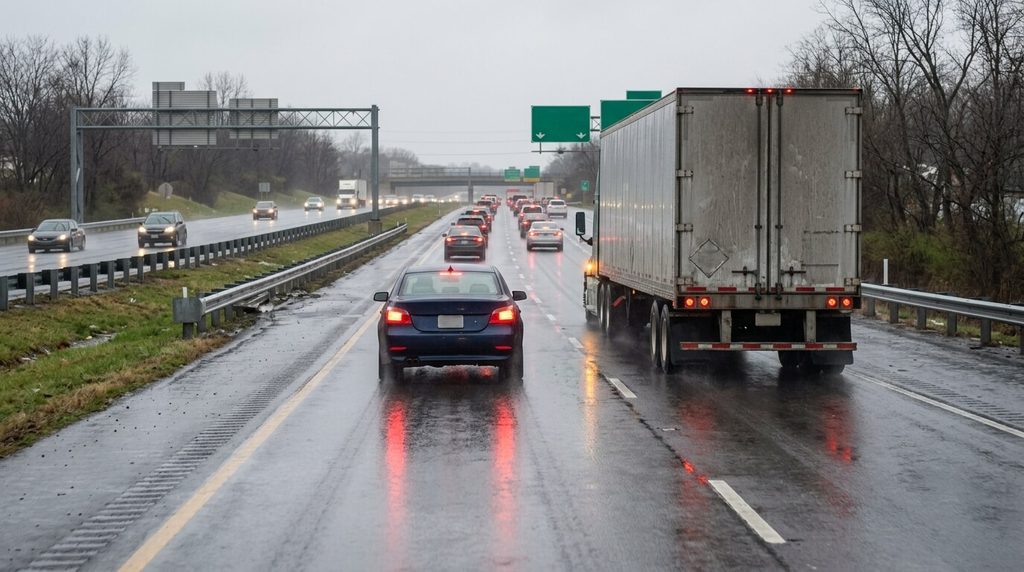
Rain, snow, ice, fog, high winds, standing water, construction zones, potholes, and uneven pavement can make operating a truck more difficult. Wet or icy surfaces reduce tire grip and extend braking distance. High winds can affect trailers, especially those carrying lighter loads or traveling through exposed areas.
The weather does not excuse unsafe driving. Conditions may require a driver to reduce speed, increase following distance, delay a trip, or pull over when the risk becomes too great. Roadway conditions can also be relevant when an investigation evaluates signs, lane markings, lighting, traffic control, or maintenance issues.
What To Do After A Serious Truck Crash
First, get to a safe location if possible and call 911 when anyone is injured or the scene is dangerous. Accept medical evaluation, even when symptoms appear manageable at first. Head, neck, back, and internal injuries may not be obvious immediately after a collision.
If it is safe to do so, take photographs of vehicle positions, damage, debris, road conditions, signs, skid marks, the truck’s company markings, and the surrounding area. Obtain witness contact information and avoid discussing fault at the scene. Keep copies of medical records, insurance communications, repair estimates, missed-work documentation, and any crash report.
If it is safe to do so, take photographs of vehicle positions, damage, debris, road conditions, signs, skid marks, the truck’s company markings, and the surrounding area. Knowing what evidence to collect after a car accident can also help you preserve important details before they disappear.
Conclusion
Truck crashes are rarely explained by a single detail. Fatigue, inattention, excessive speed, unsafe maneuvers, mechanical problems, cargo issues, and difficult road conditions can overlap in ways that lead to devastating consequences. A prompt medical response and careful preservation of information can help provide a clearer account of what occurred while injured people focus on recovery.