Influencer Marketing Tomoson Small Business Owners Should Know About
You’ve got a small budget. You don’t have an agency. And you keep seeing the same advice everywhere: get influencers to talk about your product.
Then you search for a platform to actually do that, and Tomoson keeps showing up. It’s been around since 2010. It promises access to thousands of influencers. It sounds like exactly what a small business needs.
But here’s what most articles about it won’t tell you straight. Tomoson still exists in 2026, but the reviews are mixed, and a few complaints are worth knowing about before you sign up. This guide gives you the honest picture, plus the strategy and platform options that actually make sense for a small budget in 2026.
What Is Tomoson?
Tomoson is an influencer marketing platform that connects brands with influencers and bloggers for product reviews and sponsored posts. It was founded in 2010 in Minneapolis by Dan Fernandez, and it’s one of the older names in this space, predating most of the influencer platforms you hear about today.
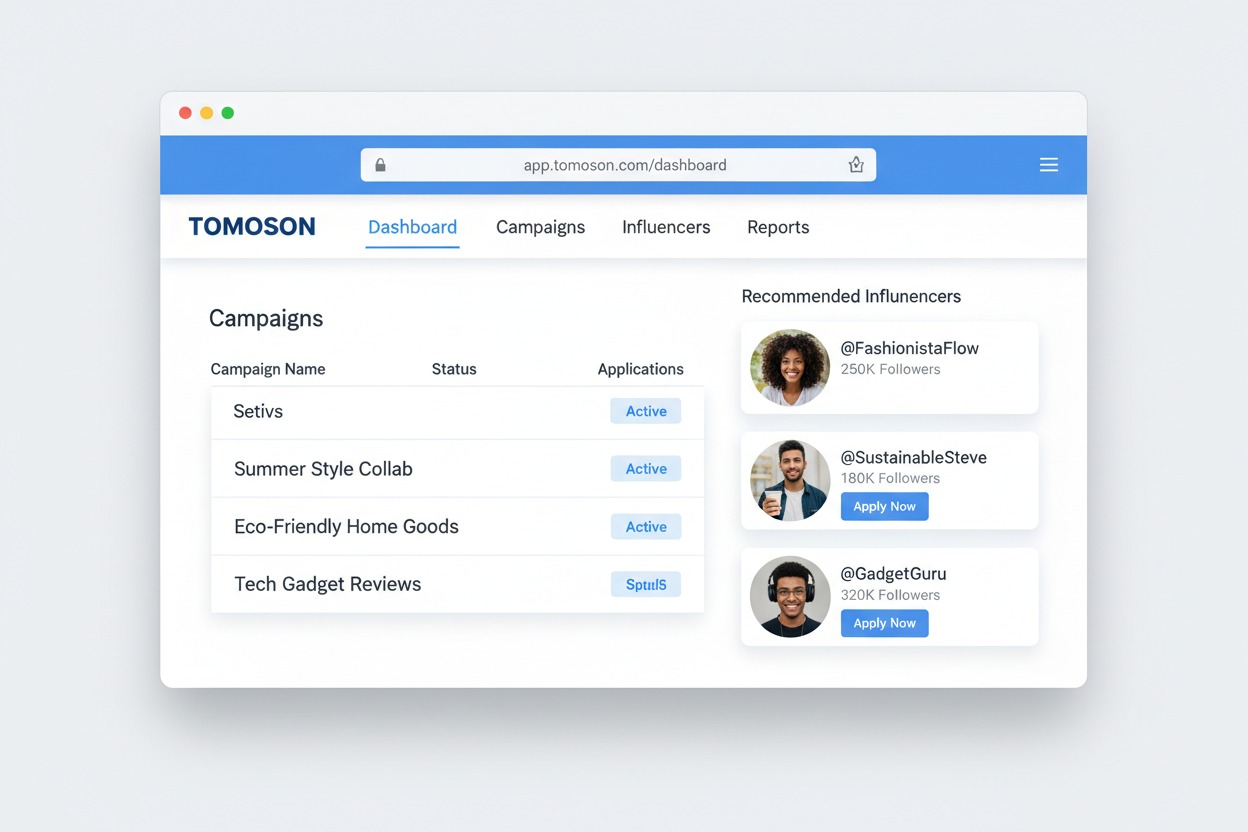
The core idea is simple. Brands post a campaign describing what they want, whether that’s a product review, an unboxing video, or a social post. Influencers browse those campaigns and apply. The brand picks who they want to work with, sends the product or payment, and the influencer creates the content.
According to ManyTools’ 2026 review, Tomoson connects with a network of more than 90,000 influencers and micro-influencers, and includes a content tool that lets brands schedule and repost influencer-generated content across their own social accounts.
Does Tomoson Still Work for Small Businesses in 2026?
This is the question most small business owners actually want answered, and it deserves a straight answer instead of a sales pitch.
Yes, Tomoson is still active. But “still active” and “still the best choice” are two different things, and the current reviews reflect that gap.
What Real Users Are Saying
According to a detailed 2026 review of user feedback, Tomoson reviews are genuinely mixed. Some brands report landing successful collaborations and getting real product exposure. Others report recurring complaints, including weak customer support, fake influencer profiles, and inconsistent campaign quality.
That same review notes that Tomoson is technically legitimate as a platform, meaning it operates as described and isn’t an outright scam. But it recommends that influencers and brands both verify credibility carefully before committing, since moderation on the platform appears weaker than on newer competitors.
A separate 2026 evaluation from Paganpressbooks echoes this, describing Tomoson as suited for small- and mid-size brands that want a simple, lower-cost influencer channel, while noting that it has limited enterprise features and needs stronger fraud detection than larger platforms.
Tomoson Pricing Overview
Tomoson uses a freemium model. According to Tomoson’s own product page, the free tier lets you create influencer campaigns and access limited analytics at no cost. Paid plans unlock advanced analytics, unlimited campaigns, and expanded influencer connections, with pricing that scales with your campaign volume.
This pricing structure is one of Tomoson’s real strengths for a small budget. You can test the platform for free first, which isn’t true of every competitor.
Tomoson Pros and Cons
| Pros | Cons |
|---|---|
| Free tier available to test the platform | Weaker fraud detection than newer platforms |
| Large influencer network (90,000+) | Mixed user reviews on support quality |
| Budget-friendly compared to enterprise tools | Reports of fake or low-quality influencer profiles |
| Simple setup, workable for beginners | Limited advanced tracking and attribution |
| Built-in content scheduling tool | Fewer enterprise-level integrations |
How Tomoson Works Step by Step
If you decide to try it, here’s the actual workflow, based on how the platform is described across multiple current reviews.
- Create a free account and set up your brand profile.
- Define your campaign. Specify what you want, a product review, unboxing, or social post, and what you’re offering in return, whether that’s free product, cash, or both.
- Set your filters. Search influencers by niche, follower count, platform, and engagement rate.
- Review applicants. Influencers apply to your campaign, and you approve the ones that fit.
- Send product or payment according to your agreed terms.
- Track deliverables using the platform’s messaging and status-tracking tools.
- Collect and repost content using Tomoson’s built-in content tool once influencers deliver.
The Paganpressbooks review notes this workflow focuses on discovery and basic campaign management rather than complex ad funnels, which keeps it approachable if you’ve never run an influencer campaign before.
How to Spot Fake Influencers Before You Pay
Given the fake-profile complaints tied to platforms like Tomoson, this deserves its own section. It’s the single biggest risk to a small budget, and it’s avoidable with a few checks.
Check the engagement-to-follower ratio. A real, healthy account typically sees engagement somewhere between 1% and 8% of its follower count, depending on platform and tier. If an account has 50,000 followers but only 40 likes per post, that’s a red flag worth investigating further.
Look at comment quality, not just comment count. Genuine engagement includes specific, varied comments. Fake engagement often looks like generic phrases, emoji-only replies, or comments from accounts with no profile photo or posts of their own.
Review follower growth patterns if the platform shows them. A sudden, unexplained spike in followers, especially without a matching spike in engagement, often signals purchased followers rather than organic growth.
Ask for past collaboration examples directly. A legitimate influencer with real brand history can usually point you to specific past posts and, ideally, some performance numbers from those campaigns.
Cross-check their profile across platforms. An influencer claiming a large following on one platform but with a nearly empty or inactive presence elsewhere is worth a second look before you commit product or payment.
None of these checks take more than a few minutes per influencer, and they’re worth doing regardless of which platform you’re using, including Tomoson.
Tomoson vs. Other Influencer Marketing Platforms for Small Business
Before you commit to any single platform, it helps to see how Tomoson actually stacks up against current alternatives. This comparison is something most single-platform reviews skip entirely.
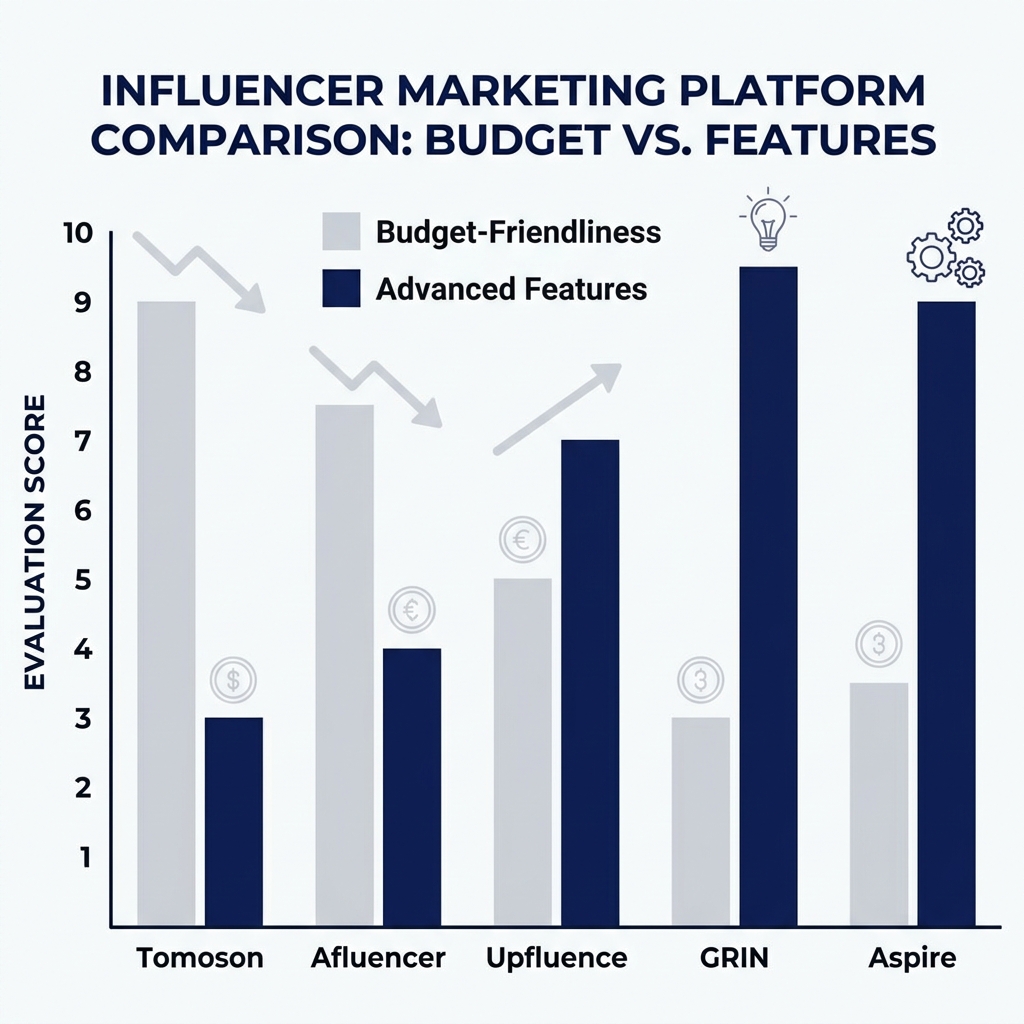
| Platform | Best For | Pricing Model | Notable Strength |
|---|---|---|---|
| Tomoson | Budget-first beginners | Freemium | Large network, low cost to start |
| Afluencer | Direct brand-creator matching | Freemium | Clearer communication tools |
| Upfluence | Turning customers into influencers | Paid, tiered | Deep search filters across platforms |
| GRIN | E-commerce brands scaling up | Paid, custom quote | Strong ecommerce integrations |
| Aspire | Mid-size brands wanting AI tools | Paid, custom quote | AI-powered creator matching |
According to the same RankVisely review, popular alternatives to Tomoson include Afluencer, Upfluence, BuzzSumo, and NinjaOutreach, which often provide stronger analytics and moderation tools than Tomoson currently offers.
If your budget is genuinely at zero and you just want to test the waters, Tomoson’s free tier is a reasonable starting point. If you’re ready to invest a real budget and want stronger fraud protection and analytics, the alternatives above are worth comparing before you commit.
Best Influencer Marketing Platforms for Small Businesses in 2026
Tomoson isn’t your only option, and depending on your goals, it might not even be your best one. Here’s a broader look at the landscape.
For pure budget testing, Tomoson’s free tier remains one of the lowest-barrier options to try influencer marketing without spending anything upfront.
For direct creator relationships: Afluencer focuses on connecting brands directly with creators across Instagram, TikTok, YouTube, and more, with a simpler application-based system.
For turning your own customers into influencers, Upfluence stands out, since it lets brands identify existing customers with engaged audiences and convert them into affiliate-style influencers.
For ecommerce brands ready to scale: GRIN integrates directly with ecommerce platforms, making it easier to track influencer-driven sales.
For AI-assisted creator discovery, Aspire uses AI-powered matching to speed up the process of finding creators whose audiences fit your product.
The right choice depends less on which platform has the biggest name and more on what your business actually needs right now. A five-person business testing its first campaign has very different needs than a growing ecommerce brand running its twentieth.
What Is Influencer Marketing for Small Businesses, Really?
Before going further, it’s worth stepping back and defining this clearly, since many small business owners jump into platforms without understanding the mechanics.
Influencer marketing for small businesses means partnering with content creators, ranging from a few thousand followers to well over a million, who promote your product to their existing audience. The appeal for a small business specifically is that you’re borrowing trust that’s already been built, rather than trying to build it from scratch with cold advertising.
The numbers back up the fact that this matters right now. According to data reported through Influencer Marketing Hub and covered by Yahoo Finance, the influencer marketing industry reached $32.55 billion in 2025, and brands earn an average return of $5.78 for every $1 spent on influencer campaigns. That same report notes 76.2% of influencer campaigns are now run in-house rather than through agencies, which is exactly the kind of hands-on approach a small business is already set up to do.
Why Small Businesses Specifically Benefit
Small businesses have a structural advantage here that larger brands often don’t. You can move faster, negotiate more flexibly, and offer product-based compensation rather than cash only, which helps keep costs manageable.
Micro-influencers, generally those with 10,000 to 100,000 followers, are also where a lot of small-business budgets go the furthest. Industry benchmark data compiled by Hubfluence’s 2026 report shows micro-creators deliver a cost-per-engagement roughly 40% lower than macro creators, while still posting median engagement rates between 3% and 8%, compared to 1% to 3% for larger accounts.
How to Build an Influencer Marketing Strategy for a Small Business
Whether you use Tomoson, a competitor, or manual outreach, the underlying strategy matters more than the platform. Here’s a practical framework.
Step 1: Define What Success Actually Looks Like
Decide upfront whether you’re chasing brand awareness, direct sales, or content you can reuse in your own marketing. Each goal changes which influencers and deliverables make sense.
Step 2: Start With Micro and Nano Influencers
Resist the urge to chase big names first. As covered above, smaller creators consistently deliver stronger engagement per dollar, which matters most when your budget is limited.
Step 3: Offer Fair, Clear Compensation
According to Aspire’s 2026 State of Influencer Marketing report, 86% of creators are still willing to work for free product alone, but only when the product genuinely fits their audience, and the value feels fair. Don’t assume free product replaces payment for creators with real engaged followings.
Step 4: Prioritize Product Fit Over Follower Count
Survey data from Drive Research, cited in that same Aspire-linked report, found 84% of influencers say product relevance to their audience is the single most important factor when choosing brand partners. A creator with 5,000 highly relevant followers often outperforms one with 50,000 unrelated ones.
Step 5: Set Clear Deliverables in Writing
Specify the content type, timeline, required hashtags or disclosures, and usage rights before the campaign starts. This avoids the single most common source of friction in influencer partnerships.
Step 6: Track More Than Vanity Metrics
Move past follower counts. Track engagement rate, click-throughs, and if possible, direct conversions using unique discount codes or trackable links for each influencer.
Step 7: Build Long-Term Relationships, Not One-Offs
Data from Sprout Social shows that 71% of influencers offer lower rates for long-term partnerships and are open to negotiating discounts for multi-post campaigns. A repeat partnership is often both cheaper and more authentic than a single sponsored post.
If you’re still formalizing the business side of your marketing spend, our guide on what to do after creating a business plan is a useful next step to ensure your budget and structure support ongoing marketing investment like this.
Why Influencers in Business Matter More Than Ever
Influencer marketing has moved well past the experimental phase it was in a few years ago. It’s now a structured, measurable part of how small and large businesses grow.
Part of why influencers in business carry so much weight is trust. Traditional advertising asks people to believe a brand’s own claims. An influencer’s audience already trusts that creator’s judgment, and that trust transfers, at least partially, to whatever they recommend.
This is also why the channel keeps maturing rather than fading. According to the same Influencer Marketing Hub data referenced above, over 80% of marketers affirm the effectiveness of influencer marketing, even as measurement expectations get stricter across the board.
For a small business specifically, this matters because it levels the playing field that used to favor whoever had the biggest ad budget. A well-matched micro-influencer partnership can outperform a much larger, less targeted ad spend, simply because the audience match is tighter.
FTC Disclosure Rules Small Businesses Often Miss
This is the part of influencer marketing that most beginner guides skip entirely, and it’s a genuine legal requirement, not just a best practice.
The Federal Trade Commission requires clear and conspicuous disclosure whenever an influencer has a material connection to a brand, whether that’s payment, free product, or any other compensation. This applies regardless of the platform you use, including Tomoson, and regardless of how small your business is.
A few practical points worth knowing:
- Disclosures need to be easy to notice, not buried. A hashtag like #ad or #sponsored needs to be clearly visible, not hidden among a dozen other unrelated hashtags.
- “Thanks to [Brand] for the free product” style captions generally satisfy the requirement, as long as it’s clear and upfront rather than tucked away.
- Both the brand and the influencer can be held responsible if a required disclosure is missing, so it’s worth confirming this is part of your written agreement before a campaign goes live.
- Video content needs verbal or on-screen disclosure, not just something buried in a written caption that viewers might not read.
Building this into your campaign brief from the start, rather than leaving it to each influencer’s judgment, protects both your business and the creators you work with.
How to Actually Measure Influencer Marketing ROI
A lot of small business owners run a campaign, feel good about the content, and never actually calculate whether it paid off. Here’s a straightforward way to fix that.
Set Up Trackable Links and Codes Before You Launch
Give each influencer a unique discount code or UTM-tagged link. Without this, you’re relying on vague impressions instead of real attribution, and you won’t know which partnerships are actually worth repeating.
Calculate Cost Per Engagement, Not Just Total Reach
Divide what you paid, in cash or product value, by the total likes, comments, and shares the content generated. This number lets you compare wildly different creators on equal footing, whether they have 5,000 or 500,000 followers.
Track Earned Media Value as a Secondary Metric
This estimates what the exposure would have cost through paid advertising instead. It’s not a perfect number, but it’s a useful context, especially when a campaign generates strong content you can reuse elsewhere in your marketing.
Watch Conversion Rate on Trackable Links
If you’re using unique links or codes per influencer, this is your clearest signal of real business impact. A creator with a smaller audience but a strong conversion rate is often more valuable long-term than one with a huge reach but low follow-through.
Give It Enough Time Before Judging Results
A single post rarely tells the full story. Purchase decisions triggered by influencer content sometimes happen days or weeks later, so avoid writing off a partnership after 48 hours of unremarkable numbers.
Here’s a simple framework to keep the whole thing organized:
| Metric | What It Tells You | How to Track It |
|---|---|---|
| Engagement rate | Content resonates with the audience | Likes, comments, shares divided by followers |
| Cost per engagement | Efficiency of spend | Total cost divided by total engagement |
| Click-through rate | Interest translating to action | Trackable link clicks |
| Conversion rate | Real business impact | Purchases via unique code or link |
| Earned media value | Comparative ad-spend context | Estimated equivalent paid ad cost |
Red Flags in Any Influencer Campaign Terms
Beyond fake profiles, a few contract-level red flags are worth watching for, regardless of which platform connects you.
Vague deliverables. If a proposed agreement doesn’t specify exactly what content, how many posts, and by when, expect confusion later. Get specifics in writing before anything ships.
No usage rights clause. If you plan to repost influencer content on your own channels or in ads, confirm that’s allowed upfront. Some creators charge extra for extended usage rights, and assuming it’s included can lead to disputes.
Pressure to skip disclosure. If an influencer suggests skipping the required sponsorship disclosure to make the post “feel more authentic,” that’s both a legal risk and a signal of how they’ll handle other agreements.
Unusually fast responses combined with unusually low rates. This isn’t a guarantee of a problem, but it’s worth a closer look. Genuine creators with real engagement tend to be selective about which brands they work with.
No willingness to share past performance data. A creator confident in their results is usually happy to share screenshots of past campaign engagement. Reluctance here is worth noting.
None of these automatically means a partnership won’t work out. But catching them early saves both budget and time, whether you’re sourcing influencers through Tomoson, a competitor, or direct outreach.
Expert Tips for Small Business Owners
- Vet every influencer profile personally, even on a trusted platform. Given the fake-follower complaints reported around platforms like Tomoson, a quick manual check of engagement quality, not just follower count, protects your budget.
- Start with a small test campaign before scaling up. Run one or two partnerships first, measure real results, then expand rather than committing your full budget upfront.
- Keep a simple spreadsheet of every influencer you’ve worked with. Track their performance, reliability, and audience fit, since your best long-term partners are usually people you’ve already tested once.
- Ask for a media kit or examples of past collaborations before approving anyone. This single step immediately filters out a large share of low-quality applicants.
- Don’t judge a campaign by reach alone. A smaller, highly engaged audience that actually converts is worth more than a large, passive one that doesn’t.
Common Mistakes Small Businesses Make With Influencer Marketing
- Chasing follower count instead of audience fit. A mismatched audience rarely converts, no matter how large it is.
- Skipping a written agreement on deliverables. Vague expectations are the top cause of disputes and missed content.
- Assuming every platform, including Tomoson, has the same moderation quality. Reviews clearly show this varies, and skipping due diligence increases your risk of fake profiles.
- Treating influencer marketing as a one-time campaign. Long-term partnerships consistently perform better and often cost less per post over time.
- Ignoring engagement quality in favor of raw numbers. A profile with inflated or fake followers looks impressive but delivers little real reach.
Frequently Asked Questions
Is Tomoson still a legitimate influencer marketing platform for small businesses?
Yes, Tomoson remains active and is considered a legitimate platform. However, current reviews report mixed experiences, including some complaints about fake influencer profiles and weak customer support, so vetting influencers carefully is important.
What does influencer marketing’s Tomoson small-business pricing look like?
Tomoson uses a freemium model. You can create campaigns and access limited analytics for free, while paid plans add advanced analytics, unlimited campaigns, and expanded influencer access at tiered pricing.
What’s the best influencer marketing platform for small businesses in 2026?
There’s no single best answer. Tomoson works well for testing the channel at zero cost. Afluencer suits direct creator relationships. Upfluence works well for turning customers into influencers. The right fit depends on your budget and specific goals.
How much does influencer marketing typically cost for a small business?
Costs vary widely by creator tier. Nano and micro-influencers often charge a few hundred to a few thousand dollars per post, or work for free product alone, while macro and mega-influencers can charge tens of thousands per post or more.
Do small businesses really need an influencer marketing strategy, or can they just use a platform?
A platform alone isn’t a strategy. Without clear goals, the right creator tier, and defined deliverables, even the best platform won’t produce consistent results. The strategy matters more than which tool you use to execute it.
Do I legally need to require influencers to disclose sponsored content?
Yes. The FTC requires clear disclosure whenever there’s a material connection between your business and an influencer, including free products. This applies regardless of which platform you use, and both the brand and the influencer can be held responsible if a disclosure is missing.
Can influencer marketing work for a very small budget, under $500 a month?
Yes, particularly through nano and micro-influencer partnerships or product-for-post arrangements. Many creators in this tier are open to working for free or discounted product alone if the fit is genuine, which keeps costs manageable even on a tight budget.
Final Thoughts
Tomoson still works, and for a small business testing influencer marketing on a near-zero budget, its free tier is a reasonable place to start. But it isn’t the only option, and the mixed reviews around fraud detection and support are worth taking seriously before you commit real budget.
The bigger takeaway is this. The platform matters less than your strategy. Define your goals, start with micro-influencers who genuinely fit your product, pay fairly, and track more than vanity metrics, and you’ll get real results whether you’re using Tomoson, a competitor, or a mix of both.
If you’re building out the broader financial and operational side of your small business alongside your marketing, our guides on using QuickBooks for a small business and paying yourself as a business owner LLC are good places to keep building from here.