How Long Does Meth Stay in Your System for a Urine Sample? (Introduction)
You have a urine drug test coming up. It could be for a job, a court order, or you might be a healthcare worker helping a patient.
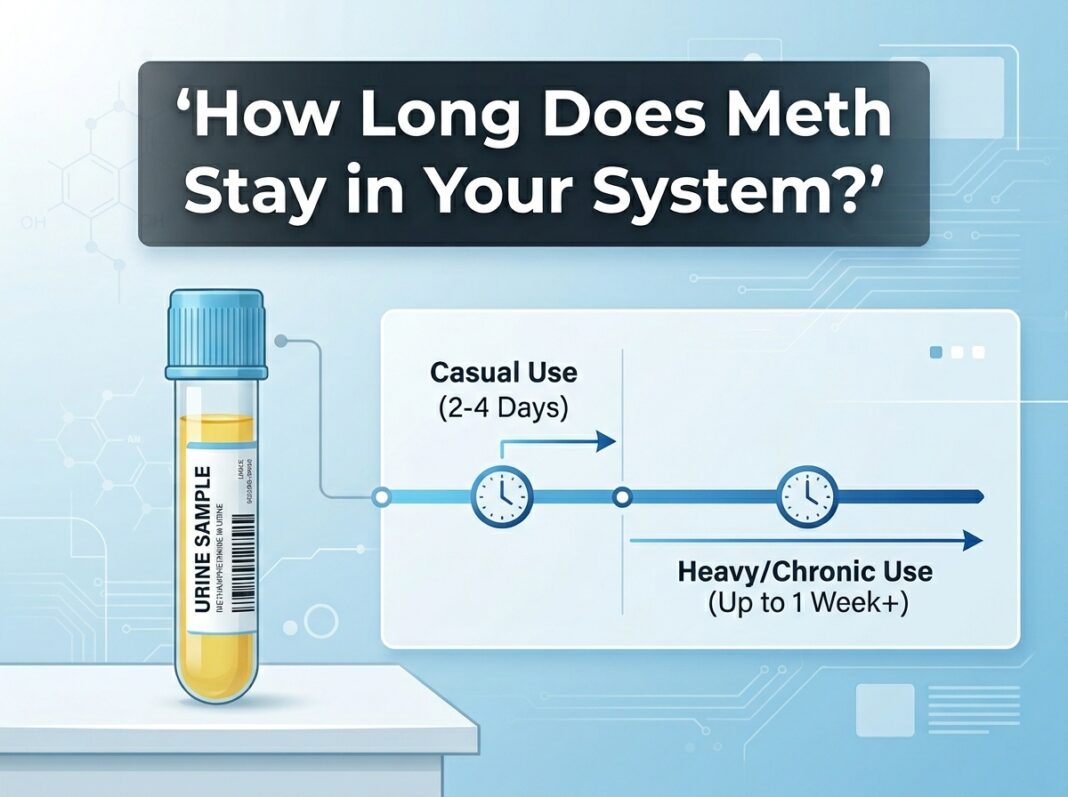
The short answer? Meth can be detected in urine for 3 to 5 days after one use. With regular or heavy use, it can last a week or longer.
The longer answer depends on many things. Your body weight, metabolism, how much you used, and how often all matter.
In this guide, I will explain everything. Detection times. How urine tests work. What affects how fast your body removes meth. And what to expect before your test.
Let’s get into it.
What Is Methamphetamine and How Does Your Body Process It?
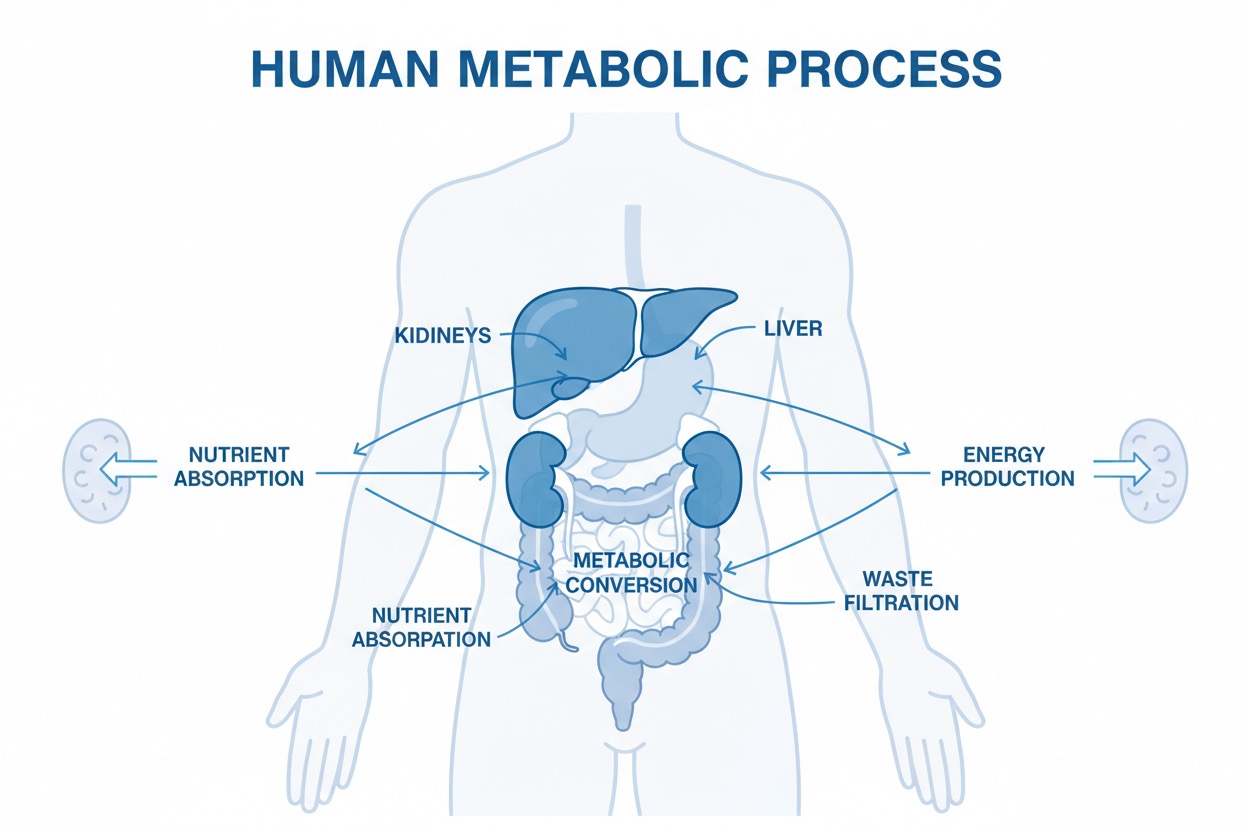
Before discussing detection windows, it’s helpful to know what meth does inside your body.
Methamphetamine is a strong drug that speeds up the central nervous system. Your body takes it in fast, no matter if you smoke, snort, inject, or swallow it.
Once it enters your bloodstream, your liver begins breaking it down. The main substance it creates is called amphetamine. Drug tests check for both meth and amphetamine.
According to the National Institute on Drug Abuse (NIDA), meth stays in your body for about 10 to 12 hours before half of it is gone. But it takes much longer for all of it to leave your body.
How Long Does Meth Stay in Your System for a Urine Sample?
This is the core question. Here’s what the research says.
Detection Window for Single Use
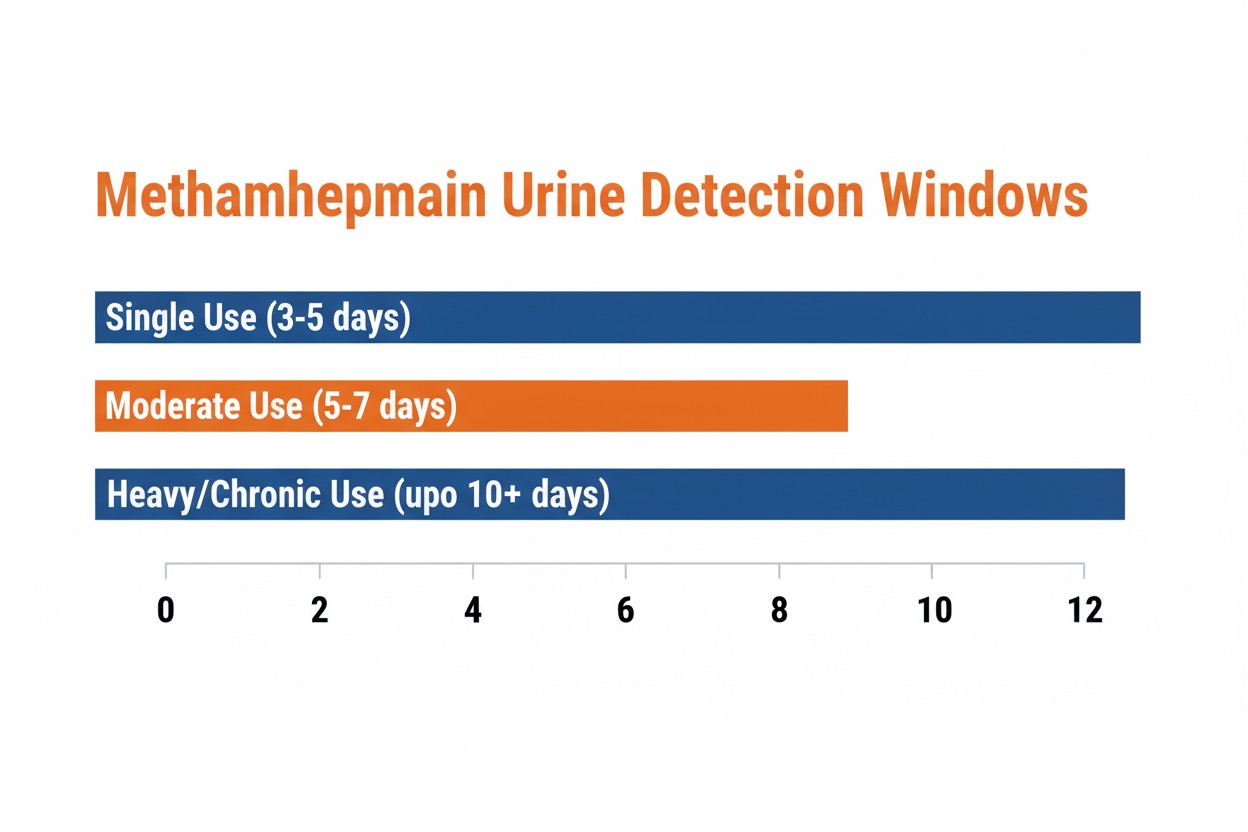
If you used meth just once, it typically shows up in urine for about 3 to 5 days.
The Substance Abuse and Mental Health Services Administration (SAMHSA) confirms this general range. Some sources cite up to 4 days for a one-time dose in a healthy adult with normal kidney function.
Detection Window for Regular or Moderate Use
If you’ve been using meth a few times per week, the detection window extends. Expect 5 to 7 days after your last use before it clears your urine.
Detection Window for Heavy or Chronic Use
Heavy, daily, or long-term meth users face the longest detection window. Meth can remain detectable in urine for up to 10 days — and in some cases slightly longer.
This happens because chronic use causes meth to build up in body tissues. As your body slowly releases those stores, metabolites keep showing up in urine.
Quick Reference Table
| Type of Use | Meth Urine Detection Window |
|---|---|
| Single/First-time use | 3 – 5 days |
| Occasional use (few times/week) | 5 – 7 days |
| Chronic/heavy daily use | 7 – 10+ days |
Important: These are general estimates based on population averages. Individual results vary. A medical professional is the only reliable source for personal guidance.
What Factors Affect How Long Meth Stays in Your Urine?
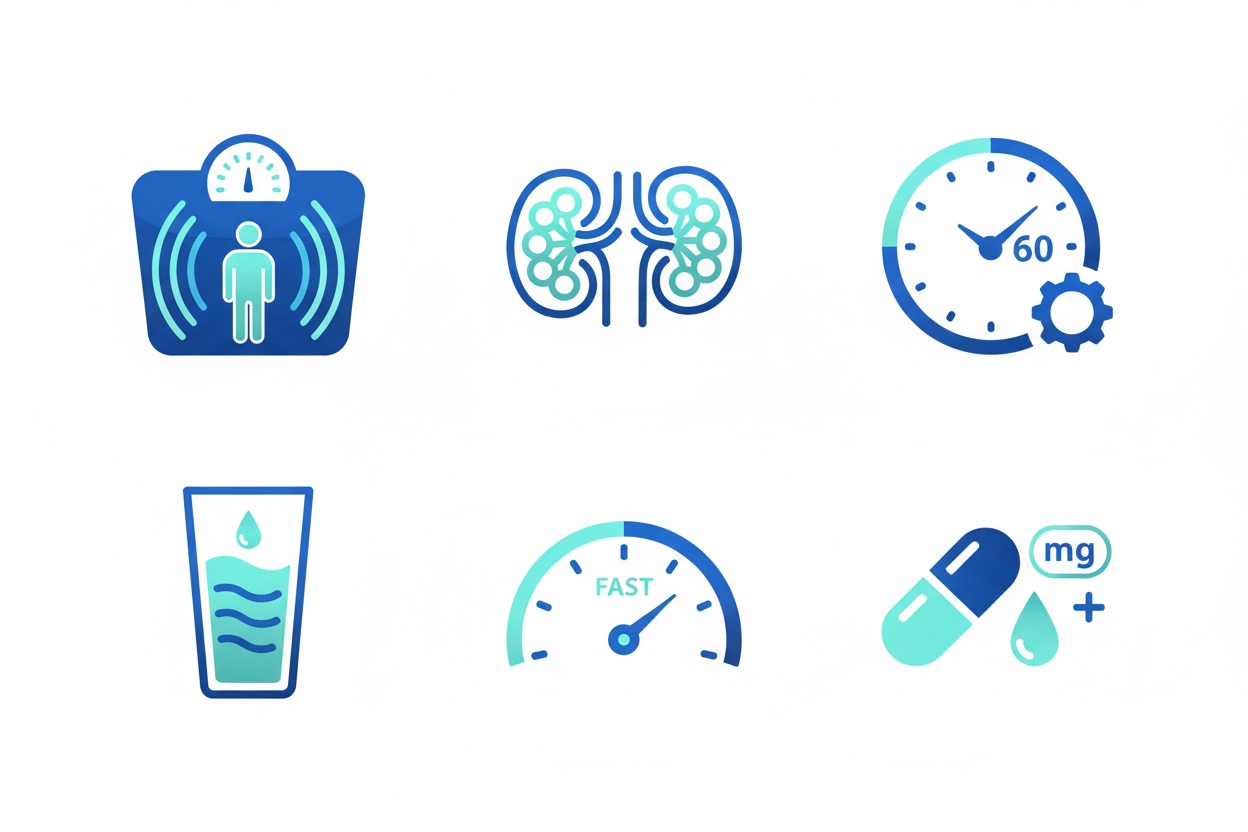
This is where it gets personal. Two people can use the same amount of meth and get very different drug test results. Here’s why.
1. Metabolism Speed
Your metabolism is basically the engine that burns through everything you consume — including meth. People with faster metabolisms clear meth more quickly.
Younger people tend to have faster metabolisms. So do people who are physically active. Age, thyroid function, and genetics all influence your metabolic rate.
2. Body Weight and Body Fat Percentage
Meth is not highly fat-soluble, but body composition still matters. People with higher body fat percentages may clear meth slightly differently than leaner individuals.
Body weight also affects how diluted a dose becomes in your system — larger bodies have more blood volume.
3. Kidney and Liver Health
Since your kidneys filter out metabolites and your liver breaks down meth, the health of these organs matters enormously.
Someone with reduced kidney function will excrete meth metabolites more slowly. Conditions like chronic kidney disease can significantly extend detection windows.
4. Hydration Levels
Staying well-hydrated helps your kidneys flush out metabolites faster. Dehydration slows that process and can concentrate metabolites in your urine — making them easier to detect, not harder.
5. Frequency and Amount of Use
This one is huge. The more you use and the more often, the more your body accumulates meth metabolites. A person who uses meth daily for months has a much longer clearance time than someone who used it once.
6. Urine pH (Acidity)
This is a lesser-known factor. Acidic urine (lower pH) speeds up meth excretion. Alkaline urine (higher pH) slows it down.
Your diet, medications, and even certain supplements can shift urine pH. This is why some sources claim vitamin C or acidic foods affect test results — though the practical impact for passing a test is minimal and unpredictable.
7. The Specific Form of Meth Used
Crystal meth (d-methamphetamine) is a purer, more potent form. It may have a slightly longer detection window compared to lower-purity versions. The route of administration also matters — smoking or injecting delivers meth to the bloodstream faster than swallowing it.
How Do Urine Drug Tests for Meth Actually Work?
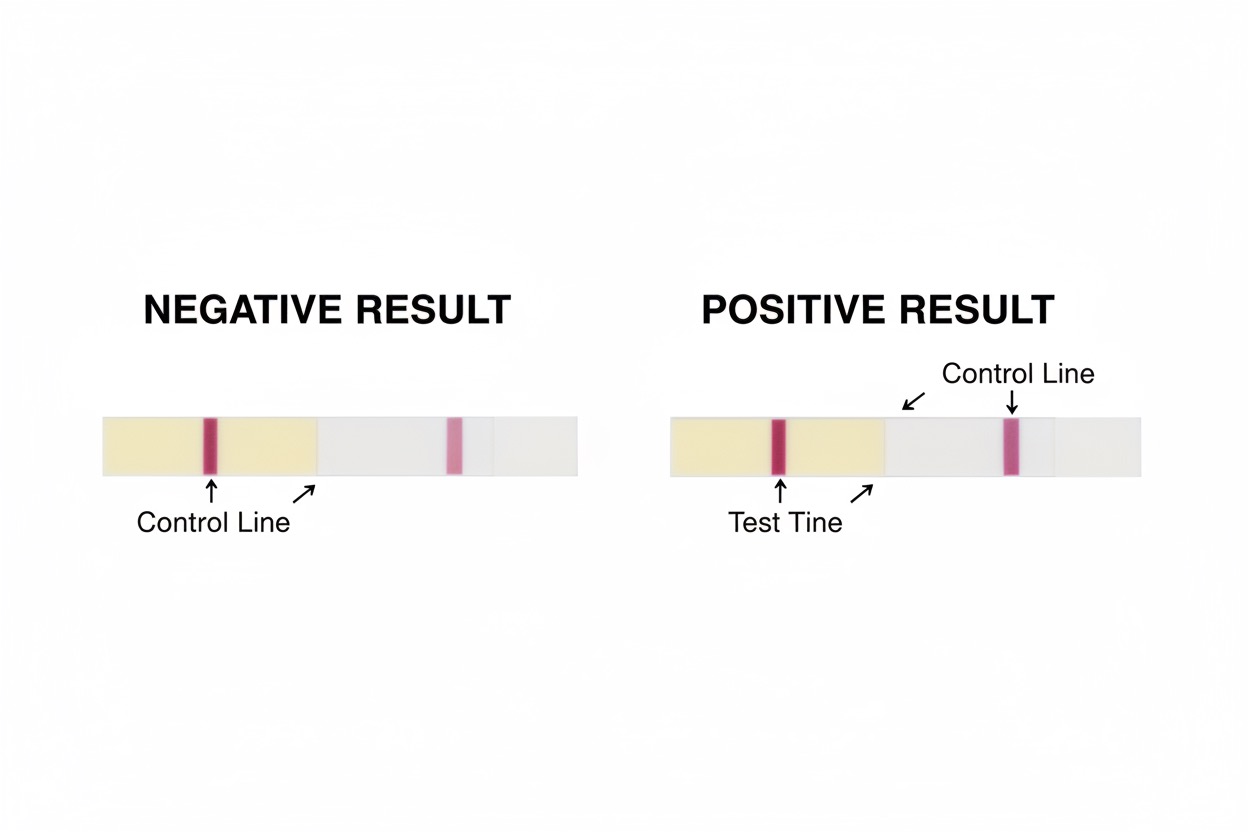
You might be wondering what exactly happens when your urine sample gets tested. Here’s the process explained simply.
Immunoassay Screening (Initial Test)
Most standard urine drug tests are immunoassay-based. These are the quick, affordable strips or panels that workplaces and clinics use for screening.
They work by detecting antibodies that react to meth metabolites. If meth metabolites are above a certain threshold, the test flags positive.
The federal cutoff level for meth in urine is 500 nanograms per milliliter (ng/mL) for screening tests, according to U.S. Department of Transportation guidelines.
Confirmatory Testing (GC-MS)
If you test positive on an initial screen, labs use a more precise method called gas chromatography-mass spectrometry (GC-MS). This test is far more accurate and nearly impossible to fool.
The confirmation cutoff for meth is 250 ng/mL. This is the standard used in federally regulated workplace drug testing programs.
What the Test Actually Detects
Urine tests look for:
- Methamphetamine itself
- Amphetamine (the main metabolite after the liver processes meth)
Both must fall below cutoff thresholds for a test to come back negative.
Meth Detection Windows Compared to Other Drug Tests
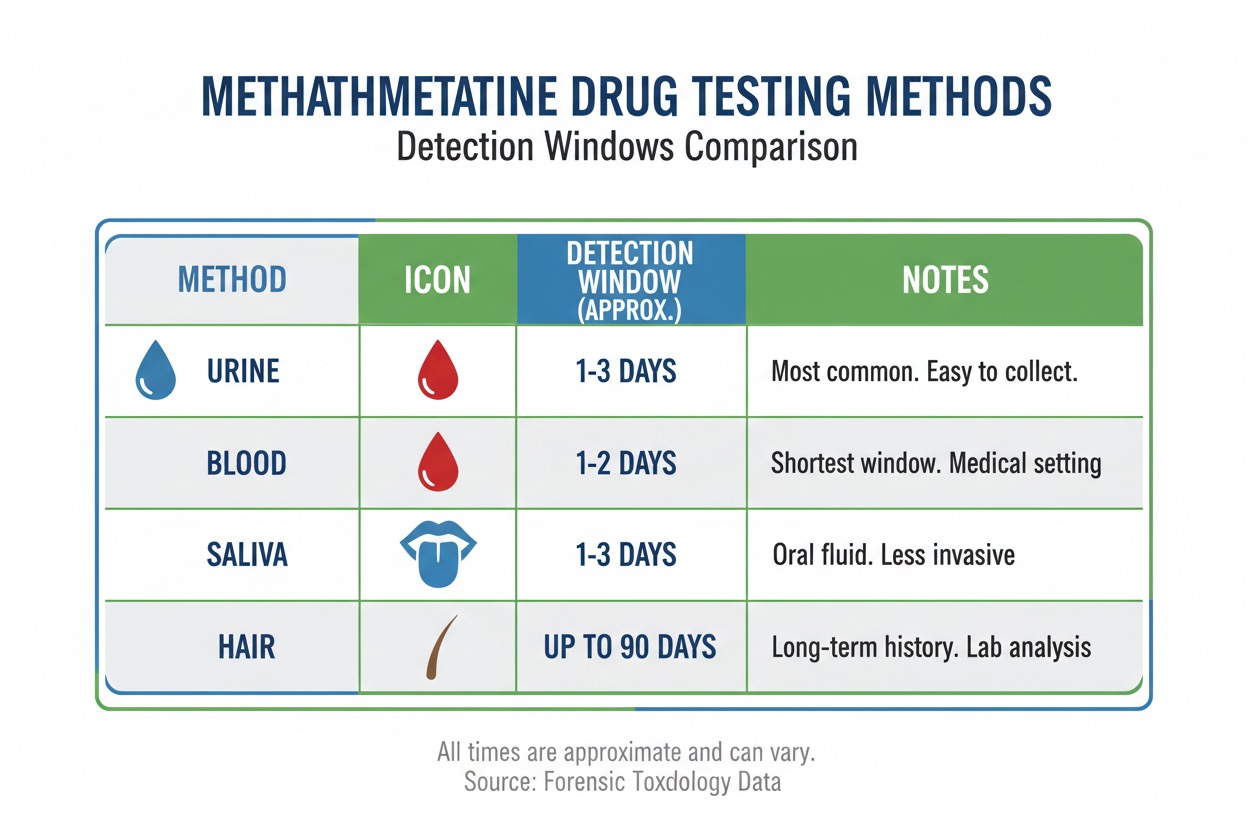
Urine testing isn’t the only type. Here’s how meth detection compares across different testing methods.
Urine Test
- Detection window: 3 – 10+ days
- Most common type for employment, courts, and rehab monitoring
- Relatively affordable and easy to administer
Blood Test
- Detection window: 1 – 3 days after use
- Used in medical emergencies or recent-use investigations
- Much shorter window because meth clears the bloodstream faster than it clears urine
Saliva (Oral Fluid) Test
- Detection window: 1 – 4 days
- Increasingly used by law enforcement roadside testing
- Detects recent use effectively
Hair Follicle Test
- Detection window: Up to 90 days (approximately)
- Used when long-term use history needs to be established
- Cannot detect very recent use (within the last 7–10 days)
- Harder to adulterate or cheat
| Test Type | Meth Detection Window |
|---|---|
| Urine | 3 – 10+ days |
| Blood | 1 – 3 days |
| Saliva | 1 – 4 days |
| Hair Follicle | Up to 90 days |
Can You Speed Up Meth Elimination from Your System?
This is a question a lot of people ask. The honest answer: you cannot reliably speed up the process.
Your liver and kidneys work at a biologically set pace. No supplement, drink, or method has been scientifically proven to significantly cut down meth detection time.
That said, here’s what can support your body’s natural elimination process:
Stay Well Hydrated
Drink adequate water throughout the day. This helps your kidneys function optimally. But don’t overdo it — extreme water loading shortly before a test is often flagged by labs (dilute specimens show an unusually low creatinine level).
Avoid Further Use
This sounds obvious, but it’s the most important step. Every additional use resets the clock.
Light Exercise
Regular exercise supports healthy metabolism. But intense exercise right before a test isn’t a shortcut — and some studies suggest it may temporarily increase metabolite concentration in urine by releasing them from tissue.
Sleep and Rest
Your body does most of its repair and detoxification work while you sleep. Quality sleep supports normal organ function.
What Doesn’t Work
- “Detox drinks” and cleanses sold online have no proven scientific efficacy for passing a drug test
- Adding adulterants (bleach, vinegar, eye drops) to your sample is illegal, detectable by labs, and often invalidates the sample entirely
- Diluting your sample excessively is typically flagged as a failed or inconclusive test
What Happens If You Test Positive for Meth?
Testing positive has different consequences depending on the context.
Employment Drug Testing
Many employers follow Department of Transportation (DOT) guidelines or similar workplace policies. A positive result typically means:
- Removal from safety-sensitive duties
- Referral to a Substance Abuse Professional (SAP)
- A return-to-duty testing process before reinstatement
Legal and Court-Ordered Testing
If you’re on probation or parole, a positive test can result in serious legal consequences including violation hearings. Courts work with specific standards and timelines.
Medical and Rehab Contexts
In treatment programs, a positive test is usually a clinical data point — not an immediate penalty. Treatment providers use results to adjust care plans and support recovery, not to punish.
False Positives: Can Other Things Trigger a Meth Positive?

Yes. False positives happen, and this is important to know.
Certain over-the-counter medications and prescription drugs can trigger a positive result for meth or amphetamine on initial immunoassay screens.
Substances that have been associated with false positives include:
- Pseudoephedrine (found in cold medicines like Sudafed)
- Ephedrine (in some decongestants)
- Bupropion (Wellbutrin) — an antidepressant
- Ranitidine (Zantac) — a heartburn medication
- Some diet pills and supplements
This is exactly why confirmatory GC-MS testing exists. If you’re taking any of the above and get an initial positive, disclose your medications to the Medical Review Officer (MRO) who reviews your results. According to Quest Diagnostics, a qualified MRO is required to review all positive results in federally regulated testing before they’re reported.
Expert Tips: What Healthcare and Addiction Professionals Say
I’ve pulled together practical insights from addiction medicine and occupational health guidance to give you expert-level perspective.
Tip 1: Individual variation is real. No online calculator or general chart can predict your exact clearance time. Factors like age, health conditions, and genetics make each person’s timeline unique.
Tip 2: Labs detect dilution. Modern urine drug tests measure creatinine and specific gravity. If your sample is too watered down, it fails as an invalid specimen — which many employers treat the same as a positive.
Tip 3: The MRO is your ally if you have a legitimate prescription. Medical Review Officers exist to protect employees who test positive for legitimate reasons. Always disclose prescription medications before a test.
Tip 4: Treatment matters more than the test. According to NIDA’s treatment guidelines, addressing the underlying use is far more effective long-term than any strategy focused only on passing a test.
Tip 5: Detox in a medically supervised setting is the safest route. If you’re trying to stop meth use, a supervised medical detox through programs listed on SAMHSA’s treatment locator is far safer than doing it alone.
Meth Urine Test: Frequently Asked Questions (FAQs)
FAQ 1: How long does meth stay in urine after one use?
After a single use, meth typically stays detectable in urine for 3 to 5 days. For people with fast metabolisms or who drink plenty of fluids, it may clear closer to the 3-day mark. Those with slower metabolism or kidney issues may still test positive at 5 days.
FAQ 2: Will drinking lots of water help me pass a meth urine test?
Not reliably. Excessive water intake can dilute your urine, but labs test for dilution. A dilute sample (low creatinine) is often flagged as inconclusive or invalid — which can trigger a retest or be treated as a failed result. Staying normally hydrated is fine; extreme hydration is not a reliable strategy.
FAQ 3: Can secondhand meth smoke cause a positive urine test?
Passive or secondhand exposure to meth smoke is extremely unlikely to produce a positive urine test at standard cutoff levels. The amount of meth absorbed passively is simply too small. This is a different situation than secondhand cannabis smoke, where some limited evidence exists for very extreme exposure scenarios.
FAQ 4: Does meth stay in your system longer than cocaine in a urine test?
Yes. Meth has a longer urine detection window than cocaine. Cocaine is typically detectable for 2 to 4 days in urine for occasional users. Meth’s longer half-life means it persists longer — 3 to 5+ days for similar use patterns.
FAQ 5: Can a hair follicle test detect meth after a urine test comes back negative?
Absolutely. Hair follicle tests detect meth for up to 90 days after use by examining metabolites deposited in hair shafts as they grow. So even if your urine test is negative (meaning it’s been more than 10 days since use), a hair follicle test could still be positive.
Conclusion
So, to pull it all together: meth stays in your urine for 3 to 5 days after single use, and up to 7 to 10+ days for regular or chronic use. The exact window depends on your metabolism, health, hydration, and how much and how often you used.
Urine testing is the most common drug test because it’s affordable, reliable, and catches a wide enough window of recent use. Modern labs are sophisticated — they detect dilution, adulteration, and substitution.
If you’re reading this because you’re genuinely worried about your relationship with meth, that matters more than any drug test result. Recovery is real, and it’s possible. Resources like SAMHSA’s National Helpline (1-800-662-4357) and NIDA’s treatment finder connect you with free, confidential support.
If you found this article helpful, consider bookmarking it or sharing it with someone who might need accurate, no-nonsense information on this topic.
⚠️ Medical Disclaimer: This article is for informational purposes only. It is not medical advice. If you or someone you know is struggling with substance use, please reach out to SAMHSA’s National Helpline at 1-800-662-4357. It’s free, confidential, and available 24/7.
Also Read: How Long Does It Take to Fill a Cavity? Everything You Need to Know