Key Takeaways: What Evidence Should You Collect After a Car Accident
- Safety and medical care come before photos, paperwork, and conversations.
- Photos and videos should capture vehicles, road conditions, traffic controls, injuries, and damaged property.
- Names, insurance details, witness contact information, and the police report number are important records.
- Medical files, repair records, receipts, and proof of missed work can document the crash’s financial effects.
- Keep original files and back them up in at least two secure locations.
- Request nearby camera footage quickly because it may be overwritten.
A collision on a busy Las Vegas intersection, a rural Nevada highway, or a neighborhood street can leave important details behind only briefly. The evidence you preserve can help show how the crash occurred, who was involved, and how it affected your health, vehicle, work, and daily life. Reviewing these steps to take following a Nevada car crash can help you put safety first while protecting information that may be needed later.
Do not put yourself in danger to gather proof. If anyone is hurt, trapped, or exposed to traffic, call 911 and seek help first. Once the area is safe and you are medically able, begin documenting the crash as carefully as possible.
Key Evidence to Collect After a Car Accident
Evidence helps create a clear, dated account when memories fade and the scene changes. It may help explain vehicle positions, roadway conditions, the sequence of events, and the extent of physical or financial losses. Nevada drivers also have responsibilities after certain crashes, including stopping, sharing identifying information, rendering reasonable assistance when needed, and making reports in specified circumstances under Nevada’s crash-reporting laws.
Start an accident file as soon as practical. A simple folder on your phone, computer, or cloud account can prevent key records from being scattered among text messages, email inboxes, repair shops, and medical portals.
Evidence to Collect at the Scene
Photographs of Vehicles and the Surrounding Area
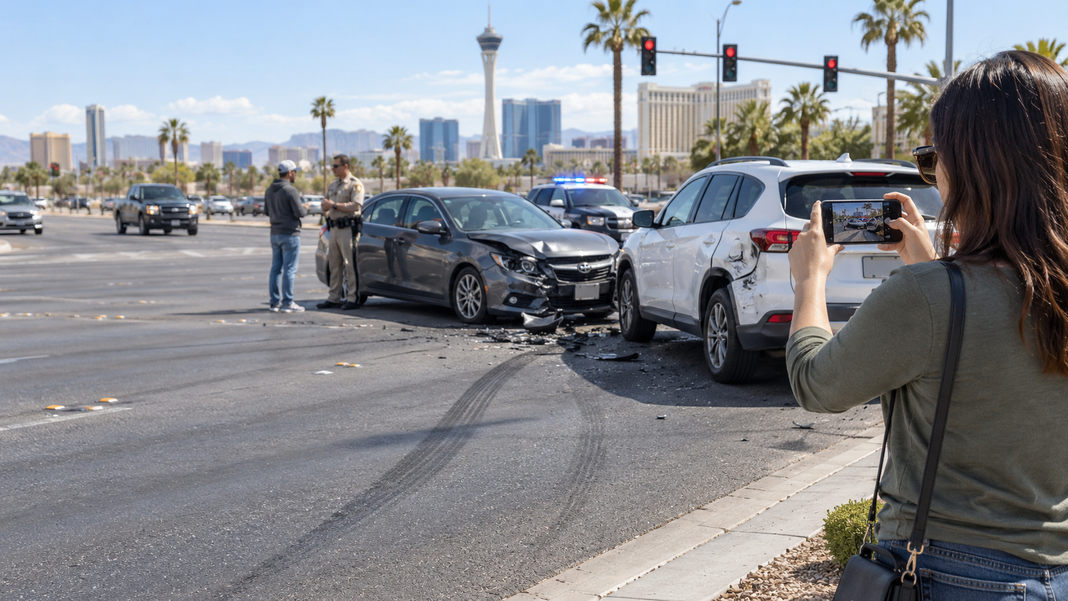
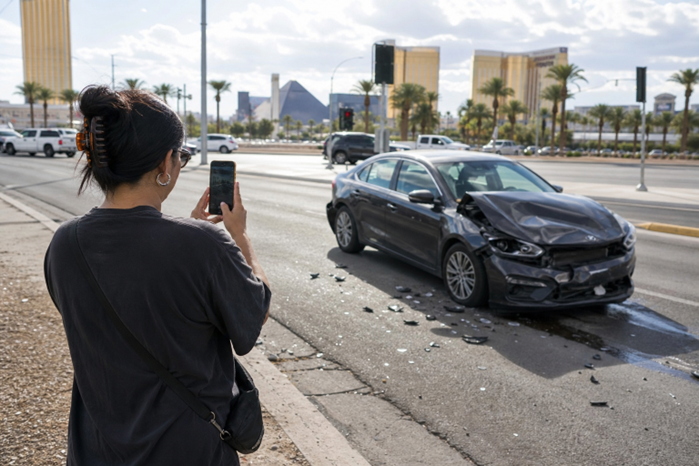
Take wide photos before moving vehicles, if it’s safe. Include the final resting positions of all vehicles, travel lanes, nearby intersections, and the general direction each vehicle was facing. Then take close images of dents, broken lights, shattered glass, paint transfer, deployed airbags, tire damage, and license plates.
Photograph the roadway from several distances. Nevada conditions can change quickly, especially where harsh sun glare, rain-slick pavement, dust, construction activity, poor lighting, or heavy tourist traffic may affect visibility. Capture traffic lights, stop signs, lane arrows, crosswalks, speed-limit signs, skid marks, debris, fluid spills, potholes, and anything blocking a driver’s view.
Injuries and Damaged Personal Items
If it is appropriate and safe, photograph visible cuts, bruises, swelling, burns, or torn clothing. Continue taking dated photos if symptoms become more visible in the following days. Also, document any damage to glasses, car seats, phones, luggage, work equipment, or other items inside the vehicle. Keep the item, if possible, until you have photographed it and recorded its condition.
Driver, Passenger, and Witness Details
Exchange information with the other driver without debating fault. Record the driver’s full name, contact information, insurance carrier, policy information, vehicle make and model, registration details, and plate number. Get the passengers’ names and phone numbers, too.
Independent witnesses can be particularly useful when drivers disagree about a green light, a lane change, a turn, or the point of impact. Ask witnesses for their contact details and a brief description of what they personally saw. Do not pressure anyone to make conclusions or guesses about speed, blame, or injuries.
Police Reports and Video Evidence
Note the following details: the responding agency, the officer’s name, badge number (if available), report number, and instructions for obtaining the report. A police report may include information about the involved parties, roadway conditions, and statements made at the scene. Review the report when it becomes available and keep a copy, though it may not contain all the facts.
Act quickly to look for electronic evidence. Ask whether the vehicles had dash cameras and check for security cameras at nearby businesses or homes. Ask property owners to preserve any relevant footage without entering private property or tampering with their equipment.
Keep original files such as dashcam clips, phone videos, and unedited photos. Detailed crash investigations require evidence from the scene, vehicle damage, and occupant contact points, all of which can provide critical information.
Medical Evidence to Save
Seek medical attention promptly when you have pain, dizziness, numbness, headaches, reduced mobility, or any other concerning symptom. Keep records from ambulance services, emergency departments, urgent care, primary-care providers, specialists, imaging facilities, physical therapists, and pharmacies. Save visit summaries, diagnostic results, prescriptions, treatment recommendations, bills, and insurance explanations of benefits.
A dated symptom journal can add helpful context between appointments. Note pain levels, sleep disruption, medications, activity limits, missed events, and everyday tasks that have become harder. Keep entries factual and specific rather than trying to diagnose yourself.
Vehicle Damage, Lost Income, and Expense Records
Preserve photographs of the vehicle before repairs, salvage, or disposal. Save towing, storage, repair, inspection, and rental-car receipts, along with written estimates and the final invoice. If the vehicle is declared a total loss, keep valuation documents and records that show its condition before the crash.
Collect pay stubs, schedules, time sheets, tax records, and employer correspondence showing missed work. Self-employed people may need invoices, client calendars, contracts, or business records. Keep receipts for medications, transportation to appointments, medical devices, household assistance, and other crash-related expenses. A spreadsheet listing the date, amount, purpose, and receipt location makes these costs easier to track.
How to Organize Your Accident File
- Create a master folder labeled with the crash date and location.
- Use separate sections for scene evidence, police records, medical care, vehicle damage, expenses, lost income, and insurance communications.
- Keep originals unchanged, including image files with their original dates and metadata.
- Back up digital evidence to a secure cloud account and an external drive.
- Maintain a call log with the date, person or business contacted, and a brief summary of each conversation.
Common Mistakes to Avoid
- Standing in traffic or delaying emergency treatment to take pictures.
- Admitting fault or speculating about what happened.
- Deleting original photos after texting compressed copies to someone else.
- Posting crash details, videos, or injury updates on social media.
- Repairing, selling, or disposing of the vehicle before documenting its damage.
- Waiting too long to ask for nearby surveillance footage.
- Keeping all records on one phone or in one email account.
What if You Did Not Collect Evidence at the Scene?
Missing photos do not necessarily prevent you from building a useful record. Request the police report, contact witnesses while their memories are fresh, ask passengers whether they took pictures, and preserve later medical and repair documentation. Prompt follow-up can still help fill important gaps.
When Additional Help May Be Needed
Consider getting assistance when injuries are serious or worsening, fault is disputed, several vehicles were involved, a commercial truck or rideshare vehicle was involved, or video evidence may disappear. Additional support may also be useful if you are being pressed to settle before you understand your medical condition and full losses. A well-organized file gives you a stronger foundation for explaining what happened after a Nevada car accident.
If injuries are serious or liability is disputed, understanding when to hire a personal injury lawyer in Las Vegas can help you decide what to do next.