I still remember the first time a payment I was counting on said “5 business days”, and I didn’t think twice about it. I had rent due Friday, a client refund coming in, and I assumed the money would just appear whenever I needed it. It didn’t. I ended up moving money from savings I really didn’t want to touch, and I learned the hard way that a processing window is not just fine print.
Why is it important to know that it will take 5 business days to process your payment request? Because that single detail decides whether your bills get paid on time, whether you get hit with an overdraft fee, and whether you trust the business or bank you’re dealing with. This guide breaks down exactly what those five days mean, why they exist, and how to plan around them so you never get caught off guard the way I did.
You’ll notice this article covers a lot more ground than most of what shows up on the first page for this exact question. Most of those results give a two-sentence answer copied from a homework help site and call it done. I wanted to actually explain the banking mechanics behind the five days, show real issuer timelines, and give you a plan for what to do if your money still hasn’t shown up once the window closes. That last part especially gets skipped almost everywhere else.
What Does “5 Business Days to Process Your Payment Request” Actually Mean?
A payment request is simply an instruction telling a bank, card network, or payment app to move money from one account to another. When a company tells you it will take 5 business days, they are describing the time it takes for that instruction to move through the banking system, get verified, and finally settle.
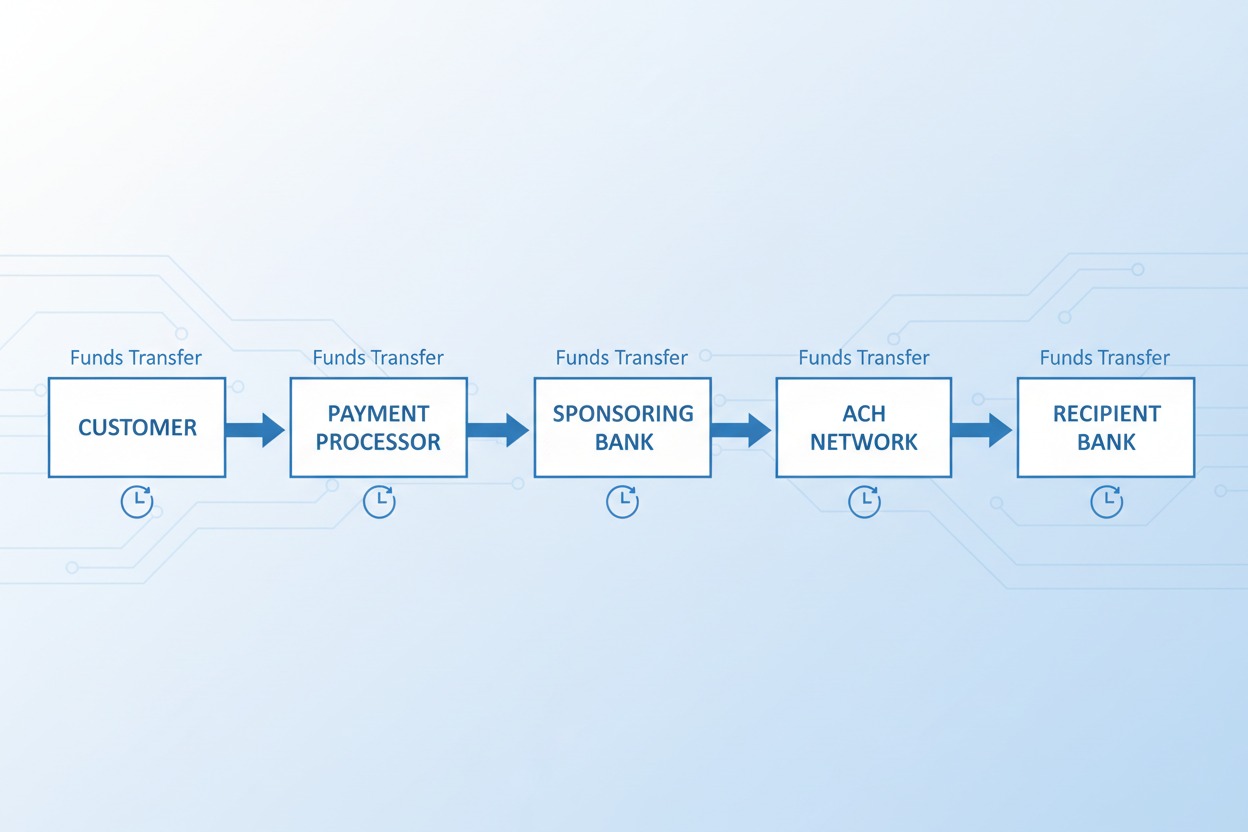
It helps to think of it less like a single wire moving instantly and more like a letter going through several sorting facilities before it reaches your mailbox. Your bank has to send the instruction out, the receiving bank has to accept it, a network sitting in between has to batch and settle it, and only then does the money actually land where it’s supposed to. Every one of those steps has its own internal schedule, and none of them run on weekends.
Most everyday payment requests, whether it’s a refund, a payroll deposit, or a bill payment, move through the Automated Clearing House (ACH) network. The ACH Network is the electronic system that connects nearly every bank and credit union in the country, and it does not run on your schedule. It runs on batches, cutoff times, and settlement windows set by the network itself, as explained by Nacha, the organization that governs ACH rules.
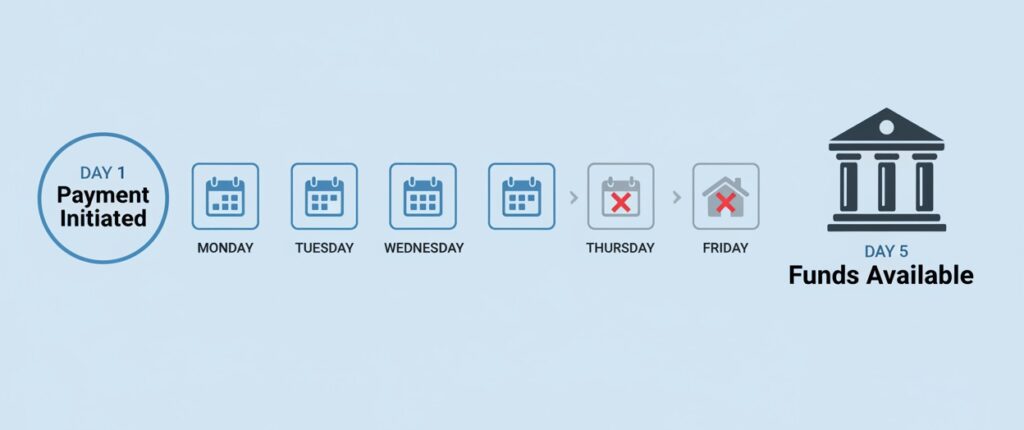
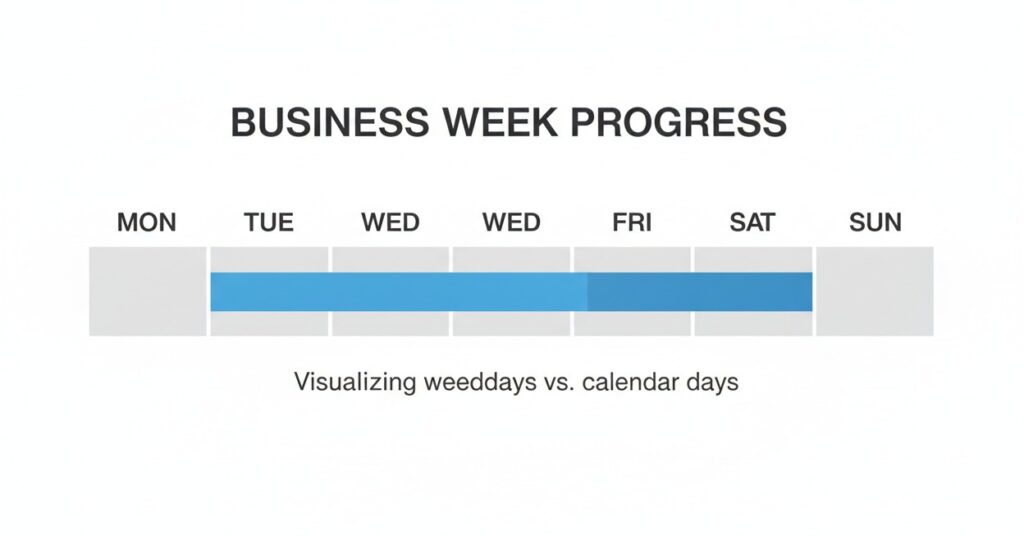
Business days only count Monday through Friday, and they exclude federal holidays. So if your payment request goes out Thursday afternoon, the clock doesn’t really start moving until Friday, and it pauses completely over the weekend.
If you’re also managing the financial side of running your own business, my breakdown of how to use QuickBooks for small business walks through how to track exactly when money leaves and enters your accounts, which makes these delays much less stressful.
Why Is It Important to Know That It Will Take 5 Business Days to Process Your Payment Request?
This is the exact question most people search for, and it deserves a direct answer, not a vague one. Knowing this timeline matters for four concrete reasons, and I’ve personally run into every single one of them.
1. It Protects Your Budget
If you’re waiting on a refund, a reimbursement, or a client payout, you need to know the real date the money lands, not the date you hope it lands. I once spent against a refund I assumed had already cleared, only to watch my account dip into the negative because the five days weren’t up yet. That one mistake cost me an overdraft fee and about twenty minutes on hold with my bank explaining what happened, which is time I’d rather have spent literally anywhere else.
The lesson stuck with me. Now, whenever I’m expecting money, I mentally add the full five business days to whatever date I’m told, and I plan my spending around the later date, not the optimistic one.
2. It Helps You Avoid Overdraft and Late Fees
Banks don’t care that your payment is “in progress.” If a bill is due before your incoming payment clears, you can still be charged a late fee or an overdraft fee. Knowing the five-day window ahead of time gives you room to plan around it, maybe by paying the bill from a different account first, or contacting the biller directly to explain the timing.
This matters most for people living paycheck to paycheck, freelancers waiting on client payouts, or small business owners who are counting on a specific payment to cover payroll. In every one of those situations, a five-day delay isn’t just an inconvenience. It can be the difference between staying current on an obligation and falling behind.
3. It Sets Honest Expectations With the Other Party
When a seller, employer, or platform tells you upfront that a payment takes 5 business days, it prevents the awkward “did you send it yet?” conversation. It’s a transparency signal, and understanding it helps you avoid unnecessary disputes with a business that is actually following normal procedure.
I’ve been on both sides of this. As a freelancer, I’ve had clients message me in a slight panic three days after paying an invoice, convinced something had gone wrong, when really the payment was moving exactly on schedule. Once I started explaining the five-day window upfront in my invoices, those messages basically stopped.
4. It Lets You Track the Transaction Properly
Once you know the expected window, you can actually tell the difference between a payment that is running normally and one that is genuinely stuck or delayed. Without that baseline, every pending payment looks alarming, even when it’s completely routine.
This also matters if you ever need to escalate a problem. If a payment is still not showing after five full business days, you have a legitimate reason to contact your bank or the sending party and ask what happened. If you contact them on day two assuming something is broken, you’re likely to be told, correctly, that everything is still within the normal window.
In short: the five-day window isn’t a red flag. It’s a built-in feature of how electronic banking works, and knowing it in advance is what turns confusion into confidence.
How Long Is 3-5 Business Days, Really?
People often see “3-5 business days” on a receipt or confirmation email and assume it means 3 to 5 calendar days. It doesn’t, and that mix-up causes most of the frustration around payment timing.
Here’s how the counting actually works:
| Day Payment Is Submitted | Business Days Counted | Estimated Completion (3-5 Business Days) |
|---|---|---|
| Monday | Tue, Wed, Thu, Fri, (Mon) | Wednesday to following Monday |
| Wednesday | Thu, Fri, (Mon, Tue, Wed) | Following Monday to Wednesday |
| Friday (afternoon) | (Mon, Tue, Wed, Thu, Fri) | Following Wednesday to Friday |
A few rules to keep in mind:
- Weekends never count, no matter when you submit the payment.
- Federal holidays never count either, even if the bank’s website is technically open.
- A payment submitted late in the business day often doesn’t start its clock until the next business day.
- “Business days” can also be affected by cutoff times specific to your bank, which are usually listed in your account agreement.
I always tell friends starting freelance work to submit invoices and payment requests early in the week. A Friday afternoon submission can genuinely add three or four extra calendar days to the wait, simply because of the weekend sitting in the middle.
What Does “Pending Transaction” Mean, and How Long Do Pending Transactions Take?
A pending transaction is a charge or transfer that has been authorized but hasn’t been fully processed yet. Your bank has essentially set the money aside, but the transaction hasn’t officially posted.
According to Chase, everyday transactions typically show as pending for three to five business days before they fully post. American Express notes that most credit card purchases post within three days, but in some cases it can stretch to as long as 30 days depending on the merchant.
Here’s a quick breakdown of what usually drives how long pending transactions take:
- Debit card purchases: Often clear within 1 to 3 business days.
- Credit card purchases: Commonly 1 to 5 business days, though hotels and rental cars sometimes hold longer because the final amount isn’t set yet.
- Cash deposits: Frequently post by the next business day.
- Checks: Can post the same day, but full clearing sometimes takes two to seven business days.
One detail that surprised me the first time I looked into it: pending transactions still reduce your available balance immediately, even though they aren’t final. That’s why your “available balance” and your actual account balance can look different for a few days after a purchase.
I ran into this exact confusion while managing expenses for a small business, and it’s part of why I eventually put together this guide on paying yourself as a business owner, since owner draws and pending vendor payments can overlap in ways that mess with your real cash position if you’re not tracking both.
How Long Do Credit Card Payments Take to Process?
This is where things get slightly more specific, because every card issuer sets its own internal timeline. Based on NerdWallet’s issuer comparison, here’s roughly what to expect:
| Card Issuer | Typical Pending Transaction Time |
|---|---|
| American Express | Up to 8 days |
| Bank of America | 3 to 5 business days |
| Most major issuers | 1 to 5 business days on average |
Factors that stretch or shrink that window include:
- Whether the merchant batches transactions daily or in real time
- Whether the purchase happened on a weekend or right before a holiday
- Whether the transaction involves a variable final amount, like a hotel stay or a rental car
- Whether your bank flags it for a routine fraud review
If you’ve ever wondered how long it takes for a payment to process compared to how long a pending transaction just sits there, the honest answer is that they’re describing the same underlying process from two different angles. “Processing” is the full journey. “Pending” is what you see on your end while that journey is happening.
Why Payment Processing Actually Takes Days: The Banking Rules Behind It
This is the part most articles skip, and it’s genuinely useful once you understand it. Payment delays aren’t arbitrary. They come from real regulatory and technical rules.
The ACH Network Runs on Batches, Not Instantly
Standard ACH payments are processed in batches rather than one at a time. Nacha’s ACH Payments Fact Sheet explains that the network settles payments four times a day and is only open during specific windows tied to the Federal Reserve’s settlement service, which is closed on weekends and federal holidays.
There’s also Same Day ACH, a faster option banks can choose to use. According to Nacha’s own Same Day ACH rules, eligible payments can settle the same banking day through morning and afternoon submission windows, but not every bank or every transaction type uses this option, which is why standard transfers still default to the multi-day timeline.
Regulation CC Sets Legal Minimums for Check Deposits
If your payment involves a check, there’s a federal rule behind the delay too. Regulation CC, enforced jointly by the Federal Reserve and the Consumer Financial Protection Bureau, requires banks to make at least a portion of a check deposit available by the next business day, with the remaining balance following on the second business day for most standard checks. Larger or newer accounts can be held even longer under specific exceptions.
This is exactly why a “5 business day” estimate isn’t your bank being slow on purpose. It’s often the combination of ACH batch timing, weekend closures, and legal funds-availability rules working together.
Fraud and Verification Checks Add a Buffer
Every transaction typically passes through several layers of review, including checks by the originating bank, the receiving bank, and sometimes the payment network itself. This is a deliberate part of the process to protect both sides from fraud, and it’s one more reason processing windows tend to be conservative rather than instant.
Time Zones and Cutoff Times Quietly Add Extra Days
This one caught me off guard when I first looked into it. Your bank might advertise a five-day window, but that clock is usually tied to a specific cutoff time in a specific time zone, often Eastern Time, since that’s where the Federal Reserve’s settlement windows are anchored. If you submit a payment request at 6 p.m. on the West Coast, it may have already missed that day’s processing window entirely, even though it still felt like the middle of the business day to you.
This is a small detail, but it explains a huge share of the “why is my payment taking longer than expected” confusion people run into. The five days isn’t measured from the moment you click submit. It’s measured from the next available processing window your bank actually uses.
Starting a Payment Processing Company: What This Delay Teaches Founders
I get asked about this a surprising amount, usually from people exploring starting a payment processing company or a fintech side project. If that’s you, the five-day standard isn’t just a consumer detail. It’s something you’ll need to design your entire business around.
A few things worth knowing before you go further:
- You’ll need to register as either a payment facilitator or work under a sponsoring bank, since you can’t move money through the ACH network without a sponsoring financial institution.
- Your settlement timelines to merchants will likely mirror the same 1 to 5 business day window, unless you specifically build in same-day ACH support, which usually costs more per transaction.
- You’ll be legally required to follow funds availability and disclosure rules similar to Regulation CC, even if you’re a smaller processor working through a partner bank.
- Compliance costs, including fraud monitoring and KYC (know your customer) verification, are a major reason processing windows exist in the first place, not just banking bureaucracy.
If you’re at the stage of formalizing a business structure for something like this, my guide on paying yourself as a business owner covers some of the early decisions that founders in payments and fintech tend to face earlier than most other industries, mainly because of how tightly regulated money movement is.
Honestly, understanding the five-day standard from the consumer side made me appreciate how much operational complexity sits behind something that looks like a single line of text on a receipt.
A Quick Glossary, So None of This Feels Like Jargon
- ACH (Automated Clearing House): The electronic network that processes most bank-to-bank transfers in the country, including direct deposits, bill payments, and refunds.
- Business day: A weekday that is not a federal holiday. Weekends never count, regardless of when a payment is submitted.
- Pending transaction: A charge or transfer that has been authorized but not yet fully processed or posted.
- Settlement: The point at which money actually moves between banks and becomes final, rather than just authorized.
- Same Day ACH: A faster version of standard ACH processing that allows eligible payments to settle within the same banking day, usually for an added fee.
- Regulation CC: A federal rule that sets minimum timelines for how quickly banks must make deposited funds, particularly checks, available to customers.
- Cutoff time: The specific time of day after which a submitted payment is treated as if it were submitted the next business day.
Expert Tips to Avoid Payment Delay Headaches
- Submit early in the week. Submitting on Monday and Tuesday helps you avoid getting stuck behind a weekend.
- Don’t spend against a pending refund. Treat it as unavailable until it’s fully posted, not just approved.
- Ask about Same Day ACH. Some banks and apps offer it for a small fee if you genuinely need funds faster.
- Keep a small buffer in your checking account. A cushion of even $100 to $200 absorbs most timing mismatches without triggering an overdraft.
- Read the actual disclosure, not just the headline. Funds availability policies are usually posted at your bank in writing, and they explain your specific bank’s cutoff times.
Quick Pros and Cons: Standard Processing vs. Same Day ACH
| Standard ACH (1-5 Business Days) | Same Day ACH | |
|---|---|---|
| Speed | Slower, predictable | Same banking day in most cases |
| Cost | Usually free or low cost | Often carries a small per-transaction fee |
| Availability | Universal | Not offered by every bank or for every transaction type |
| Best for | Routine transfers, payroll, refunds | Urgent transfers, emergency bill payments |
What to Do If Your Payment Still Hasn’t Arrived After 5 Business Days
This is the part that would have saved me a lot of stress the first time I ran into a stuck payment, and it’s the part most other articles on this topic leave out entirely.
If five full business days have passed and the money still isn’t there, here’s the order I’d actually work through it in:
- Double-check how the five days were counted. Recalculate from the actual submission date, not the date you think you submitted it, and make sure you’re not accidentally counting a holiday as a business day.
- Check for a specific cutoff time. Some banks only start the clock the next business day if a request came in after a certain hour, often mid to late afternoon.
- Contact the sending party first, whether that’s your employer, a client, or a company issuing a refund. They can usually confirm the exact date the payment was initiated on their end and whether it’s still sitting in their system.
- Contact your bank directly if the sender confirms the payment was sent. They can look at incoming ACH files and tell you whether anything arrived and is sitting in a review queue.
- Ask specifically about holds or fraud reviews. Larger or unusual transactions sometimes get an extra review step, which can add a day or two beyond the standard window.
- Request a trace number or confirmation ID if you don’t already have one. This is the single most useful piece of information when a bank needs to track down a specific transfer.
In my experience, most “missing” payments aren’t actually missing. They’re either miscounted business days, a submission that happened later in the day than the sender realized, or a routine fraud check that adds a short extra delay. Genuine lost payments are rare, but they do happen, and having a trace number ready makes resolving them dramatically faster.
Wire Transfers vs. ACH: Why Some Payments Move Faster
A question I get a lot alongside this one is why some payments seem to move almost instantly while others take the full five days. The short answer is that not all payment methods use the same rails.
| Method | Typical Speed | Common Use |
|---|---|---|
| Domestic wire transfer | Same business day, often within hours | Large one-time payments, real estate, urgent business transfers |
| Standard ACH | 1 to 5 business days | Payroll, refunds, bill payments, most everyday transfers |
| Same Day ACH | Same banking day | Urgent payroll, time-sensitive reimbursements |
| Check deposit | 1 to 2 business days for initial availability, longer for full clearing | Personal checks, business checks |
Wires move faster because they’re processed individually and settled directly between banks, rather than sitting in a batch with thousands of other transactions. That speed comes at a cost though, since wires almost always carry a flat fee, while standard ACH transfers are usually free or very low cost. That trade-off, speed versus cost, is really the whole story behind why so many routine payments default to the slower five-day window instead of something faster.
Frequently Asked Questions
Why is it important to know that it will take 5 business days to process your payment request?
Because it helps you plan your finances accurately, avoid overdraft or late fees, and set realistic expectations with whoever you’re paying or being paid by.
How long is 3-5 business days exactly?
It means three to five weekdays, not including weekends or federal holidays, counted starting from the next full business day after submission.
What does a pending transaction mean?
It means a charge or transfer has been authorized but hasn’t fully posted to your account yet. The funds are usually already reserved, even though the transaction isn’t final.
How long do pending transactions take to clear?
Most clear within 1 to 5 business days, though certain purchases like hotels or rental cars can take longer since the final charge amount isn’t set right away.
How long does it take for a payment to process if I use a debit card instead of a bank transfer?
Debit card transactions often process faster, typically within 1 to 3 business days, compared to standard bank transfers, which usually follow the fuller 1 to 5 business day window.
Final Thoughts
Five business days feels like a long time when you’re staring at your account balance, waiting. But once you understand what’s actually happening behind the scenes- batch processing, weekend closures, fraud checks, and federal funds availability rules- it stops feeling like a mystery and starts feeling like something you can plan around.
The next time you see that five-day estimate, you’ll know exactly what it means, why it exists, and how to make sure it never catches your budget off guard again. If you’re building out the financial side of a business alongside learning all this, take a look at my guide on using QuickBooks for small business to keep every incoming and outgoing payment properly tracked while it moves through that window.